Category: Outlinks

Outlinks are links to articles, videos, products, and websites that I find helpful. I also take recommendations, so feel free to contact me with suggestions.

  • Critics: Jesus Was a Miracle Worker

    Critics: Jesus Was a Miracle Worker

    Gary Habermas is a New Testament scholar and theologian. One area of his expertise is in the historicity of Jesus, and His resurrection in particular. He may be best-known for his “Minimal Facts” approach, which outlines the agreement among religious and skeptical scholars regarding what we know about Jesus’ death and resurrection from a historical perspective.

    This is a valuable approach when dealing with skeptics, as you might imagine. When some random internet dude tries to tell you there’s no evidence that Jesus even existed, you need to be prepared with at least some knowledge of the facts. Not only did Jesus actually exist – as atheist scholar Bart Ehrman points out – but skeptical scholars go even further. In this article from The Worldview Bulletin, Habermas explains that Jesus’ miracles and exorcisms are among the best-attested facts of His life.

    Go to the Original Article

  • One Temple Cleansing, or Two?

    One Temple Cleansing, or Two?

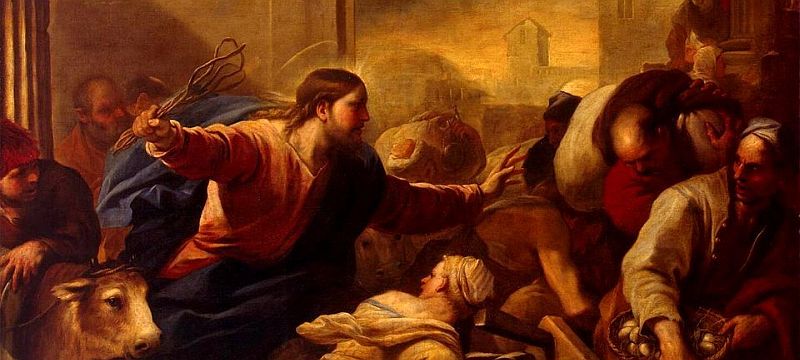
    Most of us are familiar with the gospel accounts of Jesus cleansing the temple. You know, where He flipped tables and ran out the moneychangers. That happened right before His crucifixion, right? Well… yes, but maybe He did it twice.

    In this short, interesting article by Mitch Chase of Biblical Theology, we can easily see the pattern of Jesus’ actions in Matthew, Mark, and Luke. They wrote that the event happened during Holy Week. Clearly, John’s account doesn’t quite match up. In John’s gospel, Jesus cleansed the temple at the beginning of His ministry, after the wedding in Cana… after His very first recorded miracle.

    Some might suggest that we have to take sides, and pick one. Maybe we don’t. Maybe Jesus did it twice.

    Go to the Original Article

  • A Wolf in the Sheep Pen

    A Wolf in the Sheep Pen

    Sheep aren’t the smartest kind of animal, and there’s a reason that Christians are often described as sheep. As a group, we’re pretty easy to manipulate.

    For example, we’re often impressed by those with human credentials. There’s nothing wrong with having them, of course… but they’re not necessarily good indicators of character, of faithfulness, or of one’s grasp on the truth. We’re surrounded by false teachers, and a lot of them have those credentials.

    What we lack is discernment. To discern is to notice… to see things clearly, and to be able to choose between things. Too many Christians are ignorant of what the Bible actually says, and they’re unable to spot a counterfeit, or a liar. The solution to bad teaching is good teaching, and there aren’t enough Christians who are able to tell the difference.

    Bob Perry gives some advice on how to grow in discernment… how to spot a teacher who isn’t teaching well. When we’re able to spot the fakes, we’re also able to help others do the same.

    Go to the Original Article

  • A Caution to Those Who Decree and Declare

    A Caution to Those Who Decree and Declare

    What does it mean when Christians say that they “decree” something? When they “declare” something, what are they doing? I witness people who claim to follow Jesus saying these things, and I’m disheartened. Why?

    As Oyewole Akande points out in this article, the idea comes from the heretical false teaching of the Word of Faith movement. The unbiblical idea behind it is that words have power… not the ideas that the words express, but the words themselves. When spoken with faith, they say, anyone can do the things that God can do. Not only can they declare themselves wealthy and disease-free, they can even create their own universes!

    Of course, that’s simply not true. Unfortunately, many have heard and believed these false teachers. They begin to do strange things as a result of their new beliefs. They “decree” all kinds of wonderful things for themselves, and “declare” a bright future for their loved ones.

    While this might sound nice, let’s compare that idea with what we see in the New Testament. The apostle Paul had a thorn in the flesh that God wouldn’t take away. Should he have decreed himself free of it? Timothy, pastor in Ephesus, had stomach problems. Should Paul have ‘declared health over him?’ No. That’s not even close to what we see in God’s Word.

    After reading Akande’s article, let me know if you have questions. I’m here to help.

    Go to the Original Article

  • The Nature of Apologetics

    What is apologetics? Is it good for only Christians, or is it also helpful for non-Christians? Is anyone actually born again as a result of apologetic arguments? Should we bother with it at all?

    These are good questions. Of course, I’m biased. GodWords is really all about apologetics. Most of the articles here are actual responses to actual questions, whether from Christians or non-Christians… and my goal in answer those questions is to make the case that Christianity is true and good.

    That’s what apologetics is: ‘making the case.’

    Learn to make the case

    In my opinion, apologetics is an essential part of being a follower of Jesus. To explain why I think that, I only need a few sentences. We’re to share the gospel and make disciples, right? To do that, we need to understand the gospel well enough to explain it to others, and to give them reasons to believe that it’s true. That, in a nutshell, is apologetics.

    In this article, Dr. Richard Land responds to an article by a former evangelical who claims that apologetics is only useful for those who are already saved. I disagree, and so does Land. I heartily recommend this article to you in full, and want to encourage you to seek out quality Christian apologists so you can better understand Christianity… both for your own maturity – which is very important – and for the salvation of those with whom you have influence.

    Dr. Land explains the different approaches to apologetics and why different approaches work best in different situations. If you’d like to explore this further, I’m here to help.

    Go to the Original Article

  • So, You Just Became a Christian?

    It’s always exciting when someone decides to trust God with their life! For many, this decision can be a bit overwhelming. Sometimes it’s hard to even understand what they just did, let alone see what happens next. Dr. William Lane Craig explains both in this brief video.

  • God’s Existence is Proven by Science

    “Follow the science.” That’s a good idea, I’d say. Why? Because good science tells us true things about the world around us. Scientific thinking has always been on the side of theism, and of Christianity in particular.

    In fact, while questions about the world around us have been asked by almost everyone everywhere, people who believed in God were the driving force behind the development of the scientific method. If you’ve studied science at all, many of their names will be familiar:

    • Robert Boyle
    • Michael Faraday
    • Gregor Mendel
    • Isaac Newton
    • Carl Friedrich Gauss
    • George Washington Carver
    • Blaise Pascal
    • Charles Babbage
    • Werner Heisenberg
    • Samuel Morse
    • Francis Bacon
    • Galileo Galilei
    • John Dalton
    • Louis Pasteur
    • Lord Kelvin
    • Freeman Dyson

    I could go on and on, listing hundreds of names of those who contributed significantly to the advance of scientific thinking, whose work exposed the nature of the world we live in. Science and faith are not natural enemies, as so many poorly-educated atheists like to claim. Faith is what drove these brilliant people, as they sought to understand God by studying His creation.

    Michael Egnor and Jerry Coyne have been having an online discussion. Egnor is a pediatric neurosurgeon and a Christian. Coyne is a biologist specializing in genetics, and an atheist. Egnor blogs for the Discovery Institute while Coyne wrote a book called Faith Versus Fact. In this part of their discussion, Egnor suggested that people pray for those who have COVID-19. Coyne believes that such prayers are actually harmful.

    The debate is really about science, and about the existence of God. Coyne doesn’t believe, Egnor does. Coyne discounts arguments that show that God must exist… and, in his blog post, Egnor explains a couple of the arguments. While many atheists will simply wave their hands and discount the arguments, I’ve seen no valid reason given for thinking that they’re insufficient. Having spent some time studying Aristotle and Aquinas, I’m passingly familiar with both… and I consider both arguments watertight.

    What do you think?

    Go to the Original Article
  • Guardrails for Studying Theology

    GodWords readers ask a LOT of questions. That’s good! Unfortunately, many of the questions (and arguments) betray a certain level of ignorance about what the Bible says, and what it means. They show that many don’t know how to study theology.

    When I say theology, of course, I don’t mean some kind of university-level or professional-level scholarly stuff. I mean “words about God,” which is what theology means. When we talk about God, we’re engaging in theology.

    There are many legitimate disagreements between educated and sincere Christians about how to interpret the Bible. Beyond that, however, it seems that most people have absolutely no idea how to read the Bible and understand it. This brief article gives a clear and simple set of guidelines for how to do this well.

    Go to the Original Article

  • The Triune God Is Love

    The Triune God Is Love

    Many, even non-Christians, believe that God is love. However: only those who believe in the Trinity can substantiate the claim. It’s not arrogance that makes me say that… it’s simple logic.

    A basic belief of virtually every religion is that god – either their god or the God of the Bible – is not dependent on His creation for anything. If that’s true, then only the God of the Bible can be said to be truly loving.

    You see, other gods – single, solitary entities – could not be said to be loving in character, or in their nature. Why? Because their ability to love would be dependent on the existence of other beings… they would have nobody to love until after they created other beings!

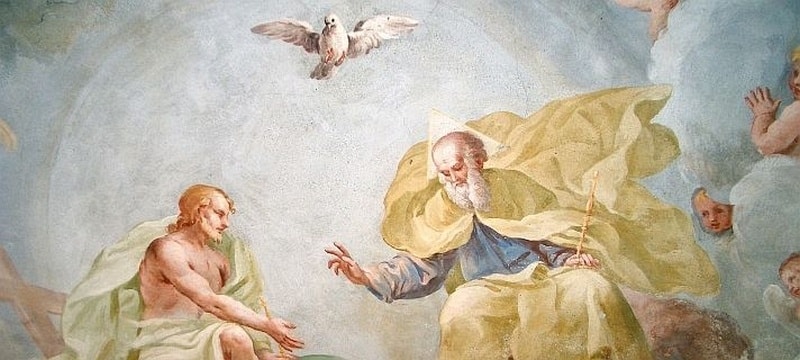
    The God of the Bible, however, is three persons in one being. They’re known as the Trinity. Because Father, Son, and Holy Spirit are not a single, solitary entity, they have loved one another eternally. Their ability to love is not dependent on us.

    Go to the Original Article

  • Just Don’t Be a Jesus Freak

    Can a person be TOO religious? In much of the world, being a Christian doesn’t present any real social problems… but being vocal about your faith is often seen as going too far. How much is too much, and how much is just right?

    As one who grew up in church, I appreciate this article very much. It’s hard to put myself in the shoes of one who first trusted God later in life. I consider my faith to be the rational, logical extension of reality, and sometimes forget how radical the claims of Jesus really are.

    Go to the Original Article

    Bonus

    In case you haven’t heard it, here’s DC Talk’s chart-busting Jesus Freak.

    Listen and read the lyrics on Awesome Christian Music