Apollinarism is an ancient heresy related to the nature of Jesus, and was deemed heretical by the First Council of Constantinople in 381.
Apollinaris was bishop of Laodicea (in Syria), and he died in 382 AD. He believed that Jesus had a human body and soul, but did not have a human mind. Instead, he believed that Jesus’ mind was the divine Logos.
Apollinaris’ position was, in part, in response to the heresy of Arianism, which taught that Jesus was the first created being. While Arius taught that Jesus was a lesser god, Apollinaris sought to protect the idea that Jesus was truly God by claiming that a human body was, more or less, empty of a human mind and filled with the mind of God.
Christians sometimes view the Bible through different lenses… that is, they may see different patterns in Scripture, and believe that those patterns are the best way to understand how God interacts with us.
Dispensationalists tend to view all of Scripture as describing different dispensations… that is, different periods of time in which God deals with humanity in different ways. There are, of course, different views within Dispensationalism. Dispensationalists typically identify seven different periods of time:
Innocence (Genesis 1:1-3:7)
Conscience (Genesis 3:8-8:22)
Human Government (Genesis 9:1-11:32)
Promise (Genesis 12:1-Exodus 19:25)
Law (Exodus 20:1-Acts 2:4)
Grace (Acts 2:4-Revelation 20:3)
The Millennial Kingdom (Revelation 20:4-6).
God’s interactions with us are understood to be divided into these periods. In other words, Dispensationalists believe that God’s expectations for humanity, our responsibilities toward Him, and the way He interacted with us changes over time. Many believe that humans were saved differently in each period as well.
Dispensationalism is often contrasted with Covenant Theology, where God deals differently with humanity based on the various covenants (agreements) made with us. For example, Covenant Theologians consider God’s covenant with the ancient Israelites, given through Moses, to be very different from the new covenant begun by Jesus on the night He was betrayed.
I’m not a Dispensationalist, so I do have a bias in this area. In my opinion, this is not the best way to explain our relationship with God as seen in Scripture. Historical sources suggest that Dispensationalism traces its origin to around 1200, which suggests that the Bible itself does not express the theory directly.
Docetism is an ancient heresy related to Christianity.
Docetism comes from the Greek dokein (to seem). It is the belief that Jesus wasn’t actually human, but only appeared to be human. Docetism was closely related to Gnosticism, which viewed physical matter as inherently evil and spiritual substance as inherently good. This denial of Jesus’ humanity contradicts the plain teaching of the New Testament.
The New Testament
Jesus is both God and man
Docetism
Jesus is either God or man, but not both.
This idea appeared soon after Jesus’ death and resurrection. 1 John 4:1-3 appears to address it specifically:
Dear friends, do not believe every spirit, but test the spirits to see whether they are from God, because many false prophets have gone out into the world. This is how you can recognize the Spirit of God: Every spirit that acknowledges that Jesus Christ has come in the flesh is from God, but every spirit that does not acknowledge Jesus is not from God. This is the spirit of the antichrist, which you have heard is coming and even now is already in the world.
In 2 John 1:7 Paul wrote that many deceivers, who do not acknowledge Jesus Christ as coming in the flesh, have gone out into the world.
Jerome, born in the mid-300s, wrote this in The Dialogue Against the Luciferians: “While the apostles were still surviving, while Christ’s blood was still fresh in Judea, the Lord’s body was asserted to be but a phantasm.”
The question of Jesus having a body appears to have been an issue very early in the church, or John would not have needed to address it. Docetism seems to have been a fairly significant issue for some time. A hundred years after John wrote that, Serapion of Antioch discovered the idea in the false Gospel of Peter. Docetism was condemned at the first council of Nicaea in 325, and is considered heretical by Roman Catholics, Eastern Orthodox, Coptic, Armenian and Ethiopian Orthodox, and all Trinitarian Protestants.
What’s the Big Idea?
Docetism is based in the idea that God has no body, cannot suffer, and certainly cannot die. Docetists, from the Greek doketai (illusionists), believed that Jesus did not have a physical body… that his body was an illusion. Therefore, everything in Scripture that relates to Jesus having a real body must be understood as not being actually true… either false or metaphorical:
Mary’s pregnancy and Jesus’ birth
Eating food
Walking around
Being tired
Weeping
His crucifixion
His death
His resurrection
His ascension to Heaven
… and so on.
Two Kinds of Docetism
The denial that Jesus was fully human results in one of two primary interpretations:
that because God has no body, so Jesus’ body must have been an illusion, or
that Jesus was a regular man, and “the Christ” is a separate divine entity that entered Jesus’ body at His baptism, empowered Him to do miracles, and left His body during the crucifixion… leaving the human Jesus to die.
Every passage in the Bible that expresses Jesus’ humanity must, in the Docetist’s view, be reinterpreted. While it’s obvious that this belief contradicts Scripture, those who hold it do not generally believe the Bible to be the infallible Word of God.
Docetism Today
The idea that Jesus was only divine and not also human persists to this day. Modern Gnostics like Christian Science believe that the only true reality is spiritual, and that anything physical is an illusion. This is why they tend to avoid doctors: to receive physical treatment is to reinforce the illusion. Others who believe Jesus was only divine include some involved in the New Age movement, Theosophy, and certain sects of Hinduism that consider Jesus to have been a divine symbol rather than God in the flesh.
Implications of Docetism
Jesus’ humanity is a core tenet of Christianity. The apostle Paul wrote again and again that he preached about Jesus’ crucifixion, and in 1 Corinthians 15:17 that “if Christ has not been raised, your faith is futile.” If Jesus had no body, He could not be crucified. He could not die. Therefore, He could not be raised from the dead. Docetism, then, contradicts the most foundational element of the Christian faith.
God, in Leviticus 17:11 (and Hebrews 9:22) is quoted as saying that there would be no forgiveness of sins without the shedding of blood. Under the old covenant, the ancient Israelites sacrificed animals to cover their sins. Jesus was the fulfillment of those symbolic acts. His death – the shedding of His blood – didn’t simply cover our sins temporarily, it removed them. Jesus paid the price for everyone’s sins, for all time… as we read in Hebrews 7:27, He sacrificed for their sins once for all when he offered himself.
Docetism erases Jesus’ life, death, resurrection, and sacrifice… all of which are central to a biblical understanding of God, His plan, and our salvation.
The Holy Spirit arrived, as Jesus said He would, on the day of Pentecost (Acts 2).
The word pentecost means “the fiftieth day.” More specifically, Pentecost is a Jewish festival that celebrates the end of harvest. It’s the second of three major Jewish festivals:
Passover (Pesach)
Pentecost (Shavuot)
Tabernacles (Sukkot)
Pentecost is a Greek word. In Hebrew, Shavuot is “the festival of weeks.” Celebrated seven weeks and one day after Passover (the feast of unleavened bread), we find instructions for Pentecost in Leviticus 23:15-21.
The old English word Whitsunday was sometimes used for Pentecost, probably reflecting the white robes worn by those baptized being baptized on that day.
The word Israel appears in the Bible over 2,400 times, and it’s used in a number of different ways. The word itself is difficult to precisely define. The el part of the word refers to God, as in Elohim. The rest of the word comes from the Hebrew sara, usually defined as to wrestle, or compete.
Jacob
In Genesis 32 we read about Jacob, and how he wrestled with a man throughout the night. In verse 28 the man said, “Your name will no longer be Jacob, but Israel, because you have struggled with God and with humans and have overcome.”
Children
Jacob, now Israel, had 12 sons. Each son had a family, and – as was common then – Jacob’s descendants were known as the ‘children of Israel.’
Nation
Later, Jacob’s descendants grew in number and chose a king, and became known as the ‘nation of Israel.’ After Saul, the first king, came Ish-Bosheth, David, and Solomon. After Solomon’s death, the kingdom of Israel split into two kingdoms for around 350 years, from 928 BC to 587 BC: Israel in the north and Judah in the south. Today, of course, Israel is again a sovereign nation.
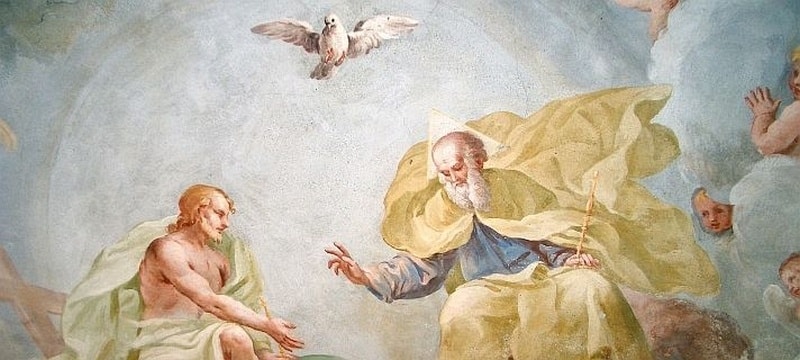
The word trinity comes from the Latin trinitas, which means “triad.” The doctrine of the Trinity is a primary belief of Christians, in which God is understood to be one God who is three persons.
The word itself isn’t in the Bible, as it was coined many years after the Bible was written. The doctrine is derived from numerous passages in the Bible that indicate that while there is only one God, He is known as Father, Son, and Holy Spirit. Each is an individual person, and all three are fully God… but are not each other.
We see this most clearly in the New Testament. Jesus is understood to be God, yet the Son of the Father. Jesus was sent by the Father, prayed to the Father, obeyed the Father, and returned to the Father. While on Earth, Jesus taught that He had to go away so the Father could send the Holy Spirit.
The typical meaning of faith is “trust.” That is, we have faith in someone or something when we have reasons to trust them. I have faith that my chair will continue to hold me up as it has before. I have faith that my wife will continue to be the loving, generous person I’ve known for decades. I have plenty of reasons to trust them both… that is, I have evidence that they’re trustworthy.
In Hebrews 11:1 we read a description of faith: it is the substance of things hoped for and the evidence of things unseen. That word “evidence” is the Greek elegchos, which means “a proof, that by which a thing is proved or tested.” In other words, things that can’t be seen can be tested by looking at the evidence.
In the Bible, faith is generally presented with evidence. In Exodus 4, God turned Moses’ staff into snake so that the Israelites would believe that God had actually appeared to him. In Mark 2, Jesus healed a paralytic so that those watching would know that He had the authority to forgive sins. In Luke 7, John the Baptist asked whether Jesus was actually the Messiah. Rather than chastising him for a lack of faith, Jesus pointed to the evidence:
The blind receive sight, the lame walk, those who have leprosy are cleansed, the deaf hear, the dead are raised, and the good news is proclaimed to the poor.
We read in Hebrews 11:6 that “without faith it’s impossible to please God.” However, the Bible does not teach any kind of “blind faith.” We are given evidence, again and again, that God is who He says He is. Faith in God is the result of examining the evidence. We can’t please God without faith, so we must examine the evidence in order to please Him.
This website, and many others, are dedicated to presenting the evidence that shows God to be trustworthy. If you want help finding and looking at the evidence, let me know. That’s why I’m here.
“Pantheism,” coined in 1697, comes from Greek. pan means “everything” and theos means “god.”
Pantheism is the belief that everything is divine… that everything that exists is god, or part of god. This belief is held by many, but not all, Hindus and Buddhists. Elements of pantheism also exist in other religions, including Sikhism, Taoism, Confucianism, and more.
Pantheism, of course, is not a belief compatible with monotheistic religions like Judaism, Christianity, and Islam. In these religions, a strong distinction is made between creator and creation. The creator is divine, but the creation is only a reflection of divinity, and not itself divine.
Certain cults of Christianity blur this distinction. Many Word of Faith teachers, for example, suggest that we are not simply made in God’s image. We are, they claim, essentially copies or duplicates of God… and, as a result, they teach that we share the ability to create in exactly the ways that God did. Obviously, this belief is unbiblical and cannot be reconciled with Christianity.
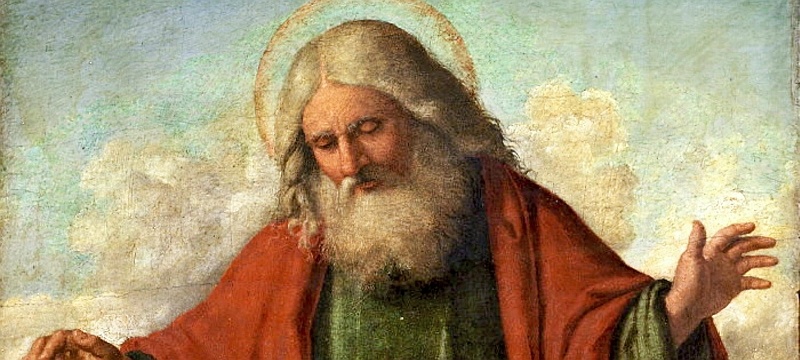
Writing a definition for God is inherently difficult, and problematic. There are two main problems with each attempt to define God. The first problem is that we only know what He has revealed to us, so any definition will necessarily be incomplete. The second problem is that while we can use words to describe God, none of those words can help us actually understand Him. Still, that doesn’t mean we shouldn’t try.
Please don’t bother complaining that I’ve missed something or that my descriptions are insufficient. This is undoubtedly true not only of my descriptions of God, but of any. Your sincere suggestions and honest conversation are always welcome.
Anselm of Canterbury (1033–1109) famously wrote that God is “that than which nothing greater is conceivable.” If you can think of a way to make God better, you’ve improved your own definition of God. In that sense, God is ‘maximally perfect.’ That is, there can be no improvements to God Himself… He is the ultimate being. He’s not only intelligent, His intelligence could not be greater. He’s not only loving, His love could not be better. He’s not only powerful, He couldn’t possibly become more powerful. With every description of God’s attributes comes the idea that none of them could be improved.
God describes Himself in the Bible, so we have some information about His nature, His character, and so on. God’s revelation of Himself changed over time. Abraham’s understanding of God was not as complete as the apostle Peter’s understanding of God, for example. This is because God chose to continue revealing more about Himself throughout history. Here’s a very incomplete and simplified list of some of God’s attributes:
God is Creator: The first verse of the Bible describes God as the creator of ‘the heavens and the earth.’ That’s a way of saying “everything.”
God is Eternal: He has always existed and will always exist.
God is Everywhere: He is omnipresent… He is not limited by time or space, and His attention is not limited.
God is Gracious: He is kind, forgiving, and patient with us in spite of our selfishness and even our rebellion.
God is Holy: The simple, technical definition of holy is ‘to be set apart.’ God is not like His creation, but is both distinct from it and unlike it.
God is Immaterial: He is spirit, not flesh. The Father and Holy Spirit have no body, and the Son had no body until He became Jesus of Nazareth. The Son, being both God and man, still has a body.
God is Intelligent: He is omniscient… He knows all things, including the future and all possible futures.
God is Just: Many Bible verses express this idea, saying that God will do what is right, that God plays no favorites, and so on. God’s justice is also expressed in His commands for us to be just as well.
God is Love: He does not simply act in loving ways, but is love itself. The Father, Son, and Spirit have loved one another eternally, as this is God’s nature.
God is Merciful: He seeks our good, so He does not punish us as we deserve.
God is Personal: He is not an impersonal force, nor is He the universe itself. Instead, God displays attributes of personhood by making decisions, taking action, and interacting with His creation.
God is Powerful: He is omnipotent… there is no limit to God’s abilities. He is able to do whatever He decides to do.
God is Righteous: He will always do what is right.
God is Self-Sufficient: His existence requires nothing outside Himself.
God is Sovereign: There is nothing outside His control, and He is not subject to anyone but Himself.
God is Unchanging: This does not mean that God always does things the same way, but that His character never changes.
God is Wise: His knowledge and foresight are unlimited, and His decisions are always perfect.
In addition to these traditional attributes, it might be useful to make another list:
God is not human. He created humans, and we are like Him in some ways, but He is not human.
God is not Jewish, nor is He a white European.
God is not a man. God is not a woman, nor is He both.
God is not mean. God is love. Loving parents discipline their children when they need it, and children often dislike discipline, but our immature response to God’s discipline does not make Him mean.
God is not a vending machine, which gives you what you want when you provide the right input. He is a loving Father, who wants to give us good things, but that does not mean that we will always get our way. Sometimes what we want will harm us, and God denies us what we want. In addition, He calls on Christians to sacrifice for the benefit of others, so there are times when we don’t get what we want so others can get what they need.