Category: Ancient Documents

This collection of ancient documents is specifically religious in nature. Most are from early Christian history, while others are significant texts from other religions, including those from cults of Christianity.

  • The Canons of the Council of Nicea

    The Canons of the Council of Nicea

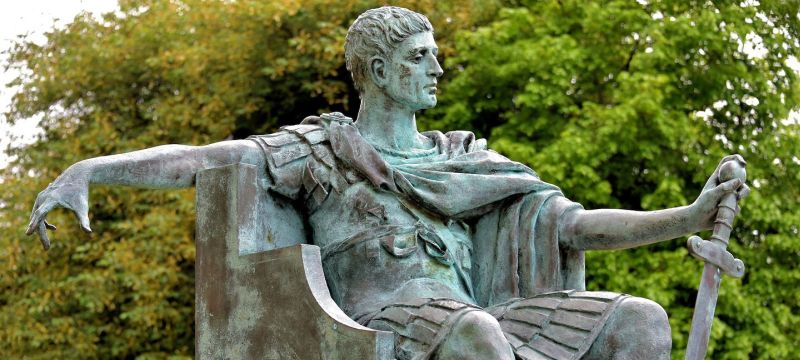
    The Council of Nicea (Nicaea) was held in 325 AD in what is now Iznik, Turkey. Roman emperor Constantine invited all Christian bishops to convene, at his expense, to settle some theological conflicts. There are a lot of urban legends about what happened. Read more in What Really Happened at the Council of Nicea?

    What is a canon?

    Canon comes from the Greek word KANON, which originally referred to a straight measuring rod or ruler. This idea was applied to mean “a standard,” or “a rule.” The canons of the Council of Nicea are the standards, or guidelines, established as a result of the discussions held there.

    Canon 1

    If any one in sickness has been subjected by physicians to a surgical operation, or if he has been castrated by barbarians, let him remain among the clergy; but, if any one in sound health has castrated himself, it behooves that such an one, if [already] enrolled among the clergy, should cease [from his ministry], and that from henceforth no such person should be promoted. But, as it is evident that this is said of those who willfully do the thing and presume to castrate themselves, so if any have been made eunuchs by barbarians, or by their masters, and should otherwise be found worthy, such men the Canon admits to the clergy.

    Canon 2   

    Forasmuch as, either from necessity, or through the urgency of individuals, many things have been done contrary to the Ecclesiastical canon, so that men just converted from heathenism to the faith, and who have been instructed but a little while, are straightway brought to the spiritual laver, and as soon as they have been baptized, are advanced to the episcopate or the presbyterate, it has seemed right to us that for the time to come no such thing shall be done. For to the catechumen himself there is need of time and of a longer trial after baptism. For the apostolical saying is clear, “Not a novice; lest, being lifted up with pride, he fall into condemnation and the snare of the devil.” But if, as time goes on, any sensual sin should be found out about the person, and he should be convicted by two or three witnesses, let him cease from the clerical office. And whoso shall transgress these [enactments] will imperil his own clerical position, as a person who presumes to disobey the great Synod.

    Canon 3   

    The great Synod has stringently forbidden any bishop, presbyter, deacon, or any one of the clergy whatever, to have a subintroducta* dwelling with him, except only a mother, or sister, or aunt, or such persons only as are beyond all suspicion.

    Canon 4       

    It is by all means proper that a bishop should be appointed by all the bishops in the province; but should this be difficult, either on account of urgent necessity or because of distance, three at least should meet together, and the suffrages of the absent [bishops] also being given and communicated in writing, then the ordination should take place. But in every province the ratification of what is done should be left to the Metropolitan.

    Canon 5                                                

    Concerning those, whether of the clergy or of the laity, who have been excommunicated in the several provinces, let the provision of the canon be observed by the bishops which provides that persons cast out by some be not readmitted by others. Nevertheless, inquiry should be made whether they have been excommunicated through captiousness, or contentiousness, or any such like ungracious disposition in the bishop. And, that this matter may have due investigation, it is decreed that in every province synods shall be held twice a year, in order that when all the bishops of the province are assembled together, such questions may by them be thoroughly examined, that so those who have confessedly offended against their bishop, may be seen by all to be for just cause excommunicated, until it shall seem fit to a general meeting of the bishops to pronounce a milder sentence upon them. And let these synods be held, the one before Lent, (that the pure Gift may be offered to God after all bitterness has been put away), and let the second be held about autumn.

    Canon 6                                      

    Let the ancient customs in Egypt, Libya and Pentapolis prevail, that the Bishop of Alexandria have jurisdiction in all these, since the like is customary for the Bishop of Rome also. Likewise in Antioch and the other provinces, let the Churches retain their privileges. And this is to be universally understood, that if any one be made bishop without the consent of the Metropolitan, the great Synod has declared that such a man ought not to be a bishop. If, however, two or three bishops shall from natural love of contradiction, oppose the common suffrage of the rest, it being reasonable and in accordance with the ecclesiastical law, then let the choice of the majority prevail.

    Canon 7                                                 

    Since custom and ancient tradition have prevailed that the Bishop of Aelia [i.e., Jerusalem] should be honored, let him, saving its due dignity to the Metropolis, have the next place of honour.

    Canon 8                                               

    Concerning those who call themselves Cathari, if they come over to the Catholic and Apostolic Church, the great and holy Synod decrees that they who are ordained shall continue as they are in the clergy. But it is before all things necessary that they should profess in writing that they will observe and follow the dogmas of the Catholic and Apostolic Church; in particular that they will communicate with persons who have been twice married, and with those who having lapsed in persecution have had a period [of penance] laid upon them, and a time [of restoration] fixed so that in all things they will follow the dogmas of the Catholic Church. Wheresoever, then, whether in villages or in cities, all of the ordained are found to be of these only, let them remain in the clergy, and in the same rank in which they are found. But if they come over where there is a bishop or presbyter of the Catholic Church, it is manifest that the Bishop of the Church must have the bishop’s dignity; and he who was named bishop by those who are called Cathari shall have the rank of presbyter, unless it shall seem fit to the Bishop to admit him to partake in the honour of the title. Or, if this should not be satisfactory, then shall the bishop provide for him a place as Chorepiscopus, or presbyter, in order that he may be evidently seen to be of the clergy, and that there may not be two bishops in the city.

    Canon 9

    If any presbyters have been advanced without examination, or if upon examination they have made confession of crime, and men acting in violation of the canon have laid hands upon them, notwithstanding their confession, such the canon does not admit; for the Catholic Church requires that [only] which is blameless.

    Canon 10

    If any who have lapsed have been ordained through the ignorance, or even with the previous knowledge of the ordainers, this shall not prejudice the canon of the Church; for when they are discovered they shall be deposed.

    Canon 11

    Concerning those who have fallen without compulsion, without the spoiling of their property, without danger or the like, as happened during the tyranny of Licinius, the Synod declares that, though they have deserved no clemency, they shall be dealt with mercifully. As many as were communicants, if they heartily repent, shall pass three years among the hearers; for seven years they shall be prostrators; and for two years they shall communicate with the people in prayers, but without oblation.

    Canon 12      

    As many as were called by grace, and displayed the first zeal, having cast aside their military girdles, but afterwards returned, like dogs, to their own vomit, (so that some spent money and by means of gifts regained their military stations); let these, after they have passed the space of three years as hearers, be for ten years prostrators. But in all these cases it is necessary to examine well into their purpose and what their repentance appears to be like. For as many as give evidence of their conversions by deeds, and not pretense, with fear, and tears, and perseverance, and good works, when they have fulfilled their appointed time as hearers, may properly communicate in prayers; and after that the bishop may determine yet more favorably concerning them. But those who take [the matter] with indifference, and who think the form of [not] entering the Church is sufficient for their conversion, must fulfil the whole time.

    Canon 13    

    Concerning the departing, the ancient canonical law is still to be maintained, to wit, that, if any man be at the point of death, he must not be deprived of the last and most indispensable Viaticum. But, if any one should be restored to health again who has received the communion when his life was despaired of, let him remain among those who communicate in prayers only. But in general, and in the case of any dying person whatsoever asking to receive the Eucharist, let the Bishop, after examination made, give it him.

    Canon 14      

    Concerning catechumens who have lapsed, the holy and great Synod has decreed that, after they have passed three years only as hearers, they shall pray with the catechumens.

    Canon 15                                               

    On account of the great disturbance and discords that occur, it is decreed that the custom prevailing in certain places contrary to the Canon, must wholly be done away; so that neither bishop, presbyter, nor deacon shall pass from city to city. And if any one, after this decree of the holy and great Synod, shall attempt any such thing, or continue in any such course, his proceedings shall be utterly void, and he shall be restored to the Church for which he was ordained bishop or presbyter.

    Canon 16                                                

    Neither presbyters, nor deacons, nor any others enrolled among the clergy, who, not having the fear of God before their eyes, nor regarding the ecclesiastical Canon, shall recklessly remove from their own church, ought by any means to be received by another church; but every constraint should be applied to restore them to their own parishes; and, if they will not go, they must be excommunicated. And if anyone shall dare surreptitiously to carry off and in his own Church ordain a man belonging to another, without the consent of his own proper bishop, from whom although he was enrolled in the clergy list he has seceded, let the ordination be void.

    Canon 17                                           

    Forasmuch as many enrolled among the Clergy, following covetousness and lust of gain, have forgotten the divine Scripture, which says, “He hath not given his money upon usury,” and in lending money ask the hundredth of the sum [as monthly interest], the holy and great Synod thinks it just that if after this decree any one be found to receive usury, whether he accomplish it by secret transaction or otherwise, as by demanding the whole and one half, or by using any other contrivance whatever for filthy lucre’s sake, he shall be deposed from the clergy and his name stricken from the list.

    Canon 18                                                 

    It has come to the knowledge of the holy and great Synod that, in some districts and cities, the deacons administer the Eucharist to the presbyters, whereas neither canon nor custom permits that they who have no right to offer should give the Body of Christ to them that do offer. And this also has been made known, that certain deacons now touch the Eucharist even before the bishops. Let all such practices be utterly done away, and let the deacons remain within their own bounds, knowing that they are the ministers of the bishop and the inferiors of the presbyters. Let them receive the Eucharist according to their order, after the presbyters, and let either the bishop or the presbyter administer to them. Furthermore, let not the deacons sit among the presbyters, for that is contrary to canon and order. And if, after this decree, any one shall refuse to obey, let him be deposed from the diaconate.

    Canon 19

    Concerning the Paulianists who have flown for refuge to the Catholic Church, it has been decreed that they must by all means be rebaptized; and if any of them who in past time have been numbered among their clergy should be found blameless and without reproach, let them be rebaptized and ordained by the Bishop of the Catholic Church; but if the examination should discover them to be unfit, they ought to be deposed. Likewise in the case of their deaconesses, and generally in the case of those who have been enrolled among their clergy, let the same form be observed. And we mean by deaconesses such as have assumed the habit, but who, since they have no imposition of hands, are to be numbered only among the laity.

    Canon 20

    Forasmuch as there are certain persons who kneel on the Lord’s Day and in the days of Pentecost, therefore, to the intent that all things may be uniformly observed everywhere (in every parish), it seems good to the holy Synod that prayer be made to God standing.

    * a subintroducta was a woman who lived with a celibate man. The idea was that the man and woman would be in a spiritual, but not physical, relationship. As you can imagine, this was often a recipe for disaster, and was condemned in all circumstances unless the woman was a close relative like a mother or a sister.

  • What is the Edict of Milan?

    What is the Edict of Milan?

    The Edict of Milan is a proclamation by Roman emperor Constantine I, given in 313 AD, that ensured the right of all Roman citizens to worship freely. It also instructed that any property that had been confiscated from Christians should be returned.

    We have no copies of the original edict. What we have are quotations from Lactantius, a Christian scholar and advisor to Constantine. I present this to you not because it directly affects any Christians today, but because so many readers have been led to believe that Constantine, in the Edict of Milan, officially changed the sabbath from Saturday to Sunday. This is simply wrong, as simply reading the text will show. Sabbath-keeping is not something Christians need to be concerned with.

    When I, Constantine Augustus, as well as I Licinius Augustus fortunately met near Mediolanum (Milan), and were considering everything that pertained to the public welfare and security, we thought -, among other things which we saw would be for the good of many, those regulations pertaining to the reverence of the Divinity ought certainly to be made first, so that we might grant to the Christians and others full authority to observe that religion which each preferred; whence any Divinity whatsoever in the seat of the heavens may be propitious and kindly disposed to us and all who are placed under our rule And thus by this wholesome counsel and most upright provision we thought to arrange that no one whatsoever should be denied the opportunity to give his heart to the observance of the Christian religion, of that religion which he should think best for himself, so that the Supreme Deity, to whose worship we freely yield our hearts) may show in all things His usual favor and benevolence. Therefore, your Worship should know that it has pleased us to remove all conditions whatsoever, which were in the rescripts formerly given to you officially, concerning the Christians and now any one of these who wishes to observe Christian religion may do so freely and openly, without molestation. We thought it fit to commend these things most fully to your care that you may know that we have given to those Christians free and unrestricted opportunity of religious worship. When you see that this has been granted to them by us, your Worship will know that we have also conceded to other religions the right of open and free observance of their worship for the sake of the peace of our times, that each one may have the free opportunity to worship as he pleases ; this regulation is made we that we may not seem to detract from any dignity or any religion.

    Moreover, in the case of the Christians especially we esteemed it best to order that if it happens anyone heretofore has bought from our treasury from anyone whatsoever, those places where they were previously accustomed to assemble, concerning which a certain decree had been made and a letter sent to you officially, the same shall be restored to the Christians without payment or any claim of recompense and without any kind of fraud or deception, Those, moreover, who have obtained the same by gift, are likewise to return them at once to the Christians. Besides, both those who have purchased and those who have secured them by gift, are to appeal to the vicar if they seek any recompense from our bounty, that they may be cared for through our clemency,. All this property ought to be delivered at once to the community of the Christians through your intercession, and without delay. And since these Christians are known to have possessed not only those places in which they were accustomed to assemble, but also other property, namely the churches, belonging to them as a corporation and not as individuals, all these things which we have included under the above law, you will order to be restored, without any hesitation or controversy at all, to these Christians, that is to say to the corporations and their conventicles: providing, of course, that the above arrangements be followed so that those who return the same without payment, as we have said, may hope for an indemnity from our bounty. In all these circumstances you ought to tender your most efficacious intervention to the community of the Christians, that our command may be carried into effect as quickly as possible, whereby, moreover, through our clemency, public order may be secured. Let this be done so that, as we have said above, Divine favor towards us, which, under the most important circumstances we have already experienced, may, for all time, preserve and prosper our successes together with the good of the state. Moreover, in order that the statement of this decree of our good will may come to the notice of all, this rescript, published by your decree, shall be announced everywhere and brought to the knowledge of all, so that the decree of this, our benevolence, cannot be concealed.

    from Lactantius, De Mort. Pers., ch. 48. opera, ed. 0. F. Fritzsche, II, p 288 sq. (Bibl Patr. Ecc. Lat. XI).

  • The Epistle of Adrian

    The Epistle of Adrian

    Adrian or, more famously, Hadrian was the emperor of Rome from 117 to 138. He ruled after Trajan and was succeeded by Antoninus Pius. He’s also known today for building “Hadrian’s Wall,” which marked the northern boundary of Roman Britannia. This letter, apparently written to Roman senator Gaius Minicius Fundanus, expresses Hadrian’s view on legal proceedings involving Christians.

    We know of the letter only because it was preserved by Justin Martyr. In it Hadrian tells the senator to personally preside over complaints about Christians in order to maintain justice, and to punish severely those who would bring false accusations. This wasn’t to defend Christians, but to preserve peace and the rule of law.

    EPISTLE OF ADRIAN IN BEHALF OF THE CHRISTIANS

    I have received the letter addressed to me by your predecessor Serenius Granianus, a most illustrious man; and this communication I am unwilling to pass over in silence, lest innocent persons be disturbed, and occasion be given to the informers for practising villany. Accordingly, if the inhabitants of your province will so far sustain this petition of theirs as to accuse the Christians in some court of law, I do not prohibit them from doing so. But I will not suffer them to make use of mere entreaties and outcries. For it is far more just, if any one desires to make an accusation, that you give judgment upon it. If, therefore, any one makes the accusation, and furnishes proof that the said men do anything contrary to the laws, you shall adjudge punishments in proportion to the offences. And this, by Hercules; you shall give special heed to, that if any man shall, through mere calumny, bring an accusation against any of these persons, you shall award to him more severe punishments in proportion to his wickedness.

  • The Epistle to Diognetus

    The Epistle to Diognetus

    This epistle, or letter – also known as The Epistle of Mathetes to Diognetus – was written by an unknown author during the second or third century. The author calls himself “Mathetes,” which is simply the Greek word for disciple. The recipient, Diognetus, is also unknown but apparently a prominent person due to the use of “His excellency.” The letter is an apologetic work, defending the doctrines of Christianity.

    The author writes to describe differences between Christians and non-Christians, and to contrast Judaism with Christianity. Included in the letter is a good description of what it means to follow Jesus. It’s considered by some to be the first apologetic writing after the New Testament.

    CHAP. I.–OCCASION OF THE EPISTLE.

    SINCE I see thee, most excellent Diognetus, exceedingly desirous to learn the mode of worshipping God prevalent among the Christians, and inquiring very carefully and earnestly concerning them, what God they trust in, and what form of religion they observe, so as all to look down upon the world itself, and despise death, while they neither esteem those to be gods that are reckoned such by the Greeks, nor hold to the superstition of the Jews; and what is the affection which they cherish among themselves; and why, in fine, this new kind or practice [of piety] has only now entered into the world, and not long ago; I cordially welcome this thy desire, and I implore God, who enables us both to speak and to hear, to grant to me so to speak, that, above all, I may hear you have been edified, and to you so to hear, that I who speak may have no cause of regret for having done so.

    CHAP. II.–THE VANITY OF IDOLS.

    Come, then, after you have freed yourself from all prejudices possessing your mind, and laid aside what you have been accustomed to, as something apt to deceive you, and being made, as if from the beginning, a new man, inasmuch as, according to your own confession, you are to be the hearer of a new [system of] doctrine; come and contemplate, not with your eyes only, but with your understanding, the substance and the form of those whom ye declare and deem to be gods. Is not one of them a stone similar to that on which we tread? Is not a second brass, in no way superior to those vessels which are constructed for our ordinary use? Is not a third wood, and that already rotten? Is not a fourth silver, which needs a man to watch it, lest it be stolen? Is not a fifth iron, consumed by rust? Is not a sixth earthenware, in no degree more valuable than that which is formed for the humblest purposes? Are not all these of corruptible matter? Are they not fabricated by means of iron and fire? Did not the sculptor fashion one of them, the brazier a second, the silversmith a third, and the potter a fourth? Was not every one of them, before they were formed by the arts of these [workmen] into the shape of these [gods], each in its own way subject to change? Would not those things which are now vessels, formed of the same materials, become like to such, if they met with the same artificers? Might not these, which are now worshipped by you, again be made by men vessels similar to others? Are they not all deaf? Are they not blind? Are they not without life? Are they not destitute of feeling? Are they not incapable of motion? Are they not all liable to rot? Are they not all corruptible? These things ye call gods; these ye serve; these ye worship; and ye become altogether like to them. For this reason ye hate the Christians, because they do not deem these to be gods. But do not ye yourselves, who now think and suppose [such to be gods], much more cast contempt upon them than they [the Christians do]? Do ye not much more mock and insult them, when ye worship those that are made of stone and earthenware, without appointing any persons to guard them; but those made of silver and gold ye shut up by night, and appoint watchers to look after them by day, lest they be stolen? And by those gifts which ye mean to present to them, do ye not, if they are possessed of sense, rather punish [than honour] them? But if, on the other hand, they are destitute of sense, ye convict them of this fact, while ye worship them with blood and the smoke of sacrifices. Let any one of you suffer such indignities! Let any one of you endure to have such things done to himself! But not a single human being will, unless compelled to it, endure such treatment, since he is endowed with sense and reason. A stone, however, readily bears it, seeing it is insensible. Certainly you do not show [by your conduct] that he [your God] is possessed of sense. And as to the fact that Christians are not accustomed to serve such gods, I might easily find many other things to say; but if even what has been said does not seem to any one sufficient, I deem it idle to say anything further. CHAP. III.–SUPERSTITIONS OF THE JEWS. And next, I imagine that you are most desirous of hearing something on this point, that the Christians do not observe the same forms of divine worship as do the Jews. The Jews, then, if they abstain from the kind of service above described, and deem it proper to worship one God as being Lord of all, [are right]; but if they offer Him worship in the way which we have described, they greatly err. For while the Gentiles, by offering such things to those that are destitute of sense and hearing, furnish an example of madness; they, on the other hand by thinking to offer these things to God as if He needed them, might justly reckon it rather an act of folly than of divine worship. For He that made heaven and earth, and all that is therein, and gives to us all the things of which we stand in need, certainly requires none of those things which He Himself bestows on such as think of furnishing them to Him. But those who imagine that, by means of blood, and the smoke of sacrifices and burnt-offerings, they offer sacrifices [acceptable] to Him, and that by such honours they show Him respect,–these, by supposing that they can give anything to Him who stands in need of nothing, appear to me in no respect to differ from those who studiously confer the same honour on things destitute of sense, and which therefore are unable to enjoy such honours.

    CHAP. IV.–THE OTHER OBSERVANCES OF THE JEWS.

    But as to their scrupulosity concerning meats, and their superstition as respects the Sabbaths, and their boasting about circumcision, and their fancies about fasting and the new moons, which are utterly ridiculous and unworthy of notice,–I do not think that you require to learn anything from me. For, to accept some of those things which have been formed by God for the use of men as properly formed, and to reject others as useless and redundant,–how can this be lawful? And to speak falsely of God, as if He forbade us to do what is good on the Sabbath-days,–how is not this impious? And to glory in the circumcision of the flesh as a proof of election, and as if, on account of it, they were specially beloved by God,–how is it not a subject of ridicule? And as to their observing months and days, as if waiting upon the stars and the moon, and their distributing, according to their own tendencies, the appointments of God, and the vicissitudes of the seasons, some for festivities, and others for mourning,–who would deem this a part of divine worship, and not much rather a manifestation of folly? I suppose, then, you are sufficiently convinced that the ChriStians properly abstain from the vanity and error common [to both Jews and Gentiles], and from the busy-body spirit and vain boasting of the Jews; but you must not hope to learn the mystery of their peculiar mode of worshipping God from any mortal.

    CHAP. V.–THE MANNERS OF THE CHRISTIANS.

    For the Christians are distinguished from other men neither by country, nor language, nor the customs which they observe. For they neither inhabit cities of their own, nor employ a peculiar form of speech, nor lead a life which is marked out by any singularity. The course of conduct which they follow has not been devised by any speculation or deliberation of inquisitive men; nor do they, like some, proclaim themselves the advocates of any merely human doctrines. But, inhabiting Greek as well as barbarian cities, according as the lot of each of them has determined, and following the customs of the natives in respect to clothing, food, and the rest of their ordinary conduct, they display to us their wonderful and confessedly striking method of life. They dwell in their own countries, but simply as sojourners. As citizens, they share in all things with others, and yet endure all things as if foreigners. Every foreign land is to them as their native country, and every land of their birth as a land of strangers. They marry, as do all [others]; they beget children; but they do not destroy their offspring. They have a common table, but not a common bed. They are in the flesh, but they do not live after the flesh. They pass their days on earth, but they are citizens of heaven. They obey the prescribed laws, and at the same time surpass the laws by their lives. They love all men, and are persecuted by all. They are unknown and condemned; they are put to death, and restored to life. They are poor, yet make many rich; they are in lack of all things, and yet abound in all; they are dishonoured, and yet in their very dishonour are glorified. They are evil spoken of, and yet are justified; they are reviled, and bless; they are insulted, and repay the insult with honour; they do good, yet are punished as evil-doers. When punished, they rejoice as if quickened into life; they are assailed by the Jews as foreigners, and are persecuted by the Greeks; yet those who hate them are unable to assign any reason for their hatred.

    CHAP. VI.–THE RELATION OF CHRISTIANS TO THE WORLD.

    To sum up all in one word–what the soul is in the body, that are Christians in the world. The soul is dispersed through all the members of the body, and Christians are scattered through all the cities of the world. The soul dwells in the body, yet is not of the body; and Christians dwell in the world, yet are not of the world. The invisible soul is guarded by the visible body, and Christians are known indeed to be in the world, but their godliness remains invisible. The flesh hates the soul, and wars against it, though itself suffering no injury, because it is prevented from enjoying pleasures; the world also hates the Christians, though in nowise injured, because they abjure pleasures. The soul loves the flesh that hates it, and [loves also] the members; Christians likewise love those that hate them. The soul is imprisoned in the body, yet preserves that very body; and Christians are confined in the world as in a prison, and yet they are the preservers of the world. The immortal soul dwells in a mortal tabernacle; and Christians dwell as sojourners in corruptible [bodies], looking for an incorruptible dwelling in the heavens. The soul, when but ill-provided with food and drink, becomes better; in like manner, the Christians, though subjected day by day to punishment, increase the more in number. God has assigned them this illustrious position, which it were unlawful for them to forsake.

    CHAP. VII.–THE MANIFESTATION OF CHRIST.

    For, as I said, this was no mere earthly invention which was delivered to them, nor is it a mere human system of opinion, which they judge it right to preserve so carefully, nor has a dispensation of mere human mysteries been committed to them, but truly God Himself, who is almighty, the Creator of all things, and invisible, has sent from heaven, and placed among men, [Him who is] the truth, and the holy and incomprehensible Word, and has firmly established Him in their hearts. He did not, as one might have imagined, send to men any servant, or angel, or ruler, or any one of those who bear sway over earthly things, or one of those to whom the government of things in the heavens has been entrusted, but the very Creator and Fashioner of all things–by whom He made the heavens–by whom he enclosed the sea within its proper bounds–whose ordinances all the stars faithfully observe–from whom the sun has received the measure of his daily course to be observed–whom the moon obeys, being commanded to shine in the night, and whom the stars also obey, following the moon in her course; by whom all things have been arranged, and placed within their proper limits, and to whom all are subject–the heavens and the things that are therein, the earth and the things that are therein, the sea and the things that are therein–fire, air, and the abyss–the things which are in the heights, the things which are in the depths, and the things which lie between. This [messenger] He sent to them. Was it then, as one might conceive, for the purpose of exercising tyranny, or of inspiring fear and terror? By no means, but under the influence of clemency and meekness. As a king sends his son, who is also a king, so sent He Him; as God[17] He sent Him; as to men He sent Him; as a Saviour He sent Him, and as seeking to persuade, not to compel us; for violence has no place in the character of God. As calling us He sent Him, not as vengefully pursuing us; as loving us He sent Him, not as judging us. For He will yet send Him to judge us, and who shall endure His appearing?[18] … Do you not see them exposed to wild beasts, that they may be persuaded to deny the Lord, and yet not overcome? Do you not see that the more of them are punished, the greater becomes the number of the rest? This does not seem to be the work of man: this is the power of God; these are the evidences of His manifestation.

    CHAP. VIII.–THE MISERABLE STATE OF MEN BEFORE THE COMING OF THE WORD.

    For, who of men at all understood before His coming what God is? Do you accept of the vain and silly doctrines of those who are deemed trustworthy philosophers? of whom some said that fire was God, calling that God to which they themselves were by and by to come; and some water; and others some other of the elements formed by God. But if any one of these theories be worthy of approbation, every one of the rest of created things might also be declared to be God. But such declarations are simply the startling and erroneous utterances of deceivers; and no man has either seen Him, or made Him known, but He has revealed Himself. And He has manifested Himself through faith, to which alone it is given to behold God. For God, the Lord and Fashioner of all things, who made all things, and assigned them their several positions, proved Himself not merely a friend of mankind, but also long-suffering [in His dealings with them.] Yea, He was always of such a character, and still is, and will ever be, kind and good, and free from wrath, and true, and the only one who is [absolutely] good; and He formed in His mind a great and unspeakable conception, which He communicated to His Son alone. As long, then, as He held and preserved His own wise counsel in concealment, He appeared to neglect us, and to have no care over us. But after He revealed and laid open, through His beloved Son, the things which had been prepared from the beginning, He conferred every blessing all at once upon us, so that we should both share in His benefits, and see and be active [in His service]. Who of us would ever have expected these things? He was aware, then, of all things in His own mind, along with His Son, according to the relation subsisting between them.

    CHAP. IX.–WHY THE SON WAS SENT SO LATE.

    As long then as the former time endured, He permitted us to be borne along by unruly impulses, being drawn away by the desire of pleasure and various lusts. This was not that He at all delighted in our sins, but that He simply endured them; nor that He approved the time of working iniquity which then was, but that He sought to form a mind conscious of righteousness, so that being convinced in that time of our unworthiness of attaining life through our own works, it should now, through the kindness of God, be vouchsafed to us; and having made it manifest that in ourselves we were unable to enter into the kingdom of God, we might through the power of God be made able. But when our wickedness had reached its height, and it had been clearly shown that its reward, punishment and death, was impending over us; and when the time had come which God had before appointed for manifesting His own kindness and power, how the one love of God, through exceeding regard for men, did not regard us with hatred, nor thrust us away, nor remember our iniquity against us, but showed great long-suffering, and bore with us, He Himself took on Him the burden of our iniquities, He gave His own Son as a ransom for us, the holy One for transgressors, the blameless One for the wicked, the righteous One for the unrighteous, the incorruptible One for the corruptible, the immortal One for them that are mortal. For what other thing was capable of covering our sins than His righteousness? By what other one was it possible that we, the wicked and ungodly, could be justified, than by the only Son of God? O sweet exchange! O unsearchable operation! O benefits surpassing all expectation! that the wickedness of many should be hid in a single righteous One, and that the righteousness of One should justify many transgressors! Having therefore convinced us in the former time that our nature was unable to attain to life, and having now revealed the Saviour who is able to save even those things which it was [formerly] impossible to save, by both these facts He desired to lead us to trust in His kindness, to esteem Him our Nourisher, Father, Teacher, Counsellor, Healer, our Wisdom, Light, Honour, Glory, Power, and Life, so that we should not be anxious concerning clothing and food.

    CHAP. X.–THE BLESSINGS THAT WILL FLOW FROM FAITH.

    If you also desire [to possess] this faith, you likewise shall receive first of all the knowledge of the Father. For God has loved mankind, on whose account He made the world, to whom He rendered subject all the things that are in it, to whom He gave reason and understanding, to whom alone He imparted the privilege of looking upwards to Himself, whom He formed after His own image, to whom He sent His only-begotten Son, to whom He has promised a kingdom in heaven, and will give it to those who have loved Him. And when you have attained this knowledge, with what joy do you think you will be filled? Or, how will you love Him who has first so loved you? And if you love Him, you will be an imitator of His kindness. And do not wonder that a man may become an imitator of God. He can, if he is willing. For it is not by ruling over his neighbours, or by seeking to hold the supremacy over those that are weaker, or by being rich, and showing violence towards those that are inferior, that happiness is found; nor can any one by these things become an imitator of God. But these things do not at all constitute His majesty. On the contrary he who takes upon himself the burden of his neighbour; he who, in whatsoever respect he may be superior, is ready to benefit another who is deficient; he who, whatsoever things he has received from God, by distributing these to the needy, becomes a god to those who receive [his benefits]: he is an imitator of God. Then thou shalt see, while still on earth, that God in the heavens rules over [the universe]; then thou shall begin to speak the mysteries of God; then shalt thou both love and admire those that suffer punishment because they will not deny God; then shall thou condemn the deceit and error of the world when thou shall know what it is to live truly in heaven, when thou shalt despise that which is here esteemed to be death, when thou shalt fear what is truly death, which is reserved for those who shall be condemned to the eternal fire, which shall afflict those even to the end that are committed to it. Then shalt thou admire those who for righteousness’ sake endure the fire that is but for a moment, and shalt count them happy when thou shalt know [the nature of] that fire.

    CHAP. XI.–THESE THINGS ARE WORTHY TO BE KNOWN AND BELIEVED.

    I do not speak of things strange to me, nor do I aim at anything inconsistent with right reason; but having been a disciple of the Apostles, I am become a teacher of the Gentiles. I minister the things delivered to me to those that are disciples worthy of the truth. For who that is rightly taught and begotten by the loving Word, would not seek to learn accurately the things which have been clearly shown by the Word to His disciples, to whom the Word being manifested has revealed them, speaking plainly [to them], not understood indeed by the unbelieving, but conversing with the disciples, who, being esteemed faithful by Him, acquired a knowledge of the mysteries of the Father? For which s reason He sent the Word, that He might be manifested to the world; and He, being despised by the people [of the Jews], was, when preached by the Apostles, believed on by the Gentiles. This is He who was from the beginning, who appeared as if new, and was found old, and yet who is ever born afresh in the hearts of the saints. This is He who, being from everlasting, is to-day called the Son; through whom the Church is enriched, and grace, widely spread, increases in the saints. furnishing understanding, revealing mysteries, announcing times, rejoicing over the faithful. giving to those that seek, by whom the limits of faith are not broken through, nor the boundaries set by the fathers passed over. Then the fear of the law is chanted, and the grace of the prophets is known, and the faith of the gospels is established, and the tradition of the Apostles is preserved, and the grace of the Church exults; which grace if you grieve not, you shall know those things which the Word teaches, by whom He wills, and when He pleases. For whatever things we are moved to utter by the will of the Word commanding us, we communicate to you with pains, and from a love of the things that have been revealed to us.

    CHAP. XII.–THE IMPORTANCE OF KNOWLEDGE TO TRUE SPIRITUAL LIFE.

    When you have read and carefully listened to these things, you shall know what God bestows on such as rightly love Him, being made [as ye are] a paradise of delight, presenting in yourselves a tree bearing all kinds of produce and flourishing well, being adorned with various fruits. For in this place the tree of knowledge and the tree of life have been planted; but it is not the tree of knowledge that destroys–it is disobedience that proves destructive. Nor truly are those words without significance which are written, how God from the beginning planted the tree of life in the midst of paradise, revealing through knowledge the way to life, and when those who were first formed did not use this [knowledge] properly, they were, through the fraud of the Serpent, stripped naked. For neither can life exist without knowledge, nor is knowledge secure without life. Wherefore both were planted close together. The Apostle, perceiving the force [of this conjunction], and blaming that knowledge which, without true doctrine, is admitted to influence life, declares, “Knowledge puffeth up, but love edifieth.” For he who thinks he knows anything without true knowledge, and such as is witnessed to by life, knows nothing, but is deceived by the Serpent, as not loving life. But he who combines knowledge with fear, and seeks after life, plants in hope, looking for fruit. Let your heart be your wisdom; and let your life be true knowledge inwardly received. Bearing this tree and displaying its fruit, thou shalt always gather in those things which are desired by God, which the Serpent cannot reach, and to which deception does not approach; nor is Eve then corrupted, but is trusted as a virgin; and salvation is manifested, and the Apostles are filled with understanding, and the Passover of the Lord advances, and the choirs are gathered together, and are arranged in proper order, and the Word rejoices in teaching the saints,–by whom the Father is glorified: to whom be glory for ever. Amen.

  • The Apology of Aristides

    The Apology of Aristides

    The Apology of Aristides was written in the early 2nd century by Marcianus Aristides of Athens. The text is his explanation for why Hadrian – Roman emperor from 117 – 138 AD – should believe that Christianity is true, and to follow Jesus as a result.

    The Apology of Aristides

    Here follows the defence which Aristides the philosopher made before Hadrian the King on behalf of reverence for God.

    . . . All-powerful Caesar Titus Hadrianus Antoninus, venerable and merciful, from Marcianus Aristides, an Athenian philosopher.

    I. I, O King, by the grace of God came into this world; and when I had considered the heaven and the earth and the seas, and had surveyed the sun and the rest of creation, I marvelled at the beauty of the world. And I perceived that the world and all that is therein are moved by the power of another; and I understood that he who moves them is God, who is hidden in them, and veiled by them. And it is manifest that that which causes motion is more powerful than that which is moved. But that I should make search concerning this same mover of all, as to what is his nature (for it seems to me, he is indeed unsearchable in his nature), and that I should argue as to the constancy of his government, so as to grasp it fully,–this is a vain effort for me; for it is not possible that a man should fully comprehend it. I say, however, concerning this mover of the world, that he is God of all, who made all things for the sake of mankind. And it seems to me that this is reasonable, that one should fear God and should not oppress man.

    I say, then, that God is not born, not made, an ever-abiding nature without beginning and without end, immortal, perfect, and incomprehensible. Now when I say that he is “perfect,” this means that there is not in him any defect, and he is not in need of anything but all things are in need of him. And when I say that he is “without beginning,” this means that everything which has beginning has also an end, and that which has an end may be brought to an end. He has no name, for everything which has a name is kindred to things created. Form he has none, nor yet any union of members; for whatsoever possesses these is kindred to things fashioned. He is neither male nor female. The heavens do not limit him, but the heavens and all things, visible and invisible, receive their bounds from him. Adversary he has none, for there exists not any stronger than he. Wrath and indignation he possesses not, for there is nothing which is able to stand against him. Ignorance and forgetfulness are not in his nature, for he is altogether wisdom and understanding; and in Him stands fast all that exists. He requires not sacrifice and libation, nor even one of things visible; He requires not aught from any, but all living creatures stand in need of him.

    II. Since, then, we have addressed you concerning God, so far as our discourse can bear upon him, let us now come to the race of men, that we may know which of them participate in the truth of which we have spoken, and which of them go astray from it.

    This is clear to you, O King, that there are four classes of men in this world:–Barbarians and Greeks, Jews and Christians. The Barbarians, indeed, trace the origin of their kind of religion from Kronos and from Rhea and their other gods; the Greeks, however, from Helenos, who is said to be sprung from Zeus. And by Helenos there were born Aiolos and Xuthos; and there were others descended from Inachos and Phoroneus, and lastly from the Egyptian Danaos and from Kadmos and from Dionysos.

    The Jews, again, trace the origin of their race from Abraham, who begat Isaac, of whom was born Jacob. And he begat twelve sons who migrated from Syria to Egypt; and there they were called the nation of the Hebrews, by him who made their laws; and at length they were named Jews.

    The Christians, then, trace the beginning of their religion from Jesus the Messiah; and he is named the Son of God Most High. And it is said that God came down from heaven, and from a Hebrew virgin assumed and clothed himself with flesh; and the Son of God lived in a daughter of man. This is taught in the gospel, as it is called, which a short time was preached among them; and you also if you will read therein, may perceive the power which belongs to it. This Jesus, then, was born of the race of the Hebrews; and he had twelve disciples in order that the purpose of his incarnation might in time be accomplished. But he himself was pierced by the Jews, and he died and was buried; and they say that after three days he rose and ascended to heaven. Thereupon these twelve disciples went forth throughout the known parts of the world, and kept showing his greatness with all modesty and uprightness. And hence also those of the present day who believe that preaching are called Christians, and they are become famous.

    So then there are, as I said above, four classes of men:–Barbarians and Greeks, Jews and Christians.

    Moreover the wind is obedient to God, and fire to the angels; the waters also to the demons and the earth to the sons of men. [Possibly inserted by mistake into one of the early MSS.]

    III. Let us begin, then, with the Barbarians, and go on to the rest of the nations one after another, that we may see which of them hold the truth as to God and which of them hold error.

    The Barbarians, then, as they did not apprehend God, went astray among the elements, and began to worship things created instead of their Creator; and for this end they made images and shut them up in shrines, and lo! they worship them, guarding them the while with much care, lest their gods be stolen by robbers. And the Barbarians did not observe that that which acts as guard is greater than that which is guarded, and that every one who creates is greater than that which is created. If it be, then, that their gods are too feeble to see to their own safety, how will they take thought for the safety of men? Great then is the error into which the Barbarians wandered in worshipping lifeless images which can do nothing to help them. And I am led to wonder, O King, at their philosophers, how that even they went astray, and gave the name of gods to images which were made in honour of the elements; and that their sages did not perceive that the elements also are dissoluble and perishable. For if a small part of an element is dissolved or destroyed, the whole of it may be dissolved and destroyed. If then the elements themselves are dissolved and destroyed and forced to be subject to another that is more stubborn than they, and if they are not in their nature gods, why, for sooth, do they call the images which are made in their honour, God? Great, then, is the error which the philosophers among them have brought upon their followers.

    IV. Let us turn now, O King, to the elements in themselves, that we may make clear in regard to them, that they are not gods, but a created thing, liable to ruin and change, which is of the same nature as man; whereas God is imperishable and unvarying, and invisible, while yet He sees, and overrules, and transforms all things.

    Those then who believe concerning the earth that it is a god have hitherto deceived themselves, since it is furrowed and set with plants and trenched; and it takes in the filthy refuse of men and beasts and cattle. And at times it becomes unfruitful, for if it be burnt to ashes it becomes devoid of life, for nothing germinates from an earthen jar. And besides if water be collected upon it, it is dissolved together with its products. And lo! it is trodden under foot of men and beast, and receives the blood of the slain; and it is dug open, and filled with the dead, and becomes a tomb for corpses. But it is impossible that a nature, which is holy and worthy and blessed and immortal, should allow of any one of these things. And hence it appears to us that the earth is not a god but a creation of God.

    V. In the same way, again, those erred who believed the waters to be gods. For the waters were created for the use of man, and are put under his rule in many ways. For they suffer change and admit impurity, and are destroyed and lose their nature while they are boiled into many substances. And they take colours which do not belong. to them; they are also congealed by frost and are mingled and permeated with the filth of men and beasts, and with the blood of the slain. And being checked by skilled workmen through the restraint of aqueducts, they flow and are diverted against their inclination, and come into gardens and other places in order that they may be collected and issue forth as a means of fertility for man, and that they may cleanse away every impurity and fulfil the service man requires from them. Wherefore it is impossible that the waters should be a god, but they are a work of God and a part of the world.

    In like manner also they who believed that fire is a god erred to no slight extent. For it, too, was created for the service of men, and is subject to them in many ways:–in the preparation of meats, and as a means of casting metals, and for other ends whereof your Majesty is aware. At the same time it is quenched and extinguished in many ways.

    Again they also erred who believed the motion of the winds to be a god. For it is well known to us that those winds are under the dominion of another, at times their motion increases, and at times it fails and ceases at the command of him who controls them. For they were created by God for the sake of men, in order to supply the necessity of trees and fruits and seeds; and to bring over the sea ships which convey for men necessaries and goods from places where they are found to places where they are not found; and to govern the quarters of the world. And as for itself, at times it increases and again abates; and in one place brings help and in another causes disaster at the bidding of him who rules it. And mankind too are able by known means to confine and keep it in check in order that it may fulfil for them the service they require from it. And of itself it has not any authority at all. And hence it is impossible that the winds should be called gods, but rather a thing made by God.

    VI. So also they erred who believed that the sun is a god. For we see that it is moved by the compulsion of another, and revolves and makes its journey, and proceeds from sign to sign, rising and setting every day, so as to give warmth for the growth of plants and trees, and to bring forth into the air wherewith it (sunlight) is mingled every growing thing which is upon the earth. And to it there belongs by comparison a part in common with the rest of the stars in its course; and though it is one in its nature it is associated with many parts for the supply of the needs of men; and that not according to its own will but rather according to the will of him who rules it. And hence it is impossible that the sun should be a god, but the work of God; and in like manner also the moon and the stars.

    VII. And those who believed of the men of the past, that some of them were gods, they too were much mistaken. For as you yourself allow, O King, man is constituted of the four elements and of a soul and a spirit (and hence he is called a microcosm), and without any one of these parts he could not consist. He has a beginning and an end, and he is born and dies. But God, as I said, has none of these things in his nature, but is uncreated and imperishable. And hence it is not possible that we should set up man to be of the nature of God:–man, to whom at times when he looks for joy, there comes trouble, and when he looks for laughter there comes to him weeping,–who is wrathful and covetous and envious, with other defects as well. And he is destroyed in many ways by the elements and also by the animals.

    And hence, O King, we are bound to recognize the error of the Barbarians, that thereby, since they did not find traces of the true God, they fell aside from the truth, and went after the desire of their imagination, serving the perishable elements and lifeless images, and through their error not apprehending what the true God is.

    VIII. Let us turn further to the Greeks also, that we may know what opinion they hold as to the true God. The Greeks, then, because they are more subtle than the Barbarians, have gone further astray than the Barbarians; inasmuch as they have introduced many fictitious gods, and have set up some of them as males and some as females; and in that some of their gods were found who were adulterers, and did murder, and were deluded, and envious, and wrathful and passionate, and parricides, and thieves, and robbers. And some of them, they say, were crippled and limped, and some were sorcerers, and some actually went mad, and some played on lyres, and some were given to roaming on the hills, and some even died, and some were struck dead by lightning, and some were made servants even to men, and some escaped by flight, and some were kidnapped by men, and some, indeed, were lamented and deplored by men. And some, they say, went down to Sheol, and some were grievously wounded, and some transformed themselves into the likeness of animals to seduce the race of mortal women, and some polluted themselves by lying with males And some, they say, were wedded to their mothers and their sisters and their daughters. And they say of their gods that they committed adultery with the daughters of men; and of these there was born a certain race which also was mortal. And they say that some of the females disputed about beauty, and appeared before men for judgment. Thus, O King, have the Greeks put forward foulness, and absurdity, and folly about their gods and about themselves, in that they have called those that are of such a nature gods, who are no gods. And hence mankind have received incitements to commit adultery and fornication, and to steal and to practise all that is offensive and hated and abhorred. For if they who are called their gods practised all these things which are written above, how much more should men practise them–men, who believe that their gods themselves practised them. And owing to the foulness of this error there have happened to mankind harassing wars, and great famines, and bitter captivity, and complete desolation. And lo! it was by reason of this alone that they suffered and that all these things came upon them;and while they endured those things they did not perceive in their mind that for their error those things came upon them.

    IX. Let us proceed further to their account of their gods that we may carefully demonstrate all that is said above. First of all, the Greeks bring forward as a god Kronos, that is to say Chiun (Saturn). And his worshippers sacrifice their children to him, and they burn some of them alive in his honour. And they say that he took to him among his wives Rhea, and begat many children by her. By her too he begat Dios, who is called Zeus. And at length he (Kronos) went mad, and through fear of an oracle that had been made known to him, he began to devour his sons. And from him Zeus was stolen away without his knowledge; and at length Zeus bound him, and mutilated the signs of his manhood, and flung them into the sea. And hence, as they say in fable, there was engendered Aphrodite, who is called Astarte. And he (Zeus) cast out Kronos fettered into darkness. Great then is the error and ignominy which the Greeks have brought forward about the first of their gods, in that they have said all this about him, O King. It is impossible that a god should be bound or mutilated; and if it be otherwise, he is indeed miserable.

    And after Kronos they bring forward another god Zeus. And they say of him that he assumed the sovereignty, and was king over all the gods. And they say that he changed himself into a beast and other shapes in order to seduce mortal women, and to raise up by them children for himself. Once, they say, he changed himself into a bull through love of Europe and Pasiphae. And again he changed himself into the likeness of gold through love of Danae, and to a swan through love of Leda, and to a man through love of Antiope, and to lightning through love of Luna, and so by these he begat many children. For by Antiope, they say, that he begat Zethus and Amphion, and by Luna Dionysos, by Alcmena Hercules, and by Leto, Apollo and Artemis, and by Danae Perseus, and by Leda, Castor and Polydeuces, and Helene and Paludus, and by Mnemosyne he begat nine daughters whom they styled the Muses, and by Europe, Minos and Rhadamanthos and Sarpedon. And lastly he changed himself into the likeness of an eagle through his passion for Ganydemos (Ganymede) the shepherd.

    By reason of these tales, O King, much evil has arisen among men, who to this day are imitators of their gods, and practise adultery and defile themselves with their mothers and their sisters, and by lying with males, and some make bold to slay even their parents. For if he who is said to be the chief and king of their gods do these things how much more should his worshippers imitate him? And great is the folly which the Greeks have brought forward in their narrative concerning him. For it is impossible that a god should practise adultery or fornication or come near to lie with males, or kill his parents; and if it be otherwise, he is much worse than a destructive demon.

    X. Again they bring forward as another god Hephaistos. And they say of him, that he is lame, and a cap is set on his head, and he holds in his hands firetongs and a hammer; and he follows the craft of iron working, that thereby he may procure the necessaries of his livelihood. Is then this god so very needy? But it cannot be that a god should be needy or lame, else he is very worthless.

    And further they bring in another god and call him Hermes. And they say that he is a thief, a lover of avarice, and greedy for gain, and a magician, and mutilated and an athlete, and an interpreter of language. But it is impossible that a god should be a magician or avaricious, or maimed, or craving for what is not his, or an athlete.And if it be otherwise, he is found to be useless.

    And after him they bring forward as another god Asklepios. And they say that he is a physician and prepares drugs and plaster that he may supply the necessaries of his livelihood. Is then this god in want? And at length he was struck with lightning by Dios on account of Tyndareos of Lacedaemon, and so he died. If then Asklepios were a god, and, when he was struck with lightning, was unable to help himself, how should he be able to give help to others? But that a divine nature should be in want or be destroyed by lightning is impossible.

    And again they bring forward another as a god, and they call him Ares. And they say that he is a warrior, and jealous, and covets sheep and things which are not his. And he makes gain by his arms. And they say that at length he committed adultery with Aphrodite, and was caught by the little boy Eros and by Hephaistos the husband of Aphrodite. But it is impossible that a god should be a warrior or bound or an adulterer.

    And again they say of Dionysos that he forsooth! is a god, who arranges carousals by night, and teaches drunkenness, and carries off women who do not belong to him. And at length, they say, he went mad and dismissed his handmaidens and fled into the desert; and during his madness he ate serpents. And at last he was killed by Titanos. If then Dionysos were a god, and when he was being killed was unable to help himself, how is it possible that he should help others?

    Herakles next they bring forward and say that he is a god, who hates detestable things, a tyrant, and warrior and a destroyer of plagues. And of him also they say that at length he became mad and killed his own children, and east himself into a fire and died. If then Herakles is a god, and in all these calamities was unable to rescue himself, how should others ask help from him? But it is impossible that a god should be mad, or drunken or a slayer of his children, or consumed by fire.

    XI. And after him they bring forward another god and call him Apollon. And they say that he is jealous and inconstant, and at times he holds the bow and quiver, and again the lyre and plectron. And he utters oracles for men that he may receive rewards from them. Is then this god in need of rewards? But it is an insult that all these things should be found with a god.

    And after him they bring forward as a goddess Artemis, the sister of Apollo; and they say that she was a huntress and that she herself used to carry a bow and bolts, and to roam about upon the mountains, leading the hounds to hunt stags or wild bears of the field. But it is disgraceful that a virgin maid should roam alone upon the hills or hunt in the chase for animals. Wherefore it is impossible that Artemis should be a goddess.

    Again they say of Aphrodite that she indeed is a goddess. And at times she dwells with their gods, but at other times she is a neighbour to men. And once she had Ares as a lover, and again Adonis who is Tammuz. Once also, Aphrodite was wailing and weeping for the death of Tammuz, and they my that she went down to Sheol that she might redeem Adonis from Persephone, who is the daughter of Sheol (Hades). If then Aphrodite is a goddess and was unable to help her lover at his death, how will she find it possible to help others? And this cannot be listened to, that a divine nature should come to weeping and wailing and adultery.

    And again they say of Tammuz that he is a god. And he is, forsooth! a hunter and an adulterer. And they say that he was killed by a wound from a wild boar, without being able to help himself. And if he could not help himself, how can he take thought for the human race? But that a god should be an adulterer or a hunter or should die by violence is impossible.

    Again they say of Rhea that she is the mother of their gods. And they say that she had once a lover Atys, and that she used to delight in depraved men. And at last she raised a lamentation and mourned for Atys her lover. If then the mother of their gods was unable to help her lover and deliver him from death, how can she help others? So it is disgraceful that a goddess should lament and weep and take delight in depraved men.

    Again they introduce Kore and say that she is a goddess, and she was stolen away by Pluto, and could not help herself. If then she is a goddess and was unable to help herself how will she find means to help others? For a god who is stolen away is very powerless.

    All this, then, O King, have the Greeks brought forward concerning their gods, and they have invented and declared it concerning them. And hence all men received an impulse to work all profanity and all defilements; and hereby the whole earth was corrupted.

    XII. The Egyptians, moreover, because they are more base and stupid than every people that is on the earth, have themselves erred more than all. For the deities (or religion) of the Barbarians and the Greeks did not suffice for them, but they introduced some also of the nature of the animals, and said thereof that they were gods, and likewise of creeping things which are found on the dry land and in the waters. And of plants and herbs they said that some of them were gods. And they were corrupted by every kind of delusion and defilement more than every people that is on the earth. For from ancient times they worshipped Isis, and they say that she is a goddess whose husband was Osiris her brother. And when Osiris was killed by Typhon his brother, Isis fled with Horos her son to Byblus in Syria, and was there for a certain time till her son was grown. And he contended with Typhon his uncle, and killed him. And then Isis returned and went about with Horos her son and sought for the dead body of Osiris her lord, bitterly lamenting his death. If then Isis be a goddess, and could not help Osiris her brother and lord, how can she help another? But it is impossible that a divine nature should be afraid, and flee for safety, or should weep and wail; or else it is very miserable.

    And of Osiris also they say that he is a serviceable god. And he was killed by Typhon and was unable to help himself. But it is well known that this cannot be asserted of divinity. And further, they say of his brother Typhon that he is a god, who killed his brother and was killed by his brother’s son and by his bride, being unable to help himself. And how, pray, is he a god who does not save himself?

    As the Egyptians, then, were more stupid than the rest of the nations, these and such like gods did not suffice for them. Nay, but they even apply the name of gods to animals in which there is no soul at all. For some of them worship the sheep and others the calf; and some the pig and others the shad fish; and some the crocodile and the hawk and the fish and the ibis and the vulture and the eagle and the raven. Some of them worship the cat, and others the turbot-fish, some the dog, some the adder, and some the asp, and others the lion; and others the garlic and onions and thorns, and others the tiger and other such things. And the poor creatures do not see that all these things are nothing, although they daily witness their gods being eaten and consumed by men and also by their fellows; while some of them are cremated, and some die and decay and become dust, without their observing that they perish in many ways. So the Egyptians have not observed that such things which are not equal to their own deliverance, are not gods. And if, forsooth, they are weak in the case of their own deliverance, whence have they power to help in the case of deliverance of their worshippers? Great then is the error into which the Egyptians wandered;–greater, indeed, than that of any people which is upon the face of the earth.

    XIII. But it is a marvel, O King, with regard to the Greeks, who surpass all other peoples in their manner of life and reasoning, how they have gone astray after dead idols and lifeless images. And yet they see their gods in the hands of their artificers being sawn out, and planed and docked, and hacked short, and charred, and ornamented, and being altered by them in every kind of way. And when they grow old, and are worn away through lapse of time, and when they are molten and crushed to powder, how, I wonder, did they not perceive concerning them, that they are not gods? And as for those who did not find deliverance for themselves, how can they serve the distress of men?

    But even the writers and philosophers among them have wrongly alleged that the gods are such as are made in honour of God Almighty. And they err in seeking to liken (them) to God whom man has not at any time seen nor can see unto what He is like. Herein, too (they err) in asserting of deity that any such thing as deficiency can be present to it; as when they say that He receives sacrifice and requires burnt-offering and libation and immolations of men, and temples. But God is not in need, and none of these things is necessary to Him; and it is clear that men err in these things they imagine.

    Further their writers and their philosophers represent and declare that the nature of all their gods is one. And they have not apprehended God our Lord who while He is one, is in all. They err therefore. For if the body of a man while it is many in its parts is not in dread, one member of another, but, since it is a united body, wholly agrees with itself; even so also God is one in His nature. A single essence is proper to Him, since He is uniform in His nature and His essence; and He is not afraid of Himself. If then the nature of the gods is one, it is not proper that a god should either pursue or slay or harm a god. If then gods be pursued and wounded by gods, and some be kidnapped and some struck dead by lightning, it is obvious that the nature of their gods is not one. And hence it is known, O King, that it is a mistake when they reckon and bring the natures of their gods under a single nature. If then it becomes us to admire a god which is seen and does not see, how much more praiseworthy is it that one should believe in a nature which is invisible and all-seeing? And if further it is fitting that one should approve the handiworks of a craftsman, how much more is it fitting that one should glorify the Creator of the craftsman?

    For behold! when the Greeks made laws they did not perceive that by their laws they condemn their gods. For if their laws are righteous, their gods are unrighteous, since they transgressed the law in killing one another, and practising sorcery, and committing adultery, and in robbing and stealing, and in lying with males, and by their other practises as well. For if their gods were right in doing all these things as they are described, then the laws of the Greeks are unrighteous in not being made according to the will of their gods. And in that case the whole world is gone astray.

    For the narratives about their gods are some of them myths, and some of them nature-poems (lit: natural–fusikai), and some of them hymns and elegies. The hymns indeed and elegies are empty words and noise. But these nature-poems, even if they be made as they say, still those are not gods who do such things and suffer and endure such things. And those myths are shallow tales with no depth whatever in them.

    XIV. Let us come now, O King, to the history of the Jews also, and see what opinion they have as to God. The Jews then say that God is one, the Creator of all, and omnipotent; and that it is not right that any other should be worshipped except this God alone. And herein they appear to approach the truth more than all the nations, especially in that they worship God and not His works. And they imitate God by the philanthropy which prevails among them; for they have compassion on the poor, and they release the captives, and bury the dead, and do such things as these, which are acceptable before God and well-pleasing also to men,–which (customs) they have received from their forefathers.

    Nevertheless they too erred from true knowledge. And in their imagination they conceive that it is God they serve; whereas by their mode of observance it is to the angels and not to God that their service is rendered:–as when they celebrate sabbaths and the beginning of the months, and feasts of unleavened bread, and a great fast; and fasting and circumcision and the purification of meats, which things, however, they do not observe perfectly.

    XV. But the Christians, O King, while they went about and made search, have found the truth; and as we learned from their writings, they have come nearer to truth and genuine knowledge than the rest of the nations. For they know and trust in God, the Creator of heaven and of earth, in whom and from whom are all things, to whom there is no other god as companion, from whom they received commandments which they engraved upon their minds and observe in hope and expectation of the world which is to come. Wherefore they do not commit adultery nor fornication, nor bear false witness, nor embezzle what is held in pledge, nor covet what is not theirs. They honour father and mother, and show kindness to those near to them; and whenever they are judges, they judge uprightly. They do not worship idols (made) in the image of man; and whatsoever they would not that others should do unto them, they do not to others; and of the food which is consecrated to idols they do not eat, for they are pure. And their oppressors they appease (lit: comfort) and make them their friends; they do good to their enemies; and their women, O King, are pure as virgins, and their daughters are modest; and their men keep themselves from every unlawful union and from all uncleanness, in the hope of a recompense to come in the other world. Further, if one or other of them have bondmen and bondwomen or children, through love towards them they persuade them to become Christians, and when they have done so, they call them brethren without distinction. They do not worship strange gods, and they go their way in all modesty and cheerfulness. Falsehood is not found among them; and they love one another, and from widows they do not turn away their esteem; and they deliver the orphan from him who treats him harshly. And he, who has, gives to him who has not, without boasting. And when they see a stranger, they take him in to their homes and rejoice over him as a very brother; for they do not call them brethren after the flesh, but brethren after the spirit and in God. And whenever one of their poor passes from the world, each one of them according to his ability gives heed to him and carefully sees to his burial. And if they hear that one of their number is imprisoned or afflicted on account of the name of their Messiah, all of them anxiously minister to his necessity, and if it is possible to redeem him they set him free. And if there is among them any that is poor and needy, and if they have no spare food, they fast two or three days in order to supply to the needy their lack of food. They observe the precepts of their Messiah with much care, living justly and soberly as the Lord their God commanded them. Every morning and every hour they give thanks and praise to God for His loving-kindnesses toward them; and for their food and their drink they offer thanksgiving to Him. And if any righteous man among them passes from the world, they rejoice and offer thanks to God; and they escort his body as if he were setting out from one place to another near. And when a child has been born to one of them, they give thanks to God; and if moreover it happen to die in childhood, they give thanks to God the more, as for one who has passed through the world without sins. And further if they see that any one of them dies in his ungodliness or in his sins, for him they grieve bitterly, and sorrow as for one who goes to meet his doom.

    XVI. Such, O King, is the commandment of the law of the Christians, and such is their manner of life. As men who know God, they ask from Him petitions which are fitting for Him to grant and for them to receive. And thus they employ their whole lifetime. And since they know the loving-kindnesses of God toward them, behold! for their sake the glorious things which are in the world flow forth to view. And verily, they are those who found the truth when they went about and made search for it; and from what we considered, we learned that they alone come near to a knowledge of the truth. And they do not proclaim in the ears of the multitude the kind deeds they do, but are careful that no one should notice them; and they conceal their giving just as he who finds a treasure and conceals it. And they strive to be righteous as those who expect to behold their Messiah, and to receive from Him with great glory the promises made concerning them. And as for their words and their precepts, O King, and their glorying in their worship, and the hope of earning according to the work of each one of them their recompense which they look for in another world,-you may learn about these from their writings. It is enough for us to have shortly informed your Majesty concerning the conduct and the truth of the Christians. For great indeed, and wonderful is their doctrine to him who will search into it and reflect upon it. And verily, this is a new people, and there is something divine (lit: “a divine admixture”) in the midst of them.

    Take, then, their writings, and read therein, and lo! you will find that I have not put forth these things on my own authority, nor spoken thus as their advocate; but since I read in their writings I was fully assured of these things as also of things which are to come. And for this reason I was constrained to declare the truth to such as care for it and seek the world to come. And to me there is no doubt but that the earth abides through the supplication of the Christians. But the rest of the nations err and cause error in wallowing before the elements of the world, since beyond these their mental vision will not pass. And they search about as if in darkness because they will not recognize the truth; and like drunken men they reel and jostle one another and fall.

    XVII. Thus far, O King, I have spoken; for concerning that which remains, as is said above, there are found in their other writings things which are hard to utter and difficult for one to narrate,–which are not only spoken in words but also wrought out in deeds.

    Now the Greeks, O King, as they follow base practises in intercourse with males, and a mother and a sister and a daughter, impute their monstrous impurity in turn to the Christians. But the Christians are just and good, and the truth is set before their eyes, and their spirit is long-suffering; and, therefore, though they know the error of these (the Greeks), and are persecuted by them, they bear and endure it; and for the most part they have compassion on them, as men who are destitute of knowledge. And on their side, they offer prayer that these may repent of their error; and when it happens that one of them has repented, he is ashamed before the Christians of the works which were done by him; and he makes confession to God, saying, I did these things in ignorance. And he purifies his heart, and his sins are forgiven him, because he committed them in ignorance in the former time, when he used to blaspheme and speak evil of the true knowledge of the Christians. And assuredly the race of the Christians is more blessed than all the men who are upon the face of the earth.

    Henceforth let the tongues of those who utter vanity and harass the Christians be silent; and hereafter let them speak the truth. For it is of serious consequence to them that they should worship the true God rather than worship a senseless sound. And verily whatever is spoken in the mouth of the Christians is of God; and their doctrine is the gateway of light. Wherefore let all who are without the knowledge of God draw near thereto; and they will receive incorruptible words, which are from all time and from eternity. So shall they appear before the awful judgment which through Jesus the Messiah is destined to come upon the whole human race.

    The Apology of Aristides the Philosopher is finished.

  • The Gospel of Judas

    The Gospel of Judas

    The so-called “Gospel of Judas” is neither a gospel nor was it written by Judas. It’s a second-century document that was created to promote gnostic ideas that directly contradict what Jesus’ disciples wrote in the New Testament. The bold numbers in the text are page numbers.

    33 This is the secret message of judgment Jesus spoke with Judas Iscariot over a period of eight days, three days before he celebrated Passover.

    When he appeared on earth, he did signs and great wonders for the salvation of humanity. Some [walked] in the way of righteousness, but others walked in their transgression, so the twelve disciples were called. He started to tell them about the mysteries beyond the world and what would happen at the end. Often he didn’t reveal himself to his disciples, but you’d find him in their midst as a child.


    Jesus Criticizes the Disciples

    One day he was with his disciples in Judea. He found them sitting together practicing their piety. When he [came up to] his disciples 34 sitting together praying over the bread, [he] laughed.

    The disciples said to him, “Master, why are you laughing at [our] prayer? What have we done? [This] is what’s right.”

    He answered and said to them, “I’m not laughing at you. You’re not doing this because you want to, but because through this your God [will be] praised.”

    They said, “Master, you […] are the Son of our God!”

    Jesus said to them, “How do [you] know me? Truly [I] say to you, no generation of the people among you will know me.”

    When his disciples heard this, [they] started to get angry and furious and started to curse him in their hearts.

    But when Jesus noticed their ignorance, [he said] to them, “Why are you letting your anger trouble you? Has your God within you and [his stars] 35 become angry with your souls? If any of you is [strong enough] among humans to bring out the perfect Humanity, stand up and face me.”

    All of them said, “We’re strong enough.” But their spirits weren’t brave enough to stand before [him] – except Judas Iscariot. He was able to stand before him, but he couldn’t look him in the eye, so he looked away.

    Judas [said] to him, “I know who you are and where you’ve come from. You’ve come from the immortal realm of Barbelo, and I’m not worthy to utter the name of the one who’s sent you.”

    Then Jesus, knowing that he was thinking about what’s exalted, said to him, “Come away from the others and I’ll tell you the mysteries of the kingdom. Not so that you’ll go there, but you’ll grieve much 36 because someone else will replace you to complete the twelve [elements] before their God.”

    Judas said to him, “When will you tell me these things, and when will the great day of light dawn for the generation […]?”

    But when he said these things, Jesus left him.


    Another Generation

    The next morning, he appeared to his disciples. [And] they said to him, “Master, where did [you] go and what did you do when you left us?”

    Jesus said to them, “I went to another great and holy generation.”

    His disciples said to him, “Lord, what great generation is better and holier than us, that’s not in these realms?”

    Now when Jesus heard this, he laughed. He said to them, “Why are you wondering in your hearts about the strong and holy generation? 37 Truly I say to you, no one born [of] this realm will see that [generation], no army of angels from the stars will rule over it, and no person of mortal birth will be able to join it, because that generation doesn’t come from […] that has become […] the generation of the people among [them] is from the generation of the great people […] the powerful authorities who […] nor the powers […] those by which you rule.”

    When his disciples heard these things, they were each troubled in their spirit. They couldn’t say a thing.


    The Disciples’ Vision

    Another day Jesus came up to them. They said to him, “Master, we’ve seen you in a dream, because we had great [dreams last] night.”

    But Jesus said, “Why […] hidden yourselves?”

    38 And they [said, “We saw] a great [house, with a great] altar [in it, and] twelve people – we’d say they were priests – and a name. And a crowd of people was waiting at the altar [until] the priests [finished receiving] the offerings. We kept waiting too.”

    [Jesus said], “What were they like?”

    And they said, “[Some] fast [for] two weeks. Others sacrifice their own children; others their wives, praising and humbling themselves among each other. Others sleep with men; others murder; yet others commit many sins and do criminal things. [And] the people standing [before] the altar invoke your [name]! 39 And in all their sacrificing, they fill the [altar] with their offerings.” When they said this, [they] fell silent because they were troubled.

    Jesus said to them, “Why are you troubled? Truly I say to you, all the priests standing before that altar invoke my name. And [again], I say to you, my name has been written on this [house] of the generations of the stars by the human generations. [And they] have shamefully planted fruitless trees in my name.” Jesus said to them, “You’re the ones receiving the offerings on the altar you’ve seen. That’s the God you serve, and you’re the twelve people you’ve seen. And the animals you saw brought in to be sacrificed are the crowd you lead astray 40 before that altar. [Your minister] will stand up and use my name like that, and [the] generations of the pious will be loyal to him. After him, another person will present [those who sleep around], and another those who murder children, and another those who sleep with men, and those who fast, and the rest of impurity, crime, and error. And those who say, ‘We’re equal to the angels’ – they’re the stars that finish everything. It’s been said to the human generations, ‘Look, God has accepted your sacrifice from the hands of priests,’ that is, the minister of error. But the Lord who commands is the Lord over everything. On the last day, they’ll be found guilty.”

    41 Jesus said [to them], “Stop [sacrificing animals]. You’ve [offered them] over the altar, over your stars with your angels where they’ve already been completed. So let them become […] with you and let them [become] clear.”

    His disciples [said to him], “Cleanse us from our [sins] that we’ve committed through the deceit of the angels.”

    Jesus said to them, “It’s not possible […], nor [can] a fountain quench the fire of the entire inhabited world. Nor can a [city’s] well satisfy all the generations, except the great, stable one. A single lamp won’t illuminate all the realms, except the second generation, nor can a baker feed all creation 42 under [heaven].”

    And [when the disciples heard] these [things], they said to [him], “Master, help us and save us!”

    Jesus said to them, “Stop struggling against me. Each one of you has his own star, [and …] of the stars will […] what belongs to it […] I wasn’t sent to the corruptible generation, but to the strong and incorruptible generation, because no enemy has ruled [over] that generation, nor any of the stars. Truly I say to you, the pillar of fire will fall quickly and that generation won’t be moved by the stars.”


    Jesus and Judas

    And when Jesus [said] these things, he left, [taking] Judas Iscariot with him. He said to him, “The water on the exalted mountain is [from] 43 […] it didn’t come to [water … the well] of the tree of [the fruit …] of this realm […] after a time […], but came to water God’s paradise and the enduring [fruit], because [it] won’t corrupt that generation’s [walk of life], but [it will exist] for all eternity.”

    Judas said to [him, “Tell] me, what kind of fruit does this generation have?”

    Jesus said, “The souls of every human generation will die; however, when these people have completed the time in the kingdom and the spirit leaves them, their bodies will die but their souls will live, and they’ll be taken up.”

    Judas said, “What will the rest of the human generations do?”

    Jesus said, “It’s not possible 44 to sow on [rock] and harvest its fruit. In the same way, it’s [not possible to sow on] the [defiled] race along with the perishable wisdom [and] the hand which created mortal humans so that their souls may go up to the realms above. [Truly] I say to you, [no ruler], angel, [or] power will be able to see the [places] that [this great], holy generation [will see].” When Jesus said this, he left.

    Judas said, “Master, just as you’ve listened to all of them, now listen to me too, because I’ve seen a great vision.”

    But Jesus laughed when he heard this. He said to him, “Why are you all worked up, you thirteenth demon? But speak up, and I’ll bear with you.”

    Judas said to him, “In the vision, I saw myself. The twelve disciples are stoning me and 45 chasing [me rapidly]. And I also came to the place where [I had followed] you. I saw [a house in this place], and my eyes couldn’t [measure] its size. Great people surrounded it, and that house had a roof of greenery. In the middle of the house was [a crowd …]. Master, take me in with these people!”

    [Jesus] answered and said, “Your star has led you astray, Judas,” and that “no person of mortal birth is worthy to enter the house you’ve seen, because that place is reserved for those who are holy. Neither the sun nor the moon will rule there, nor the day, but those who are holy will always stand in the realm with the holy angels. Look, I’ve told you the mysteries of the kingdom 46 and I’ve taught you about the error of the stars and […] sent [on high] over the twelve realms.”

    Judas said, “Master, surely my seed doesn’t dominate the rulers, does it?”

    Jesus answered and said to him, “Come, let me [tell] you [about the holy generation. Not so that you’ll go there], but you’ll grieve much when you see the kingdom and all its generation.”

    When Judas heard this, he said to him, “What good has it done me that you’ve separated me from that generation?”

    Jesus answered and said, “You’ll become the thirteenth, and will be cursed by the other generations and will rule over them. In the last days they’ll […] to you and you won’t go up 47 to the holy generation.”


    Jesus Reveals Everything to Judas

    Jesus said, “[Come] and I’ll teach you about the [mysteries that no] human [will] see, because there exists a great and boundless realm whose horizons no angelic generation has seen, [in] which is a [great] invisible Spirit, which no [angelic] eye has ever seen, no heart has ever comprehended, and it’s never been called by any name.

    “And a luminous cloud appeared there. And he (the Spirit) said, ‘Let an angel come into being to attend me.’ And a great angel, the Self-Begotten, the God of the Light, emerged from the cloud. And because of him, another four angels came into being from another cloud, and they attended the angelic Self-Begotten. And said 48 the [Self-Begotten], ‘Let [a realm] come into being,’ and it came into being [just as he said]. And he [created] the first luminary to rule over it. And he said, ‘Let angels come into being to serve [it,’ and myriads] without number came into being. And he said, ‘[Let a] luminous realm come into being,’ and it came into being. He created the second luminary to rule over it, along with myriads of angels without number to offer service. And that’s how he created the rest of the realms of light. And he made them to be ruled, and created for them myriads of angels without number to assist them.

    “And Adamas was in the first cloud of light that no angel could ever see among all those called ‘God.’ 49 And [Adamas begat Seth in] that [place after the] image [of …] and after the likeness of [this] angel. He made the incorruptible [generation] of Seth appear to the twelve androgynous [luminaries. And then] he made seventy-two luminaries appear in the incorruptible generation according to the Spirit’s will. Then the seventy-two luminaries themselves made three hundred sixty luminaries appear in the incorruptible generation according to the Spirit’s will so that there’d be five for each. And the twelve realms of the twelve luminaries make up their father, with six heavens for each realm so there are seventy-two heavens for the seventy-two luminaries, and for each one 50 [of them five] firmaments [for a total of] three hundred sixty [firmaments. They] were given authority and a [great] army of angels without number for honor and service, along with virgin spirits [too] for the honor and [service] of all the realms and the heavens with their firmaments.

    “Now the crowd of those immortals is called ‘cosmos’ – that is, ‘perishable’ – by the father and the seventy-two luminaries with the Self-Begotten and his seventy-two realms. That’s where the first human appeared with his incorruptible powers. In the realm that appeared with his generation is the cloud of knowledge and the angel who’s called 51 [Eleleth …] After these things [Eleleth] said, ‘Let twelve angels come into being [to] rule over Chaos and [Hades]. And look, from the cloud there appeared an [angel] whose face flashed with [fire] and whose likeness was [defiled] by blood. His name was Nebro, which means ‘Rebel.’ Others call him Yaldabaoth. And another angel, Saklas, came from the cloud too. So Nebro created six angels – and Saklas (did too) – to be assistants. They brought out twelve angels in the heavens, with each of them receiving a portion in the heavens.

    “And the twelve rulers spoke with the twelve angels: ‘Let each of you 52 […] and let them […] generation [… five] angels:

    The first [is Yaoth], who’s called ‘the Good One.’
    The second is Harmathoth, [the eye of fire].
    The [third] is Galila.
    The fourth [is] Yobel.
    The fifth is Adonaios.

    “These are the five who ruled over Hades and are the first over Chaos.

    “Then Saklas said to his angels, ‘Let’s create a human being after the likeness and the image.’ And they fashioned Adam and his wife Eve, who in the cloud is called ‘Life,’ because by this name all the generations seek him, and each of them calls her by their names. Now Saklas didn’t 53 [command …] give birth, except […] among the generations […] which this […] and the [angel] said to him, ‘Your life will last for a limited time, with your children.’”

    Then Judas said to Jesus, “[How] long can a person live?”

    Jesus said, “Why are you amazed that the lifespans of Adam and his generation are limited in the place he’s received his kingdom with his ruler?”

    Judas said to Jesus, “Does the human spirit die?”

    Jesus said, “This is how it is. God commanded Michael to loan spirits to people so that they might serve. Then the Great One commanded Gabriel to give spirits to the great generation with no king – the spirit along with the soul. So the [rest] of the souls 54 […] light [… the] Chaos […] seek [the] spirit within you which you’ve made to live in this flesh from the angelic generations. Then God caused knowledge to be brought to Adam and those with him, so that the kings of Chaos and Hades might not rule over them.”

    [Then] Judas said to Jesus, “So what will those generations do?”

    Jesus said, “Truly I say to you, the stars complete all these things. When Saklas completes the time span that’s been determined for him, their first star will appear with the generations, and they’ll finish what’s been said. Then they’ll sleep around in my name, murder their children, 55 and [they’ll …] evil and […] the realms, bringing the generations and presenting them to Saklas. [And] after that […] will bring the twelve tribes of [Israel] from […], and the [generations] will all serve Saklas, sinning in my name. And your star will [rule] over the thirteenth realm.” Then Jesus [laughed].

    [Judas] said, “Master, why [are you laughing at me?”

    Jesus] answered [and said], “I’m not laughing [at you but] at the error of the stars, because these six stars go astray with these five warriors, and they’ll all be destroyed along with their creations.”

    Then Judas said to Jesus, “What will those do who’ve been baptized in your name?”


    The Betrayal

    Jesus said, “Truly I say [to you], this baptism 56 [which they’ve received in] my name […] will destroy the whole generation of the earthly Adam. Tomorrow they’ll torture the one who bears me. Truly I [say] to you, no hand of a mortal human [will fall] upon me. Truly [I say] to you, Judas, those who offer sacrifices to Saklas […] everything that’s evil. But you’ll do more than all of them, because you’ll sacrifice the human who bears me. Your horn has already been raised, your anger has been kindled, your star has ascended, and your heart has [strayed]. 57 Truly [I say to you], your last [… and] the [… the thrones] of the realm have [been defeated], the kings have grown weak, the angelic generations have grieved, and the evil [they sowed …] is destroyed, [and] the [ruler] is wiped out. [And] then the [fruit] of the great generation of Adam will be exalted, because before heaven, earth, and the angels, that generation from the realms exists. Look, you’ve been told everything. Lift up your eyes and see the cloud with the light in it and the stars around it. And the star that leads the way is your star.”

    Then Judas looked up and saw the luminous cloud, and he entered it. Those standing on the ground heard a voice from the cloud saying, 58 “[ . . . the] great [generation . . . ] and [ . . . ].” And Judas didn’t see Jesus anymore.

    Immediately there was a disturbance among [the] Jews, more than […] Their high priests grumbled because he’d gone into the guest room to pray. But some scribes were there watching closely so they could arrest him during his prayer, because they were afraid of the people, since they all regarded him as a prophet.

    And they approached Judas and said to him, “What are you doing here? Aren’t you Jesus’ disciple?”

    Then he answered them as they wished. Then Judas received some money and handed him over to them.

  • The 52 Books in the Ancient Nag Hammadi Library

    The 52 Books in the Ancient Nag Hammadi Library

    What is the Nag Hammadi Library?

    Nag Hammadi is a town in Egypt, about 70 miles north of Luxor. In 1945, two Egyptian brothers found a large urn near Nag Hammadi, filled with ancient papyri. The Nag Hammadi library is a collection of manuscripts written in Coptic Egyptian and believed to be 4th century copies of older documents. Most of the documents are indirectly related to early Christianity, though the content varies. None are considered inspired Scripture.

    There are 52 separate texts, but several of the texts appear in more than one codex (book): The Apocryphon of John (Codexes 2, 3, and 4), The Holy Book of the Great Invisible Spirit named The Gospel of the Egyptians (Codexes 3 and 4), The Gospel of Truth (Codexes 1 and 12), and On the Origin of the World (Codexes 2 and 13).

    List of Books in the Nag Hammadi Library

    Codex I (also known as The Jung Codex):
    The Prayer of the Apostle Paul
    The Apocryphon of James (also known as the Secret Book of James)
    The Gospel of Truth
    The Treatise on the Resurrection
    The Tripartite Tractate
    Codex II:
    The Apocryphon of John
    The Gospel of Thomas
    The Gospel of Philip
    The Hypostasis of the Archons
    On the Origin of the World
    The Exegesis on the Soul
    The Book of Thomas the Contender
    Codex III:
    The Apocryphon of John
    Holy Book of the Great Invisible Spirit named The Gospel of the Egyptians
    Eugnostos the Blessed
    The Sophia of Jesus Christ
    The Dialogue of the Saviour
    Codex IV:
    The Apocryphon of John
    Holy Book of the Great Invisible Spirit named The Gospel of the Egyptians
    Codex V:
    Eugnostos the Blessed
    The Apocalypse of Paul
    The First Apocalypse of James
    The Second Apocalypse of James
    The Apocalypse of Adam
    Codex VI:
    The Acts of Peter and the Twelve Apostles
    The Thunder, Perfect Mind
    Authoritative Teaching
    The Concept of Our Great Power
    Republic by Plato – The original is not gnostic, but the Nag Hammadi library version is heavily modified with then-current gnostic concepts.
    The Discourse on the Eighth and Ninth – a Hermetic treatise
    The Prayer of Thanksgiving (with a hand-written note) – a Hermetic prayer
    Asclepius 21-29 – another Hermetic treatise
    Codex VII:
    The Paraphrase of Shem
    The Second Treatise of the Great Seth
    Gnostic Apocalypse of Peter
    The Teachings of Silvanus
    The Three Steles of Seth
    Codex VIII:
    Zostrianos
    The Letter of Peter to Philip
    Codex IX:
    Melchizedek
    The Thought of Norea
    The Testimony of Truth
    Codex X:
    Marsanes
    Codex XI:
    The Interpretation of Knowledge
    A Valentinian Exposition, On the Anointing, On Baptism (A and B) and On the Eucharist (A and B)
    Allogenes
    Hypsiphrone
    Codex XII:
    The Sentences of Sextus
    The Gospel of Truth
    Fragments
    Codex XIII:
    Trimorphic Protennoia
    On the Origin of the World
  • The 114 Sayings of the Gospel of Thomas

    The 114 Sayings of the Gospel of Thomas

    The Gospel of Thomas is a false gospel.

    Origin of the Gospel of Thomas

    Discovered in 1945, the Gospel of Thomas is part of the Nag Hammadi library of manuscripts. Also known as the Coptic Gospel of Thomas, it is a collection of 114 supposedly secret sayings of Jesus. Modern scholars consider it pseudepigraphal (bearing the name of someone who didn’t write it) and no major Christian group in history considered it Scripture. Properly dating an ancient document like Thomas is difficult, but it appears to have written or compiled between 140 and 250 AD.

    Content in the Gospel of Thomas

    Some of the sayings are related to accepted Scripture. Others diverge from biblical ideas and, at times, border on the ridiculous. The general idea is that Jesus passed on hidden knowledge to those closest to Him, which is a core concept in ancient Gnosticism. Thomas cannot reasonably be considered inspired by God, and was rejected by the early church soon after it was written.

    The following translation has been committed to the public domain and may be freely copied and used, changed or unchanged, for any purpose. It is based on the Coptic text of NHC II, 2.

    Prologue

    These are the hidden sayings that the living Jesus spoke and Didymos Judas Thomas wrote down.

    Saying 1: True Meaning

    And he said, “Whoever discovers the meaning of these sayings won’t taste death.”

    Saying 2: Seek and Find

    Jesus said, “Whoever seeks shouldn’t stop until they find. When they find, they’ll be disturbed. When they’re disturbed, they’ll be […] amazed, and reign over the All.”

    Saying 3: Seeking Within

    Jesus said, “If your leaders tell you, ‘Look, the kingdom is in heaven,’ then the birds of heaven will precede you. If they tell you, ‘It’s in the sea,’ then the fish will precede you. Rather, the kingdom is within you and outside of you.

    “When you know yourselves, then you’ll be known, and you’ll realize that you’re the children of the living Father. But if you don’t know yourselves, then you live in poverty, and you are the poverty.”

    Saying 4: First and Last

    Jesus said, “The older person won’t hesitate to ask a little seven-day-old child about the place of life, and they’ll live, because many who are first will be last, and they’ll become one.”

    Saying 5: Hidden and Revealed

    Jesus said, “Know what’s in front of your face, and what’s hidden from you will be revealed to you, because there’s nothing hidden that won’t be revealed.”

    Saying 6: Public Ritual

    His disciples said to him, “Do you want us to fast? And how should we pray? Should we make donations? And what food should we avoid?”

    Jesus said, “Don’t lie, and don’t do what you hate, because everything is revealed in the sight of heaven; for there’s nothing hidden that won’t be revealed, and nothing covered up that will stay secret.”

    Saying 7: The Lion and the Human

    Jesus said, “Blessed is the lion that’s eaten by a human and then becomes human, but how awful for the human who’s eaten by a lion, and the lion becomes human.”

    Saying 8: The Parable of the Fish

    He said, “The human being is like a wise fisher who cast a net into the sea and drew it up from the sea full of little fish. Among them the wise fisher found a fine large fish and cast all the little fish back down into the sea, easily choosing the large fish. Anyone who has ears to hear should hear!”

    Saying 9: The Parable of the Sower

    Jesus said, “Look, a sower went out, took a handful of seeds, and scattered them. Some fell on the roadside; the birds came and gathered them. Others fell on the rock; they didn’t take root in the soil and ears of grain didn’t rise toward heaven. Yet others fell on thorns; they choked the seeds and worms ate them. Finally, others fell on good soil; it produced fruit up toward heaven, some sixty times as much and some a hundred and twenty.”

    Saying 10: Jesus and Fire (1)

    Jesus said, “I’ve cast fire on the world, and look, I’m watching over it until it blazes.”

    Saying 11: Those Who Are Living Won’t Die (1)

    Jesus said, “This heaven will disappear, and the one above it will disappear too. Those who are dead aren’t alive, and those who are living won’t die. In the days when you ate what was dead, you made it alive. When you’re in the light, what will you do? On the day when you were one, you became divided. But when you become divided, what will you do?”

    Saying 12: James the Just

    The disciples said to Jesus, “We know you’re going to leave us. Who will lead us then?”

    Jesus said to them, “Wherever you are, you’ll go to James the Just, for whom heaven and earth came into being.”

    Saying 13: Thomas’ Confession

    Jesus said to his disciples, “If you were to compare me to someone, who would you say I’m like?”

    Simon Peter said to him, “You’re like a just angel.”

    Matthew said to him, “You’re like a wise philosopher.”

    Thomas said to him, “Teacher, I’m completely unable to say whom you’re like.”

    Jesus said, “I’m not your teacher. Because you’ve drunk, you’ve become intoxicated by the bubbling spring I’ve measured out.”

    He took him aside and told him three things. When Thomas returned to his companions, they asked, “What did Jesus say to you?”

    Thomas said to them, “If I tell you one of the things he said to me, you’ll pick up stones and cast them at me, and fire will come out of the stones and burn you up.”

    Saying 14: Public Ministry

    Jesus said to them, “If you fast, you’ll bring guilt upon yourselves; and if you pray, you’ll be condemned; and if you make donations, you’ll harm your spirits.

    “If they welcome you when you enter any land and go around in the countryside, heal those who are sick among them and eat whatever they give you, because it’s not what goes into your mouth that will defile you. What comes out of your mouth is what will defile you.”

    Saying 15: Worship

    Jesus said, “When you see the one who wasn’t born of a woman, fall down on your face and worship that person. That’s your Father.”

    Saying 16: Not Peace, but War

    Jesus said, “Maybe people think that I’ve come to cast peace on the world, and they don’t know that I’ve come to cast divisions on the earth: fire, sword, and war. Where there are five in a house, there’ll be three against two and two against three, father against and son and son against father. They’ll stand up and be one.”

    Saying 17: Divine Gift

    Jesus said, “I’ll give you what no eye has ever seen, no ear has ever heard, no hand has ever touched, and no human mind has ever thought.”

    Saying 18: Beginning and End

    The disciples said to Jesus, “Tell us about our end. How will it come?”

    Jesus said, “Have you discovered the beginning so that you can look for the end? Because the end will be where the beginning is. Blessed is the one who will stand up in the beginning. They’ll know the end, and won’t taste death.”

    Saying 19: Five Trees in Paradise

    Jesus said, “Blessed is the one who came into being before coming into being. If you become my disciples and listen to my message, these stones will become your servants; because there are five trees in paradise which don’t change in summer or winter, and their leaves don’t fall. Whoever knows them won’t taste death.”

    Saying 20: The Parable of the Mustard Seed

    The disciples asked Jesus, “Tell us, what can the kingdom of heaven be compared to?”

    He said to them, “It can be compared to a mustard seed. Though it’s the smallest of all the seeds, when it falls on tilled soil it makes a plant so large that it shelters the birds of heaven.”

    Saying 21: The Parables of the Field, the Bandits, and the Reaper

    Mary said to Jesus, “Whom are your disciples like?”

    He said, “They’re like little children living in a field which isn’t theirs. When the owners of the field come, they’ll say, ‘Give our field back to us.’ They’ll strip naked in front of them to let them have it and give them their field.

    “So I say that if the owner of the house realizes the bandit is coming, they’ll watch out beforehand and won’t let the bandit break into the house of their domain and steal their possessions. You, then, watch out for the world! Prepare to defend yourself so that the bandits don’t attack you, because what you’re expecting will come. May there be a wise person among you!

    “When the fruit ripened, the reaper came quickly, sickle in hand, and harvested it. Anyone who has ears to hear should hear!”

    Saying 22: Making the Two into One

    Jesus saw some little children nursing. He said to his disciples, “These nursing children can be compared to those who enter the kingdom.”

    They said to him, “Then we’ll enter the kingdom as little children?”

    Jesus said to them, “When you make the two into one, and make the inner like the outer and the outer like the inner, and the upper like the lower, and so make the male and the female a single one so that the male won’t be male nor the female female; when you make eyes in the place of an eye, a hand in the place of a hand, a foot in the place of a foot, and an image in the place of an image; then you’ll enter [the kingdom].”

    Saying 23: Those Who are Chosen (1)

    Jesus said, “I’ll choose you, one out of a thousand and two out of ten thousand, and they’ll stand as a single one.”

    Saying 24: Light

    His disciples said, “Show us the place where you are, because we need to look for it.”

    He said to them, “Anyone who has ears to hear should hear! Light exists within a person of light, and they light up the whole world. If they don’t shine, there’s darkness.”

    Saying 25: Love and Protect

    Jesus said, “Love your brother as your own soul. Protect them like the pupil of your eye.”

    Saying 26: Speck and Beam

    Jesus said, “You see the speck that’s in your brother’s eye, but you don’t see the beam in your own eye. When you get the beam out of your own eye, then you’ll be able to see clearly to get the speck out of your brother’s eye.”

    Saying 27: Fasting and Sabbath

    “If you don’t fast from the world, you won’t find the kingdom. If you don’t make the Sabbath into a Sabbath, you won’t see the Father.”

    Saying 28: The World is Drunk

    Jesus said, “I stood in the middle of the world and appeared to them in the flesh. I found them all drunk; I didn’t find any of them thirsty. My soul ached for the children of humanity, because they were blind in their hearts and couldn’t see. They came into the world empty and plan on leaving the world empty. Meanwhile, they’re drunk. When they shake off their wine, then they’ll change.”

    Saying 29: Spirit and Body

    Jesus said, “If the flesh came into existence because of spirit, that’s amazing. If spirit came into existence because of the body, that’s really amazing! But I’m amazed at how [such] great wealth has been placed in this poverty.”

    Saying 30: Divine Presence

    Jesus said, “Where there are three deities, they’re divine. Where there are two or one, I’m with them.”

    Saying 31: Prophet and Doctor

    Jesus said, “No prophet is welcome in their own village. No doctor heals those who know them.”

    Saying 32: The Parable of the Fortified City

    Jesus said, “A city built and fortified on a high mountain can’t fall, nor can it be hidden.”

    Saying 33: The Parable of the Lamp

    Jesus said, “What you hear with one ear, listen to with both, then proclaim from your rooftops. No one lights a lamp and puts it under a basket or in a hidden place. Rather, they put it on the stand so that everyone who comes and goes can see its light.”

    Saying 34: The Parable of Those Who Can’t See

    Jesus said, “If someone who’s blind leads someone else who’s blind, both of them fall into a pit.”

    Saying 35: The Parable of Binding the Strong

    Jesus said, “No one can break into the house of the strong and take it by force without tying the hands of the strong. Then they can loot the house.”

    Saying 36: Anxiety

    Jesus said, “Don’t be anxious from morning to evening or from evening to morning about what you’ll wear.”

    Saying 37: Seeing Jesus

    His disciples said, “When will you appear to us? When will we see you?”

    Jesus said, “When you strip naked without being ashamed, and throw your clothes on the ground and stomp on them as little children would, then [you’ll] see the Son of the Living One and won’t be afraid.”

    Saying 38: Finding Jesus

    Jesus said, “Often you’ve wanted to hear this message that I’m telling you, and you don’t have anyone else from whom to hear it. There will be days when you’ll look for me, but you won’t be able to find me.”

    Saying 39: The Keys of Knowledge

    Jesus said, “The Pharisees and the scholars have taken the keys of knowledge and hidden them. They haven’t entered, and haven’t let others enter who wanted to. So be wise as serpents and innocent as doves.”

    Saying 40: A Grapevine

    Jesus said, “A grapevine has been planted outside of the Father. Since it’s malnourished, it’ll be pulled up by its root and destroyed.”

    Saying 41: More and Less

    Jesus said, “Whoever has something in hand will be given more, but whoever doesn’t have anything will lose even what little they do have.”

    Saying 42: Passing By

    Jesus said, “Become passersby.”

    Saying 43: The Tree and the Fruit

    His disciples said to him, “Who are you to say these things to us?”

    “You don’t realize who I am from what I say to you, but you’ve become like those Judeans who either love the tree but hate its fruit, or love the fruit but hate the tree.”

    Saying 44: Blasphemy

    Jesus said, “Whoever blasphemes the Father will be forgiven, and whoever blasphemes the Son will be forgiven, but whoever blasphemes the Holy Spirit will not be forgiven, neither on earth nor in heaven.”

    Saying 45: Good and Evil

    Jesus said, “Grapes aren’t harvested from thorns, nor are figs gathered from thistles, because they don’t produce fruit. [A person who’s good] brings good things out of their treasure, and a person who’s [evil] brings evil things out of their evil treasure. They say evil things because their heart is full of evil.”

    Saying 46: Greater than John the Baptizer

    Jesus said, “From Adam to John the Baptizer, no one’s been born who’s so much greater than John the Baptizer that they shouldn’t avert their eyes. But I say that whoever among you will become a little child will know the kingdom and become greater than John.”

    Saying 47: The Parables of Divided Loyalties, New Wine in Old Wineskins, and New Patch on Old Cloth

    Jesus said, “It’s not possible for anyone to mount two horses or stretch two bows, and it’s not possible for a servant to follow two leaders, because they’ll respect one and despise the other.

    “No one drinks old wine and immediately wants to drink new wine. And new wine isn’t put in old wineskins, because they’d burst. Nor is old wine put in new wineskins, because it’d spoil.

    “A new patch of cloth isn’t sewn onto an old coat, because it’d tear apart.”

    Saying 48: Unity (1)

    Jesus said, “If two make peace with each other in a single house, they’ll say to the mountain, ‘Go away,’ and it will.”

    Saying 49: Those Who Are Chosen (2)

    Jesus said, “Blessed are those who are one – those who are chosen, because you’ll find the kingdom. You’ve come from there and will return there.”

    Saying 50: Our Origin and Identity

    Jesus said, “If they ask you, ‘Where do you come from?’ tell them, ‘We’ve come from the light, the place where light came into being by itself, [established] itself, and appeared in their image.’

    “If they ask you, ‘Is it you?’ then say, ‘We are its children, and we’re chosen by our living Father.’

    “If they ask you, ‘What’s the sign of your Father in you?’ then say, ‘It’s movement and rest.’”

    Saying 51: The New World

    His disciples said to him, “When will the dead have rest, and when will the new world come?”

    He said to them, “What you’re looking for has already come, but you don’t know it.”

    Saying 52: Twenty-Four Prophets

    His disciples said to him, “Twenty-four prophets have spoken in Israel, and they all spoke of you.”

    He said to them, “You’ve ignored the Living One right in front of you, and you’ve talked about those who are dead.”

    Saying 53: True Circumcision

    His disciples said to him, “Is circumcision useful, or not?”

    He said to them, “If it were useful, parents would have children who are born circumcised. But the true circumcision in spirit has become profitable in every way.”

    Saying 54: Those Who Are Poor

    Jesus said, “Blessed are those who are poor, for yours is the kingdom of heaven.”

    Saying 55: Discipleship (1)

    Jesus said, “Whoever doesn’t hate their father and mother can’t become my disciple, and whoever doesn’t hate their brothers and sisters and take up their cross like I do isn’t worthy of me.”

    Saying 56: The World is a Corpse

    Jesus said, “Whoever has known the world has found a corpse. Whoever has found a corpse, of them the world isn’t worthy.”

    Saying 57: The Parable of the Weeds

    Jesus said, “My Fathers’ kingdom can be compared to someone who had [good] seed. Their enemy came by night and sowed weeds among the good seed. The person didn’t let anyone pull out the weeds, ‘so that you don’t pull out the wheat along with the weeds,’ they said to them. ‘On the day of the harvest, the weeds will be obvious. Then they’ll be pulled out and burned.’”

    Saying 58: Finding Life

    Jesus said, “Blessed is the person who’s gone to a lot of trouble. They’ve found life.”

    Saying 59: The Living One

    Jesus said, “Look for the Living One while you’re still alive. If you die and then try to look for him, you won’t be able to.”

    Saying 60: Don’t Become a Corpse

    They saw a Samaritan carrying a lamb to Judea. He said to his disciples, “What do you think he’s going to do with that lamb?”

    They said to him, “He’s going to kill it and eat it.”

    He said to them, “While it’s living, he won’t eat it, but only after he kills it and it becomes a corpse.”

    They said, “He can’t do it any other way.”

    He said to them, “You, too, look for a resting place, so that you won’t become a corpse and be eaten.”

    Saying 61: Jesus and Salome

    Jesus said, “Two will rest on a couch. One will die, the other will live.”

    Salome said, “Who are you, Sir, to climb onto my couch and eat off my table as if you’re from someone?”

    Jesus said to her, “I’m the one who exists in equality. Some of what belongs to my Father was given to me.”

    “I’m your disciple.”

    “So I’m telling you, if someone is equal, they’ll be full of light; but if they’re divided, they’ll be full of darkness.”

    Saying 62: Mysteries

    Jesus said, “I tell my mysteries to [those who are worthy of my] mysteries. Don’t let your left hand know what your right hand is doing.”

    Saying 63: The Parable of the Rich Fool

    Jesus said, “There was a rich man who had much money. He said, ‘I’ll use my money to sow, reap, plant, and fill my barns with fruit, so that I won’t need anything.’ That’s what he was thinking to himself, but he died that very night. Anyone who has ears to hear should hear!”

    Saying 64: The Parable of the Dinner Party

    Jesus said, “Someone was planning on having guests. When dinner was ready, they sent their servant to call the visitors.

    “The servant went to the first and said, ‘My master invites you.’

    “They said, ‘Some merchants owe me money. They’re coming tonight. I need to go and give them instructions. Excuse me from the dinner.’

    “The servant went to another one and said, ‘My master invites you.’

    “They said, “I’ve just bought a house and am needed for the day. I won’t have time.’

    “The servant went to another one and said, ‘My master invites you.’

    “They said, ‘My friend is getting married and I’m going to make dinner. I can’t come. Excuse me from the dinner.’

    “The servant went to another one and said, ‘My master invites you.’

    “They said, “I’ve just bought a farm and am going to collect the rent. I can’t come. Excuse me.’

    “The servant went back and told the master, ‘The ones you’ve invited to the dinner have excused themselves.’

    “The master said to their servant, ‘Go out to the roads and bring whomever you find so that they can have dinner.’

    “Buyers and merchants won’t [enter] the places of my Father.”

    Saying 65: The Parable of the Sharecroppers

    He said, “A [creditor] owned a vineyard. He leased it out to some sharecroppers to work it so he could collect its fruit.

    “He sent his servant so that the sharecroppers could give him the fruit of the vineyard. They seized his servant, beat him, and nearly killed him.

    “The servant went back and told his master. His master said, ‘Maybe he just didn’t know them.’ He sent another servant, but the tenants beat that one too.

    “Then the master sent his son, thinking, ‘Maybe they’ll show some respect to my son.’

    “Because they knew that he was the heir of the vineyard, the sharecroppers seized and killed him. Anyone who has ears to hear should hear!”

    Saying 66: The Rejected Cornerstone

    Jesus said, “Show me the stone the builders rejected; that’s the cornerstone.”

    Saying 67: Knowing Isn’t Everything

    Jesus said, “Whoever knows everything, but is personally lacking, lacks everything.”

    Saying 68: Persecution

    Jesus said, “Blessed are you when you’re hated and persecuted, and no place will be found where you’ve been persecuted.”

    Saying 69: Those Who Are Persecuted

    Jesus said, “Blessed are those who’ve been persecuted in their own hearts. They’ve truly known the Father. Blessed are those who are hungry, so that their stomachs may be filled.”

    Saying 70: Salvation is Within

    Jesus said, “If you give birth to what’s within you, what you have within you will save you. If you don’t have that within [you], what you don’t have within you [will] kill you.”

    Saying 71: Destroying the Temple

    Jesus said, “I’ll destroy [this] house, and no one will be able to build it […]”

    Saying 72: Not a Divider

    [Someone said to him], “Tell my brothers to divide our inheritance with me.”

    He said to him, “Who made me a divider?”

    He turned to his disciples and said to them, “Am I really a divider?”

    Saying 73: Workers for the Harvest

    Jesus said, “The harvest really is plentiful, but the workers are few. So pray that the Lord will send workers to the harvest.”

    Saying 74: The Empty Well

    He said, “Lord, many are gathered around the well, but there’s nothing to drink.”

    Saying 75: The Bridal Chamber

    Jesus said, “Many are waiting at the door, but those who are one will enter the bridal chamber.”

    Saying 76: The Parable of the Pearl

    Jesus said, “The Father’s kingdom can be compared to a merchant with merchandise who found a pearl. The merchant was wise; they sold their merchandise and bought that single pearl for themselves.

    “You, too, look for the treasure that doesn’t perish but endures, where no moths come to eat and no worms destroy.”

    Saying 77: Jesus is the All

    Jesus said, “I’m the light that’s over all. I am the All. The All has come from me and unfolds toward me.

    “Split a log; I’m there. Lift the stone, and you’ll find me there.”

    Saying 78: Into the Desert

    Jesus said, “What did you go out into the desert to see? A reed shaken by the wind? A [person] wearing fancy clothes, [like your] rulers and powerful people? They (wear) fancy [clothes], but can’t know the truth.”

    Saying 79: Listening to the Message

    A woman in the crowd said to him, “Blessed is the womb that bore you, and the breasts that nourished you.”

    He said to [her], “Blessed are those who have listened to the message of the Father and kept it, because there will be days when you’ll say, ‘Blessed is the womb that didn’t conceive and the breasts that haven’t given milk.’”

    Saying 80: The World is a Body

    Jesus said, “Whoever has known the world has found the body; but whoever has found the body, of them the world isn’t worthy.”

    Saying 81: Riches and Renunciation (1)

    Jesus said, “Whoever has become rich should become a ruler, and whoever has power should renounce it.”

    Saying 82: Jesus and Fire (2)

    Jesus said, “Whoever is near me is near the fire, and whoever is far from me is far from the kingdom.”

    Saying 83: Light and Images

    Jesus said, “Images are revealed to people, but the light within them is hidden in the image of the Father’s light. He’ll be revealed, but his image will be hidden by his light.”

    Saying 84: Our Previous Images

    Jesus said, “When you see your likeness, you rejoice. But when you see your images that came into being before you did – which don’t die, and aren’t revealed – how much you’ll have to bear!”

    Saying 85: Adam Wasn’t Worthy

    Jesus said, “Adam came into being from a great power and great wealth, but he didn’t become worthy of you. If he had been worthy, [he wouldn’t have tasted] death.”

    Saying 86: Foxes and Birds

    Jesus said, “[The foxes have dens] and the birds have nests, but the Son of Humanity has nowhere to lay his head and rest.”

    Saying 87: Body and Soul

    Jesus said, “How miserable is the body that depends on a body, and how miserable is the soul that depends on both.”

    Saying 88: Angels and Prophets

    Jesus said, “The angels and the prophets will come to you and give you what belongs to you. You’ll give them what you have and ask yourselves, ‘When will they come and take what is theirs?’”

    Saying 89: Inside and Outside

    Jesus said, “Why do you wash the outside of the cup? Don’t you know that whoever created the inside created the outside too?”

    Saying 90: Jesus’ Yoke is Easy

    Jesus said, “Come to me, because my yoke is easy and my requirements are light. You’ll be refreshed.”

    Saying 91: Reading the Signs

    They said to him, “Tell us who you are so that we may trust you.”

    He said to them, “You read the face of the sky and the earth, but you don’t know the one right in front of you, and you don’t know how to read the present moment.”

    Saying 92: Look and Find

    Jesus said, “Look and you’ll find. I didn’t answer your questions before. Now I want to give you answers, but you aren’t looking for them.”

    Saying 93: Don’t Throw Pearls to Pigs

    “Don’t give what’s holy to the dogs, or else it might be thrown on the manure pile. Don’t throw pearls to the pigs, or else they might […]”

    Saying 94: Knock and It Will Be Opened

    Jesus [said], “Whoever looks will find, [and whoever knocks], it will be opened for them.”

    Saying 95: Giving Money

    [Jesus said], “If you have money, don’t lend it at interest. Instead, give [it to] someone from whom you won’t get it back.”

    Saying 96: The Parable of the Yeast

    Jesus [said], “The Father’s kingdom can be compared to a woman who took a little yeast and [hid] it in flour. She made it into large loaves of bread. Anyone who has ears to hear should hear!”

    Saying 97: The Parable of the Jar of Flour

    Jesus said, “The Father’s kingdom can be compared to a woman carrying a jar of flour. While she was walking down [a] long road, the jar’s handle broke and the flour spilled out behind her on the road. She didn’t know it, and didn’t realize there was a problem until she got home, put down the jar, and found it empty.”

    Saying 98: The Parable of the Assassin

    Jesus said, “The Father’s kingdom can be compared to a man who wanted to kill someone powerful. He drew his sword in his house and drove it into the wall to figure out whether his hand was strong enough. Then he killed the powerful one.”

    Saying 99: Jesus’ True Family

    The disciples said to him, “Your brothers and mother are standing outside.”

    He said to them, “The people here who do the will of my Father are my brothers and mother; they’re the ones who will enter my Father’s kingdom.”

    Saying 100: Give to Caesar What Belongs to Caesar

    They showed Jesus a gold coin and said to him, “Those who belong to Caesar demand tribute from us.”

    He said to them, “Give to Caesar what belongs to Caesar, give to God what belongs to God, and give to me what belongs to me.”

    Saying 101: Discipleship (2)

    “Whoever doesn’t hate their [father] and mother as I do can’t become my [disciple], and whoever [doesn’t] love their [father] and mother as I do can’t become my [disciple]. For my mother […], but [my] true [Mother] gave me Life.”

    Saying 102: The Dog in the Feeding Trough

    Jesus said, “How awful for the Pharisees who are like a dog sleeping in a feeding trough for cattle, because the dog doesn’t eat, and [doesn’t let] the cattle eat either.”

    Saying 103: The Parable of the Bandits

    Jesus said, “Blessed is the one who knows where the bandits are going to enter. [They can] get up to assemble their defenses and be prepared to defend themselves before they arrive.”

    Saying 104: Prayer and Fasting

    They said to [Jesus], “Come, let’s pray and fast today.”

    Jesus said, “What have I done wrong? Have I failed?

    “Rather, when the groom leaves the bridal chamber, then people should fast and pray.”

    Saying 105: Knowing Father and Mother

    Jesus said, “Whoever knows their father and mother will be called a bastard.”

    Saying 106: Unity (2)

    Jesus said, “When you make the two into one, you’ll become Children of Humanity, and if you say ‘Mountain, go away!’, it’ll go.”

    Saying 107: The Parable of the Lost Sheep

    Jesus said, “The kingdom can be compared to a shepherd who had a hundred sheep. The largest one strayed. He left the ninety-nine and looked for that one until he found it. Having gone through the trouble, he said to the sheep: ‘I love you more than the ninety-nine.’”

    Saying 108: Becoming Like Jesus

    Jesus said, “Whoever drinks from my mouth will become like me, and I myself will become like them; then, what’s hidden will be revealed to them.”

    Saying 109: The Parable of the Hidden Treasure

    Jesus said, “The kingdom can be compared to someone who had a treasure [hidden] in their field. [They] didn’t know about it. After they died, they left it to their son. The son didn’t know it either. He took the field and sold it.

    “The buyer plowed the field, [found] the treasure, and began to loan money at interest to whomever they wanted.”

    Saying 110: Riches and Renunciation (2)

    Jesus said, “Whoever has found the world and become rich should renounce the world.”

    Saying 111: Those Who are Living Won’t Die (2)

    Jesus said, “The heavens and the earth will roll up in front of you, and whoever lives from the Living One won’t see death.”

    Doesn’t Jesus say, “Whoever finds themselves, of them the world isn’t worthy”?

    Saying 112: Flesh and Soul

    Jesus said, “How awful for the flesh that depends on the soul. How awful for the soul that depends on the flesh.”

    Saying 113: The Kingdom is Already Present

    His disciples said to him, “When will the kingdom come?”

    “It won’t come by looking for it. They won’t say, ‘Look over here!’ or ‘Look over there!’ Rather, the Father’s kingdom is already spread out over the earth, and people don’t see it.”

    Saying 114: Peter and Mary

    Simon Peter said to them, “Mary should leave us, because women aren’t worthy of life.”

    Jesus said, “Look, am I to make her a man? So that she may become a living spirit too, she’s equal to you men, because every woman who makes herself manly will enter the kingdom of heaven.”

    Notes on Translation

    Saying 13: “Three things.” Or possibly “three words.” The Coptic term for “word” can also be translated as “saying,” as in the incipit.

    Sayings 16, 49, and 75: “One.” Literally, monachos, usually translated “single,” “solitary,” or “alone.” For the translation choice, cf. my book The Gospel of Thomas: A New Translation for Spiritual Seekers (CreateSpace Independent Publishing Platform), 2015, pp. 24,25, building on Cynthia Bourgeault, The Wisdom Jesus: Transforming Heart and Mind – a New Perspective on Christ and His Message (Shambhala), 2009, p. 21; “The Gift of Life: The Unified Solitude of the Desert Fathers,” Parabola, 1989, Vol. 14, No. 2, pp. 27,28; building in turn on Gabriele Winkler, “The Origins and Idiosyncrasies of the Earliest Form of Ascetisicm,” The Continuing Quest for God: Monastic Spirituality in Tradition and Transition, ed. William Skuldarek, O.S.B. (The Liturgical Press), 1981, pp. 28,29.

    Saying 61: “Equal.” The Coptic literally reads “destroyed,” which may be a scribal error; if one letter is changed, the word would be “equal,” which would echo the earlier phrase “I am the one who exists in equality.”

    Saying 65: “Creditor.” Or possibly “a good person”; cf. Michael W. Grondin, “Good Man or Usurer? Battle over a Lacuna,” rev. May 31, 2014, on-line at https://gospel-thomas.net/lacuna.htm. Last accessed August 1, 2015.

    Saying 105: “A bastard.” Literally, “the son of a prostitute.”

    Saying 114: “Manly.” Cf. my book The Gospel of Thomas, op. cit., pp. 25,26, building on Samuel Zinner, The Gospel of Thomas in the Light of Early Jewish, Christian and Islamic Esoteric Trajectories: with a contextualized commentary and a new translation of the Thomas Gospel (The Matheson Trust), 2011, pp. 288-290; building in turn on Paul Schüngel, “Ein Vorschlag, EvTho 114 neu zu übersetzen,” Novum Testamentum, 1994, Vol. 36, No. 4, pp. 394-401.