Category: Christianity and the Bible

Christianity is the largest religion in the world. Despite being the focus of study for 2000 years, Christianity is often considered confusing by both Christians and non-Christians alike. These posts are designed to clarify the simple message of the Bible.

  • Who Were the Judges in Israel?

    Who Were the Judges in Israel?

    Between the death of Joshua and the inauguration of King Saul, the ancient nation of Israel didn’t have specific human leaders at the top of the food chain, running the show.

    Moses’ generation didn’t get to enter the Promised Land. The next generation did, and they fought battles and took land as God directed. As we read in Judges 2:10-11, after that whole generation had been gathered to their ancestors, another generation grew up who knew neither the Lord nor what he had done for Israel. Then the Israelites did evil in the eyes of the Lord and served the Baals.

    This began a cycle of rebellion that lasted over 300 years:

    • Israel did evil and worshiped other gods
    • God used the nations around Israel to punish them
    • They cried out to God
    • God raised up a “judge” to deliver Israel from their oppressors
    • They served God in peace, but then
    • again did evil and worshiped other gods…

    Today we think of judges as those presiding over a court of law, pronouncing judgement on criminals. The Hebrew sapat is a lot like that, only it was God who did the judging. He chose certain individuals to free Israel from their oppressors, and we call them judges. Here’s what Judges 2:18 tells us:

    Whenever the Lord raised up a judge for them, he was with the judge and saved them out of the hands of their enemies as long as the judge lived; for the Lord relented because of their groaning under those who oppressed and afflicted them.

    The definition of sapat is to judge, govern, vindicate, or punish. There were 12 judges. Some claim they each came from a different tribe of Israel, but that’s not what the Bible tells us… another reminder to do your homework! Each name is linked to the passage about them… some short, some long, some spread across multiple books in the Bible.

    JudgeTribe
    OthnielJudah
    EhudBenjamin
    Shamgar(not mentioned, probably not an Israelite)
    Deborah(Unknown, possibly Issachar)
    GideonManasseh
    TolaIssachar
    JairMannasseh
    JephthahMannasseh
    Ibzan(not mentioned, possibly Judah)
    ElonZebulun
    AbdonEphraim
    SamsonDan

  • Will There Be a Rapture?

    Will There Be a Rapture?

    Thanks to Michael for asking the question. I’m biased on this subject, and I could be wrong. A lot of people believe in the rapture, and not all of them are uneducated Left Behind readers. There are scholars who believe it’s found in Scripture. I’m not really a scholar, but I do disagree with the idea. Most of the verses in question either seem to be unclear, or interpreted backwards. What follows are my opinions. It’s important to remember that this is not an essential teaching of the Christian faith.

    First, what IS the rapture? It’s generally taught be the event where Jesus comes to take His Bride – the church, which is all believers – to Heaven with Him. Some believe this will happen before the Great Tribulation, some believe it will be in the middle, and some at the end. All of these views consider the rapture to be a separate event from Jesus’ second coming.

    However: for virtually all of church history, Christians have considered the two to be actually ONE event. In the rapture, Jesus comes back… but not all the way. He comes back most of the way, but doesn’t touch the earth with His foot. He then pulls all believers into the air with Him, taking us to Heaven. Then, at some point later, He comes all the way back.

    I don’t see that in Scripture. I believe the historical, traditional view that the rapture and second coming are one event. Here are a few reasons why I believe this:

    • Jesus said that when He comes back, everyone will see it. The rapture is a secret event, where those left behind are left to wonder where we went. Those who rejected the gospel might figure it out, but that’s after… not during the event itself.
    • Jesus talked a lot about the separation of the righteous and unrighteous, which is what the rapture is about… and what will happen at His second coming.
      • In Matthew 13, Jesus’ parable about weeds in a wheat field says that the weeds should be removed first. In that sense, the unrighteous are taken.
      • In Matthew 24, Jesus talked about Noah’s flood, and how the unrighteous were ‘swept away.’
      • In Luke 17, Jesus talks about some who are taken, and some left behind. The disciples asked, “Where?” That seems like a strange question. What were they asking? Those left behind would still be right where they were, of course. Their location wasn’t a mystery. So it appears they were asking about where people would be taken TO, and Jesus replied “Where there is a dead body, there the vultures will gather.” It seems those taken would be the unrighteous, which is the opposite of the rapture.
    • In that Luke 17 passage, where Jesus talks about one being taken and one being left, He refers to it as ‘the day the Son of Man is revealed.’ The rapture is supposed to be a secret event, not a revelation to the world that Jesus is back.
    • When Jesus warned people about His coming, He spoke as if THEY needed to be concerned… rather than saying that some unknown, future generation should be afraid:
      • Matthew 10:23 When you are persecuted in one place, flee to another. Truly I tell you, you will not finish going through the towns of Israel before the Son of Man comes.
      • Matthew 23:36 Truly I tell you, all this will come on this generation.
      • Matthew 24:34 Truly I tell you, this generation will certainly not pass away until all these things have happened.
    • In Revelation 13, Jesus told John about the Beast, and his mark. Check out verse 18: This calls for wisdom. Let the person who has insight calculate the number of the beast, for it is the number of a man. That number is 666. Now, consider: if this is still a future event, how could John’s original audience – the first-century church – use wisdom to calculate the number of a man who wouldn’t be born for another 2000 years? They wouldn’t use wisdom for that. They would need direct revelation from God. Only the generation that includes the Beast could use wisdom to calculate his identity.

    For these reasons, and a few more, I consider myself – somewhat loosely – a Partial Preterist. That is, I believe that some of the prophesied end-time events happened in the first and second centuries. Full Preterism – the idea that it’s all past – is a heresy. We’re definitely not yet living in the New Jerusalem, so there are still many events to come… but it does seem that the most responsible handling of Scripture may lead us to believe that the persecution – the tribulation – has already occurred, and that Jesus and John were warning those alive at that time about its coming. There may be another, even greater tribulation, but I believe this one is in the past.

    Finally, we have John’s description of himself in Revelation 1:9. Depending on which version you read, this is what he called himself: 

    • your brother and partner in the tribulation (ESV, HCSB)
    • your brother and fellow-partaker in the tribulation (BLB)
    • your brother and companion in tribulation (KJV, AMP)
    • your brother and fellow participant in the tribulation (NASB)
    • your brother and the one who shares with you in the persecution (NET)

    I hope that answers your question. Keep in mind that much of this is speculation, and that we may not fully understand what’s to come. I’m okay with that. We should cling tightly to the gospel, and hold more loosely those things about which we’re unsure. This is certainly one of those unsure things.

    What are your thoughts?

  • Is the Church of Christ a Cult?

    Is the Church of Christ a Cult?

    I’m regularly asked about the beliefs of particular groups of people, like Catholics, Mormons, Jehovah’s Witnesses, and Seventh-Day Adventists. When I respond, I try to be very careful in my assessments. My goal is to compare beliefs (any beliefs, including yours and mine) with what we find in the Bible. I do not feel comfortable saying whether anyone in particular has been saved, let alone an entire group. Many people are born again in spite of bad theology, and many people are bound for Hell in spite of good theology. In this article, I simply explain some of my experiences and thoughts about Churches of Christ.

    My goal here is not to offend. My goal is simply honesty, fair-mindedness, and grace. This is a real question from a real reader. If what I’ve written here offends you, I can’t say whether that’s good or bad. That would depend on whether what you believe matches or contradicts what God has said in Scripture. If you’re a born again member of a Church of Christ, you are my family.

    First, what is a cult? The word simply suggests a specific set of beliefs that spring from another set of beliefs. In that sense, Christianity is historically and technically a cult of Judaism. The word is neutral, even though most of us use it in a negative sense. There’s no question that those in the Church of Christ share many beliefs with traditional, historic Protestant Christians… but there are some distinctives that separate them. That makes them a cult of Christianity in a technical sense, but that should not be considered a negative without addressing their actual beliefs.

    It’s important to distinguish here between different movements with similar names:

    • There’s the United Churches of Christ, a theologically and socially liberal group with roots in the Puritan movement and Lutheranism. Generally speaking, these churches have – in my opinion – abandoned the gospel.
    • There’s the Church of Christ Restored, also known as The Church of Christ – Temple Lot, a splinter group that broke from the LDS church after Joseph Smith’s death. They didn’t go to Utah with Brigham Young, opting instead to follow Joseph Smith, Jr. This group is clearly non-Christian.
    • There are several groups in the so-called Restoration Movement, including the Churches of Christ, the Christian Church (Disciples of Christ), and the non-institutional churches of Christ. While these all come from the “Campbellite” movement, this last group is our focus here.

    NOTE: It’s been brought to my attention that there are Churches of Christ outside the U.S., as in Australia, that do not seem to share the beliefs of the North American churches. My focus here is on the American group, springing from the Stone-Campbell “restorationist” movement.

    Theologically, the Church of Christ is a mixed bag… some parts great, some parts not so great. Because each congregation is independent, it’s impossible to speak clearly about all of them. What you read here is generally what they have in common.

    I’d like to point positively to a few things they believe that are worth considering, in light of Scripture:

    • They identify themselves simply as Christians. This is, in my mind, as it should be. I’m bothered when people put descriptors on their relationship with God, like “I’m a Presbyterian Christian” or “I’m a non-denominational Christian.” People who follow Jesus don’t need to create ways to be distinct from other people who follow Jesus. Yes, it’s okay to be part of a like-minded group… but I don’t believe it’s healthy to identify FIRST as something else.
    • They usually practice open communion. That is, any follower of Jesus may take communion with them. This is a good thing, recognizing that anyone who follows Jesus is welcome. I don’t believe that it’s a good idea to keep believers from taking communion on the basis that they’re not part of your particular group.
    • They teach that the Bible is our only source of doctrine. This is good. Too many people identify their beliefs in other ways, like “I’m a Westminster Confession kind of Christian” or “I’m a Nicene Creed kind of Christian.” The creeds are, when done well, taken directly from Scripture… and the source material is better than its derivatives. It’s better to simply identify the Bible as our guide.
    • They don’t put pastors on pedestals. They recognize that there’s no meaningful spiritual difference between people who get paid to lead at church and people who don’t. As a former pastor, I see this as a very important issue. According to the Bible, every believer is a priest.
    • While lots of people call for unity among believers, those in the Churches of Christ tend to point to the source of our spiritual unity: the Bible. If we don’t believe the same basic truths of Scripture, we can’t actually have spiritual unity. I appreciate their efforts in pointing people to God’s Word.
    • It’s not an official position, but I’ve heard this from many… and I like to use it as well: “we speak where the Bible speaks, and are silent where the Bible is silent.” That’s a helpful point of view, and it’s one way to spot bad theology and false teaching.

    There are, of course, differences. Some are inconsequential, some are simply in conflict with my understanding of Scripture.

    • They believe we must be baptized to be saved. This is in direct conflict with Scripture. Every conversation I’ve ever had on this topic with Church of Christ folks has been an exercise in bad logic. The thief on the cross wasn’t baptized, but “he was an exception.” God can, they say, break His own rules if He wants. They highlight the few passages that mention both faith and baptism, but seem unwilling to talk about the passages that describe salvation without any mention of water at all. It seems clear to me that one can be wrong about this topic and still be saved, but that doesn’t mean we should overlook such an obvious error.
    • They claim to not be a denomination. That’s silly, when we ask “what is a denomination?” To ‘denominate’ is to give something a name so you can tell things apart. The Churches of Christ have a name, and they use that name to distinguish between their group and other groups. That’s actually a textbook definition for denomination. Unfortunately, some of them go so far as to say that denominations are from the devil, that they’re the mark of the Beast from Revelation, that associating with a denomination is a sin, and so on.
    • They don’t use musical instruments in worship. I find this inconsequential. They say it’s because there’s no mention of the early church using them in the New Testament. While I appreciate their desire to strictly adhere to what the Bible says, I can’t agree with those individuals who claim that doing so displeases God. There are generally two camps when it comes to these things. One says that we can do anything in worship that’s not prohibited in Scripture, the other that we should do nothing that’s not found in Scripture. In light of passages like Romans 14, where it’s clear that we are not to judge one another over disputable matters, it seems ill-advised to criticize people over musical instruments. Also, there’s a bit of hypocrisy involved here, as virtually every local Church of Christ congregation engages in things not found in Scripture… from using microphones to leasing buildings and more. To distinguish themselves by this standard and then to ignore it doesn’t help their cause.
    • This brings me to the ‘legalism’ part of your question. Yes, Churches of Christ – in my experience – do tend toward legalism. That’s unfortunate, but common among those who consider personal holiness to be an important part of following Jesus. Having grown up in a tradition that values holiness, I’ve seen this legalistic leaning in person for many years. While legalism goes too far, it’s also true that many who aren’t legalistic also fail to uphold any standards at all. Following Jesus doesn’t include legalism or license.
    • As for not being able to know whether you’re saved, this is a break from Scripture. For example, we see this in 1 John 5: I write these things to you who believe in the name of the Son of God so that you may know that you have eternal life. It’s common for them to teach that we must be sufficiently obedient to be saved (or to remain saved), and Jesus’ parable of the Sheep and the Goats would lend that view credibility… but the idea that we’re judged as saved or unsaved by our works does fly in the face of other, obviously clear passages. We must take each passage in context, and this teaching suggests that we’re saved – at least in some sense – by works, which directly contradicts Ephesians 2:8: … it is by grace you have been saved, through faith—and this is not from yourselves, it is the gift of God— not by works… When questioned, I’ve been told that “baptism isn’t works.” I agree, but it’s added on top of belief and repentance, so this is an aberrant teaching.

    I’ve had friends who attended (and led) Churches of Christ that I consider brothers and sisters in Christ, with no real questions about their salvation. I’ve also met some that I would definitely not consider followers of Jesus. This is true of every church I’ve ever attended (or studied). Most congregations have a mix of saved and unsaved people, so that’s not a surprise.

    When I’m assessing whether any group is “Christian” or not, I ask this question: Are people in this group saved BECAUSE of what they teach, or IN SPITE OF it? Mormonism, for example, includes many false teachings. I believe that some Mormons have been saved… not because of Mormon doctrine, but in spite of it. God can draw anyone to Himself, and that includes those who are simply wrong about Him. When I think of the Churches of Christ, I wouldn’t put them in the same group as Mormonism, Jehovah’s Witnesses, or Unity. I would put them in the same category as Seventh-Day Adventists: right about a lot, wrong about some things, not recommended, but not to be condemned outright.

    In my opinion, in spite of their seemingly obvious errors, I would suggest that a person attending a Church of Christ could be saved because of what is taught, rather than in spite of it.

    I hope that answers your question, my friend.

  • What Does Spiritual Warfare Look Like?

    What Does Spiritual Warfare Look Like?

    A reader asks: What exactly does spiritual warfare look like? What about deliverance ministries? I’m not clear on what I believe about it. Why would we need to do any more than Jesus did when he was tempted?

    I’ve had the same kinds of questions over the years. The topic of spiritual warfare can be difficult. Here are a few thoughts:

    • First, we know it’s really a thing. Spiritual warfare is real, as we find it in Scripture.
    • Next, we don’t know everything about it because what happens in ‘the spiritual world’ is generally hidden from us. We can’t typically see angels as they go from place to place, and we can’t see demons… demoning.
    • Because we don’t watch them and don’t really know much about them, it’s easy to let our imaginations run wild about what happens, and how things work.
    • Because it’s easy to imagine things, and because humans have a tendency to try to make sense of everything, people will naturally and logically try to combine the limited info we have in Scripture with the things they imagine in ways that make sense to them.
    • Because this happens, if we look hard enough, we can find virtually every kind of wild idea about spiritual warfare somewhere in the world. The internet has helped these ideas spread, but this process has existed for a long, long time.
    • The longer an idea has been around, the more likely we are to assume that it’s true.
    • The more often an idea is repeated, the more likely we are to assume that it’s true.

    So we’re left to ponder the question: where can we find reliable, accurate information about spiritual warfare? As Clint Archer points out after doing a ton of research, “There are no experts in this field. No one person has any more reliable information than anyone else.” All of the information we can find on spiritual warfare either comes from the Bible or is anecdotal… that is, a story someone told to someone else. In a world filled with hucksters, shysters, con men, and gullible people, the Bible is the only source we can truly trust. The Bible, while fully reliable, doesn’t tell us much.

    We should be content with what we have. If God thought we should know more about spiritual warfare, He would have inspired more about spiritual warfare for the New Testament. Those who make a career out of spiritual warfare have exactly the same amount of 100%-reliable information that the rest of us have… and we shouldn’t pretend otherwise. That’s not to say that there aren’t people who have greater insight into this subject. It’s to say that we can’t rely fully on what any human says unless it matches what God has already said.

    You wisely refer to Ephesians 6. It’s worth mentioning that while these 10 verses are important, they’re not necessarily more important than the previous 166 verses that Paul wrote to the church in Ephesus… or the 4 verses after. Spiritual warfare is not a primary topic in any New Testament book, and a proper perspective of Christian doctrine should include this fact. It’s a subject that’s important enough to be in there, but it’s obviously not a top-level priority in the context of following Jesus. It’s not the secret to living victoriously, or the lynchpin or the keystone or whatever else people may claim about spiritual warfare. We should study the verses that address spiritual warfare in exactly the same way we study any other part of God’s Word. Not more, not less.

    So what does spiritual warfare look like? As far as I can tell from studying Scripture, it looks exactly like what you’ve described: what Jesus did. Your analysis is, in my opinion, brilliant. We see echoes of Jesus in many New Testament verses about spiritual warfare. Here are a few:

    • He submitted to God and resisted the devil – James 4:7
    • He demolished arguments and every pretension that sets itself up against the knowledge of God – 2 Corinthians 10:5
    • He forgave people and avoided being outwitted by Satan – 2 Corinthians 2:10-11
    • He was equipped, as we find in Ephesians 6, with truth (He IS the truth) and righteousness and the gospel of peace and faith, bringing salvation through knowing the Word of God.

    Spiritual warfare, rather than being a thrill-filled, action-packed process of hand-to-hand combat with dark spiritual forces, looks suspiciously like following Jesus. You know, learning what Jesus taught and then doing it. It’s more about what we personally know and do than it is about direct engagement with the enemy. We’re made aware of our enemy’s schemes by being familiar with the Bible. Spiritual warfare, as outlined in Scripture, starts with the gospel and is applied by looking in the mirror and making sure we’re not just hearing Jesus’ words, but living them.

    You might have noticed that there are no New Testament passages about Christians having demons cast out of them. There are no verses that speak of demons of alcoholism or demons of doubt that attach themselves to believers. Most of the things that “deliverance ministries” talk about are entirely absent from the Bible… they’re the result, as mentioned above, of combining what little we have in Scripture with our overactive imaginations. If anyone wants to be an expert in spiritual warfare, they need to simply be an expert on what God has said in the New Testament. Anything more is likely unnecessary, as God has not chosen to give us more.

  • Who Were the Lost Tribes of Israel?

    Who Were the Lost Tribes of Israel?

    Roland wanted to know about the so-called lost tribes of Israel. Here are some of the details.

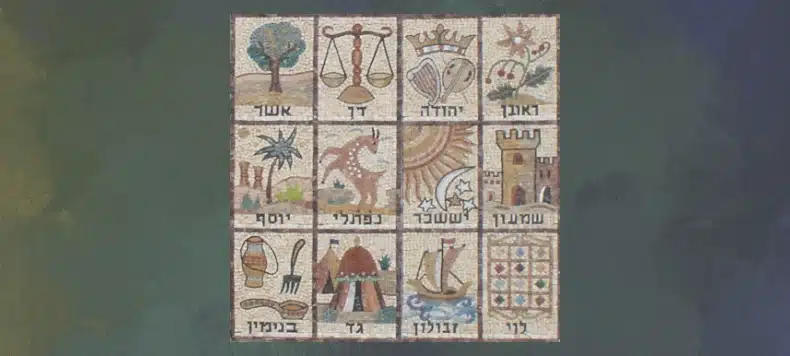
    In the words of Rich Mullins, Jacob got two women and a whole house full of kids. Jacob, renamed Israel, had twelve sons by four different women: two wives and two concubines. Those twelve sons had their own families… twelve different tribes of Israel.

    MothersSons
    LeahReubenSimeon
    LeviJudah
    IssacharZebulun
    RachelJoseph
    Benjamin
    BilhahDan
    Naphtali
    ZilpahGad
    Asher

    So, how did any of them get lost? Well… for that, we fast forward a few generations. These twelve families had grown to become a very large number of people. After leaving slavery in Egypt, they settled in Canaan. At first, the ancient Israelites had no king. They had God as their king… or, to be more precise, they were supposed to. They had human spiritual leaders, like Samuel. When Samuel’s sons turned out badly, the elders of Israel didn’t want them in charge. They wanted a human king, so they could be like the other nations around them.

    That’s how Saul became Israel’s first king. Fast forward through King David and King Solomon to Rehoboam. After 3 years as king, the united kingdom of Israel split. The tribes of Judah and Benjamin were living in the south, which became the kingdom of Judah, where Jerusalem is. The other ten tribes lived in the north, including Samaria and Galilee, which became the kingdom of Israel. This was around 928 BC. For a list of rulers, see The Kings of Ancient Israel and Judah.

    Fast forward again, around 200 years. The Assyrian kingdom attacked the northern kingdom of Israel off and on for a decade or more and killed a lot of people. Along the way, they deported a lot of people to other places, spreading them out. This is a strategy for conquest. If you conquer a city and leave everybody there, it’s likely they will eventually revolt. If you capture the smartest and bravest and relocate them, the victims would eventually settle in their new homes, get married to locals, have kids, put down roots, and be assimilated into the culture. In that way, they would never again be a threat.

    The Assyrian kings involved were Pul (or Pulu, also known as Tiglath-pileser III), Shalmaneser V, and Sargon II. Over time, they conquered the entire northern kingdom of Israel. Those who were deported weren’t “lost,” of course. They would, however, lose their identity over time. Also, there were many who fled south into Judah. Asa, king of Judah, listened to Azariah the prophet and removed the idols and altars to other gods. He also repaired the altar to Yahweh that was in front of the temple. This began a revival of sorts in Judah:

    Then he assembled all Judah and Benjamin and the people from Ephraim, Manasseh and Simeon who had settled among them, for large numbers had come over to him from Israel when they saw that the Lord his God was with him. They assembled at Jerusalem in the third month of the fifteenth year of Asa’s reign. At that time they sacrificed to the Lord seven hundred head of cattle and seven thousand sheep and goats from the plunder they had brought back. They entered into a covenant to seek the Lord, the God of their ancestors, with all their heart and soul.

    Significance

    Part of Roland’s question was about the significance of the lost tribes. I see two parts to this:

    • a lesson to learn, and
    • urban legends.

    The lesson part can only be understood by reading the texts as found in the Bible. You see, most of these problems began with King Solomon. He did not obey God, allowing his many wives to influence him to worship other gods. As a result, God told Solomon that He would tear the kingdom away from his son and give it to a subordinate. That was Jeroboam, who rebelled against Solomon’s son Rehoboam and caused the united kingdom to split into north and south.

    Not only was it God who actually caused the kingdom to split, it was God who also stirred up the spirit of the Assyrian kings to invade the north. So the dispersion of the ten Israelite tribes from the northern kingdom was punishment for idolatry. When Asa removed the idols from the southern kingdom, the people responded to God’s discipline by entering into a new covenant with God, promising to obey Him.

    As for the urban legend part, I don’t put much stock in urban legends. There are many of them. Some relate to where the Israelites ended up, from China and Japan to Nigeria and the Americas. Some may be based in history, some are clearly myth. Others relate to what will happen in the ‘last days,’ where the lost tribes will (or won’t, depending) reunite with Judah and Benjamin. As fun as it is to speculate, it’s unwise to create theology from speculation… so urban legends are fascinating, but not the building blocks for any real conclusions.

  • Is the Bible Really God’s Word?

    Is the Bible Really God’s Word?

    As with most things on GodWords, this very good question came from a reader. Because I was asked, I answered. Yes, there are some Bible verses I could include here. No, I’m not going to include them here. That’s a different article entirely. This one’s my opinion. Agree or disagree, my view of Scripture is pretty simple: either it’s from God, or it’s not.

    For the record, the question was more like ‘should Christians just accept the Bible as a whole, or should we be skeptical of different parts of it?’. I’m going with accepting it as a single, trustworthy set of documents.

    If it’s not from God

    If the Bible isn’t from God, there’s no reason to pay attention to it at all. Reading it would be optional, like any other simply-human writing. It may contain some wisdom, and some good advice, and some sound principles… but so do a lot of other books.

    If it is from God

    If the Bible is from God, it seems safe to assume a few things:

    • God wants to communicate with us,
    • God is capable of communicating with us,
    • God has capably communicated with us, and
    • it’s a good idea to make sure we know what God is telling us.

    I believe the Bible is from God. It explains reality as I see it… the nature of the world, human nature, and more. It contains a lot of prophecies that have been fulfilled, which merely human books lack. While it was written by around 40 authors over 1500 years, it tells a single, cohesive story. I could go on about why I believe the Bible is fully trustworthy, but you get the point.

    Assuming these things are true, the Bible should be accepted as-is. By that I mean that it adequately and accurately communicates what God wants us to know.

    I see nothing in the Bible to justify interpreting God’s message from multiple points of view. Instead, we see the opposite. Peter wrote that Paul’s writings are Scripture, and that some people distort what he said. The implication is that what Paul wrote wasn’t subject to every individual’s personal opinion. Paul wrote that there’s one gospel, and anyone who teaches another gospel should be under God’s curse. Jude wrote that the gospel was delivered to the saints once for all… explaining that the gospel isn’t something that changes over time, or is subject to reinterpretation. In other words, the Bible is an unchanging communication from God to humanity – to you and me – that needs to be read, studied, and lived.

    That we have different interpretations of parts of Scripture has nothing to do with whether the Bible is TRUE, but with whether we adequately understand it. That makes sense. In Acts 2 we see that new Christians studied the apostles’ teaching. Paul told Timothy to study. The author of Hebrews said that his readers no longer even tried to understand… that instead of being able to teach, they needed someone to explain the basics to them again.

    To be sure, there ARE parts of the Bible that are difficult to understand. Most of that difficulty comes from our refusal to actually study what it says. We hear or read a single verse, or a short passage, and try to understand it… but seldom learn about the author, the audience, and the situation that created the need for someone to write. We seldom learn how to study each passage in light of the rest of Scripture, too. Many things that seem unclear are made very clear when we understand a separate but related passage.

    The foundation of the question is whether we should take the Bible’s contents “literally.” The problem is with the word “literally.” It means “as in literature,” like a fictional story where things are symbolic in nature. We’ve reversed the meaning, so now when we say something is “literally true” we mean that it’s actual… that it should be taken at face value. We SHOULD take the Bible literally, but in the older, technical sense: taking the type of literature into account.

    When Jesus said, “I am the Door,” we shouldn’t take that “literally.” Jesus is not actually a door. Instead, Jesus is using figurative language to say that He acts, in certain ways, LIKE a door. When we read Joshua 5:1, we shouldn’t believe that the hearts of the Amorite and Canaanite kings actually “melted in fear.” We learn that they were really, really scared. We should take these verses “literally,” as in “the kind of writing tells us how to understand this.”

    We run into trouble when we don’t take different types of writing into account. Some read the Proverbs and believe that they’re all promises from God. That’s not what Proverbs is. Yes, the Proverbs ARE Scripture… but a simple reading makes it clear that it’s wisdom, not promises. When we fail to account for the type of literature we’re reading, we will inevitably either create our own bad doctrine from our misunderstanding, or simply conclude that the Bible isn’t true at all. Here’s a short list of some of the types of literature (the genres) we find in the Bible:

    • History
    • Law
    • Wisdom
    • Poetry
    • Prophecy
    • Apocalyptic
    • Gospels
    • Epistles (Letters)

    Histories aren’t the same as personal Letters. Poetry isn’t the same as Law. They’re different, so we acknowledge what kind of writing we’re looking at. Plus: in each genre, we will find some language is straight-forward, while some is symbolic. Properly interpreting the Bible means studying to learn which is which.

    So, to answer the question: God’s message for us may require some interpretation, but that interpretation isn’t a matter of our personal perspective. It’s a matter of studying to understand God’s perspective, as He’s revealed it to us. When reading that Jesus is a Door, we shouldn’t guess about what He meant. We need to know what He meant when He said it. That way, we receive God’s message instead of creating our own.

  • Was Melchizedek Really Jesus?

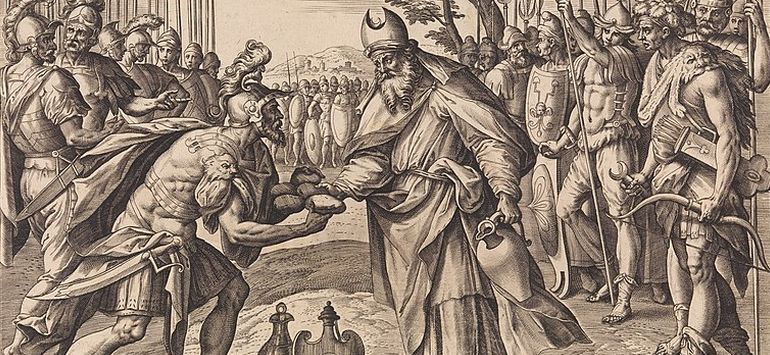
    Was Melchizedek Really Jesus?

    While a lot of people believe that Melchizedek was an appearance of the pre-incarnate Son, that can’t be established in Scripture. They may be right, but they may not be aware of the other possibilities. 

    Here are some reasons why Melchizedek might not have been Jesus:

    • This would be a unique kind of theophany, without precedent. That alone doesn’t invalidate the idea, but we can identify a good number of probable theophanies in the Old Testament that fit a general pattern, and this would be entirely outside of that pattern. Rather than an episodic appearance, as with Moses’ burning bush, this appearance would have been long-term… and independent of the narrative of Scripture during that period.
    • It’s generally believed that Abram tithed to Melchizedek because the king had allowed Abram to travel through his lands for a battle. This form of tribute, offering a tenth of the spoils of war, wasn’t unknown in the ancient world. This would suggest that Melchizedek was a regular old king of Salem… unless the Son lived as man before becoming Jesus, which would be a theologically difficult idea.
    • Hebrews mentions Melchizedek around a dozen times… and only in comparison. At no point do any passages indicate that he WAS the Son… only that the two can be compared.
    • In Hebrews, Jesus is not said to be Melchizedek, but a high priest “in the order of” Melchizedek. This suggests that Jesus’ ministry is similar to that of the old-timer, not synonymous.
    • Melchizedek was said to have no mother or father, but Jesus has both.
    • Melchizedek was said to “resemble” the Son of God… not to BE the Son of God.
    • The New Testament talks about the incarnation, but never suggests that it had happened before. For example, John 1:18 would be a good place to read that God Himself had come to earth before, lived as a man, was a high priest, and so on. Because the only statements in the New Testament about the two are comparative, and because we have no verses that suggest Jesus’ supposed previous incarnation, we can’t clearly connect the two.

    Here are some reasons why Melchizedek might have been Jesus:

    • The obvious mentions in Hebrews make some connection, even though the language is comparative. It could be the author referred to Melchizedek’s legendary status, equating it with Jesus’ earthly ministry.
    • His name means ‘king of righteousness, king of peace.’ That would certainly fit Jesus as well.
    • He offered Abram bread and wine. This might connect to the Last Supper, where Jesus did the same.
    • In Psalm 110, David mentions Melchizedek. This is possibly the most important of the Messianic Psalms, which may suggest more than an interesting connection between the two men.

    It’s okay to speculate about whether the eternal Son had previously come to earth, lived and served as an earthly king, and then disappeared from the historical record. In the end, we’re just not sure… so it would be a serious problem for anyone to teach it as if it’s true.

    A little more info, just for fun: 

    • The idea that Melchizedek was the Jewish Messiah predates the New Testament, being known in the Second Temple period. 
    • The Nag Hammadi library contains gnostic texts in which Melchizedek, as Jesus Christ, lives, preaches, dies and is resurrected. 
  • Do We Really Eat Jesus?

    Do We Really Eat Jesus?

    In John 6, Jesus tells the crowd to eat His flesh and drink His blood. That’s weird, and would be objectively disgusting for you or me to suggest… but how we should view communion, or the Eucharist? Did Jesus mean this literally or figuratively?

    I’m certainly no expert. Obviously, what Jesus said in John 6 is “a hard teaching,” and a lot of people walked away after hearing it. I recognize that a lot of readers may feel strongly about this issue, and may take disagreement about it personally. My intent here is simply to answer this question, posed to me directly: “What is your understanding?”

    Disagreement over this issue should not, generally speaking, cause us to divide from brothers and sisters in the faith. We should work together to understand Scripture as well as we can, to encourage one another to respond obediently to what we learn, and to treat each other well in the meantime.

    As for John 6, I see two possibilities:

    1. The people had no idea what Jesus meant and walked away thinking, “That dude’s just plain nuts,” or
    2. The people knew precisely what He meant and didn’t really want to hear it.

    I’m confident that Jesus was using eating and drinking metaphorically. Millions of people have believed otherwise, of course.

    Three common beliefs

    1. Transubstantiation: after being blessed by a priest, the bread and wine actually BECOME Jesus’ body and blood.
    2. Consubstantiation: the bread and wine don’t become Jesus’ body and blood, but He is somehow PRESENT in them. 
    3. Memorial: when Jesus said to eat and drink in REMEMBRANCE of Him, that’s all it is: a ceremonial reminder of His sacrifice on our behalf.

    Transubstantiation seems, to me, a bit like magic. Jesus – a human being – is somehow replicated a zillion times so that each person actually eats His physical flesh and drinks His physical blood. Of course, Jesus had just turned 5 barley loaves and 2 fish into a meal for thousands, so the parallel could be literal or figurative. In this view, the bread and wine still looks and feels and tastes like bread and wine, but they’re actually – in reality – Jesus Himself. This presents a problem with communion leftovers… they can’t be thrown out, because they’re literally Jesus. Priests often eat and drink the leftovers to avoid disposing of them improperly. As far as I can tell, this view comes only through tradition and not from Scripture.

    Consubstantiation is, like transubstantiation, a hard concept to grasp. Jesus is present IN, WITH, and UNDER the elements, but they haven’t changed. As with transubstantiation, those who believe this view don’t seem able to explain it in technical terms, of course… they can only take it on faith. They must appeal to ‘mystery.’ It’s not that Jesus will be with us in spirit when we eat and drink (or pray, or gather, or always), but that He’s in the bread and wine. Again, this comes through tradition… not a deal-breaker, but certainly an addition – or an overlay – on Scripture itself.

    The Memorial view makes the most sense to me. It uses a basic principle of biblical interpretation: to take each passage of Scripture in the most plain sense in which it was written. Obvious metaphors should be read as metaphor. Poetry should be understood as poetry. History is historical, and so on. If Jesus meant for us to literally eat and drink Himself, this passage should be read that way. If Jesus was using a metaphor, the passage should be read that way. So: which way should we read it? I think there are seemingly obvious clues in the passage.

    Drinking blood

    We see no indication that anyone responded with, “That Jesus guy has lost his mind.” Jews were prohibited from drinking blood, so one might expect them to have a strong and obvious response to a literal interpretation. Imagine if Jesus told them that following Him meant they HAD to eat pork… there would have been an uproar. Not only were Jews prohibited from drinking blood, we see in Acts 15 that even Gentile Christians in Antioch were instructed to abstain. For these reasons alone, I don’t believe that Jesus actually meant that we should literally drink His blood. Here is Leviticus 17:10-12:

    “‘I will set my face against any Israelite or any foreigner residing among them who eats blood, and I will cut them off from the people. For the life of a creature is in the blood, and I have given it to you to make atonement for yourselves on the altar; it is the blood that makes atonement for one’s life. Therefore I say to the Israelites, “None of you may eat blood, nor may any foreigner residing among you eat blood.”

    The New Testament records a number of times where Jesus was accused of breaking the Mosaic Law. At no time did anyone accuse Jesus of encouraging anyone to actually drink blood.

    No explanation

    Sometimes Jesus’ audience, including the twelve, needed an explanation to understand what He meant. Considering God’s instructions to not drink blood, one would think they’d have questions about this. Oddly, neither the twelve nor the thousands and thousands of people are mentioned as having questions, let alone objections to what Jesus said.

    Flesh counts for nothing

    In John 6, we see this: “On hearing it, many of his disciples said, “This is a hard teaching. Who can accept it?” Aware that his disciples were grumbling about this, Jesus said to them, “Does this offend you? Then what if you see the Son of Man ascend to where he was before! The Spirit gives life; the flesh counts for nothing.” Jesus literally said, right after talking about eating His flesh, that the flesh counts for nothing. If Jesus meant for them to eat His literal flesh, this would certainly be a confusing statement.

    Salvation implications

    Jesus compares Himself to the manna that God provided for Israel in the wilderness. He called Himself the true bread that comes down from heaven and gives life to the world. Consider the implication: eating the true bread gives life to the world. If the eating is figurative, this suggests choosing to follow Jesus, as He is the Messiah. If the eating is literal, then we must eat His flesh in order to have life. This is NOT what the New Testament teaches… not in any sense at all. When we read about people coming to faith, there’s no mention of eating or drinking anything.

    • In Luke 23, the thief on the cross was promised Paradise. There’s no mention of eating or drinking.
    • In Acts 2, about 3,000 came to faith in Jesus. There’s no mention of eating or drinking.
    • In Acts 4, that number grew to 5,000. There’s no mention of eating or drinking.
    • In Acts 8, the Ethiopian eunuch came to faith in Jesus. There’s no mention of eathing or drinking.
    • In Acts 10, Cornelius and his family came to faith in Jesus. There’s no mention of eating or drinking.
    • In Acts 13, Sergius Paulus came to faith in Jesus. There’s no mention of eating or drinking.
    • In Acts 16, the Philippian jailer came to faith in Jesus. There’s no mention of eating or drinking.
    • In Acts 17, the Bereans heard the message and believed. There’s no mention of eating or drinking.

    Also:

    • In Mark 16:15 we see that those who believe will be saved.
    • In John 3:16 we see that whoever believes in Jesus will have eternal life.
    • In John 3:36 we see that whoever believes in the Son has eternal life.
    • In John 5:24 we see that whoever hears Jesus’ word and believes God will have eternal life.
    • In Romans 1:16 we see that the gospel is the power of God for salvation for those who believe.
    • In Romans 10:9-10 we see that we’re saved by believing and confessing Jesus and His resurrection.
    • In Ephesians 2:8-9 we see that we’re saved by grace through faith, and not by works.

    Conclusion

    I could go on and on with Bible verses about salvation. While some Bible verses seem to indicate that we’re to actually eat Jesus’ flesh and drink Jesus’ blood, the rest of God’s Word shows no indication that literal eating and drinking, as we do in communion, has anything to do with the life Jesus gives to the world. Because nobody in the New Testament is shown to actually receive life by literally eating and drinking Jesus, the only reasonable conclusion I can find is that His words in John 6 are metaphorical.

    Disclaimer

    I will readily admit that I’m not mystical in the least. I’m not personally inclined to spiritualize things to any degree, so anything mystical runs against the grain of how I understand Scripture. I could be wrong, of course. This is just my view: we take communion to commemorate Jesus’ death. That’s seems to be exactly what He said at the Last Supper, and that’s how I understand John 6.

  • My List of Apologetics Ministries

    My List of Apologetics Ministries

    Apologetics is, simply, making the case for something. Like a lawyer, Christian apologists use evidence and testimony to show that Christianity is true and good and compelling.

    I appreciate the work of many apologists over the past 40+ years, and present some of them for you in this list. The list will grow over time, and is alphabetical by first name. Please let me know who I’ve missed. All links open in a new tab.
    Disclosure: some links presented here are affiliate links to Amazon. This helps support GodWords.

    Also check out Bible Teachers I Can Recommend.

    Alisa Childers

    Alisa Childers, daughter of CCM pioneer Chuck Girard and member of the awesome ZOEgirl, writes and speaks about losing her faith through ‘progressive Christianity’ and regaining it through studying the Bible. Well-known for her YouTube channel, some of her books include The Deconstruction of Christianity, about the dangers of progressive Christianity, Another Gospel, Live Your Truth And Other Lies, and Mama Bear Apologetics, a book preparing parents to teach their kids to challenge the lies in our culture.

    C.S. Lewis

    C.S. Lewis was a scholar, a writer, and a theologian. One of the best-known Christian writers, Lewis taught English literature at both Oxford and Cambridge. His Mere Christianity is a seminal work, and he’s known worldwide as the author of the beloved children’s series The Chronicles of Narnia, The Screwtape Letters, and The Space Trilogy.

    Cliff Knechtle

    Cliff Knechtle is Senior Pastor at Grace Community Church in New Canaan, CT and the man behind the Give Me An Answer ministry. Along with his son Stuart, Cliff has public conversations with skeptics and seekers about the truth of Christianity and the reliability of the Bible, and his YouTube videos are a very helpful resource. He’s also the author of Help Me Believe: Direct Answers to Real Questions, Heaven Can’t Wait, and Cliff Hangers, a compilation of questions people have asked him.

    Craig Blomberg

    Dr. Craig Blomberg is Denver Seminary’s Professor Emeritus of New Testament. I don’t believe he has a personal website, but you can find a list of books, articles, and interviews on his DenSem bio. He’s also featured regularly on YouTube. I was fortunate to take his class on the reliability of Scripture several years ago.

    David Wood

    David Wood is a former atheist who founded Acts 17 Ministries with Dr. Nabeel Qureshi, a former Muslim. After trying to kill his own father, he was diagnosed with antisocial personality disorder and sentenced to prison for ten years, where he tried to prove a Christian inmate was foolish, only to become a Christian himself.

    Frank Turek

    Frank Turek is an author and speaker, perhaps best known for debates with atheist Christopher Hitchens. One of my favorites, he’s a regular speaker at colleges and universities. His Q&A sessions are invaluable. He’s probably best known for I Don’t Have Enough Faith To Be An Atheist, arguing that Christianity is the most reasonable faith, Stealing From God, about atheists needing God to make their case, and Correct, But Not Politically Correct, about same-sex marriage and transgenderism.

    Greg Koukl

    Greg Koukl is president of Stand To Reason Ministries and an adjunct professor in Christian apologetics at Biola University. He’s spoken at many universities, debated Michael Shermer and Deepak Chopra, and has written a number of books including The Story of Reality and one of my favorites, Tactics. I find his work on the problem of evil especially helpful.

    J. Warner Wallace

    J. Warner Wallace is America’s best-known cold-case detective. He’s been featured over and over on news programs for solving old crimes with little evidence. His book Cold Case Christianity lays out his approach to investigating the Gospels, to see if they hold up as eyewitness testimony. Other books include Person of Interest, about Jesus’ impact on the world, God’s Crime Scene, dealing with the creation of the universe, and Forensic Faith, teaching beginners how to engage in apologetic discussions.

    John Lennox

    John Lennox is a Professor of Mathematics at Oxford University, a Senior Fellow with the Trinity Forum, an author, and a speaker on subjects relating to science, philosophy and religion. He’s well-known for debating noted atheists Richard Dawkins, Christopher Hitchens, and Peter Singer. Notable books include God And Stephen Hawking, God’s Undertaker, and Seven Days That Divide The World, about the creation of the universe.

    Lenny Esposito

    Lenny Esposito is president and founder of Come Reason Ministries, a Christian apologetics organization, and author of the popular Come Reason website. He has taught apologetics and Christian worldview for decades, and has authored hundreds of articles on topics such as the existence of God, theology, philosophy, social issues and biblical difficulties. His Come Reason Podcast is one of the most popular on the web.

    Lee Strobel

    Lee Strobel is a former legal editor and investigative reporter for the Chicago Tribune. Strobel was an investigative reporter and editor for the Chicago Tribune, and an atheist. His book (and later, the movie) The Case For Faith lays out his attempts to prove that his wife’s new faith in Jesus was misplaced. Today, because of his work in this area, Colorado Christian University hosts the Lee Strobel Center for Evangelism and Apologetics. He followed up that bestseller with other “The Case for” books include: Faith, A Creator, Easter, Miracles, Heaven, Christmas, Hope, and more. I’d also recommend his book Is God Real?

    Melissa Dougherty

    Melissa Dougherty is best known for her YouTube channel, where she covers a variety of theological topics. A former New-Ager, Melissa is transparent, funny, and very prepared to defend Christianity.

    Mike Winger

    Mike Winger is a pastor and well-known YouTuber. One of my favorites, he has many videos online that answer Bible questions, explain difficult passages, and more. He takes questions during live feeds, and I appreciate his careful approach to both difficult subjects and difficult people.

    Natasha Crain

    Natasha Crain is a speaker, author, blogger, and podcaster whose focus is helping Christians develop a biblical worldview in an increasingly secular, hostile culture. In addition to her own podcast, she is also the co-host of the Unshaken Faith Podcast with Alisa Childers (see her bio above). Natasha has an upcoming book: When Culture Hates You. She has also written several books for children, and Faithfully Different: Regaining Biblical Clarity in a Secular Culture.

    Norm Geisler

    Norman Geisler, considered by many to be the father of modern apologetics, was a pastor, speaker, author, professor, theologian, philosopher, evangelist, and more. He wrote or co-wrote around 125 books and papers… and his Christian Apologetics is my favorite. He taught at a number of well-known schools, including Trinity Evangelical Seminary, Dallas Theological Seminary, Veritas International University, and Southern Evangelical Seminary. Married for 64 years, Geisler passed away in 2019… but his legacy, and his work, continues to impact many. Because of his vast influence, I’ve included a link to search YouTube for Norm… a lot of people have posted his debates, lessons, interviews, and more.

    Paul Copan

    Paul Copan is a Christian theologian, analytic philosopher, apologist, and author. A professor of philosophy and ethics at Palm Beach Atlantic University, he may be best-known for his book Is God A Moral Monster? He was president of the Evangelical Philosophical Society as well… so he’s got serious bona fides.

    Sean McDowell

    Dr. Sean McDowell is an Associate Professor in the Christian Apologetics program at Talbot School of Theology, Biola University. He’s a well-known speaker, author, and podcaster. You may know his father Josh McDowell, author of the best-selling Evidence That Demands a Verdict. In addition to his own books, Sean worked with his father on a revised edition. Highly recommended.

    William Lane Craig

    Dr. William Lane Craig is Visiting Scholar of Philosophy at Talbot School of Theology and Professor of Philosophy at Houston Christian University. He’s a brilliant apologist, philosopher, and scholar. Well-known for winning debates with prominent atheists, Craig is an invaluable asset for those seeking confidence in Christianity. He has two YouTube channels: the first for shorter videos, the second for longer ones. Notable: The Equip Project is a free series of classes that walk you through Dr. Craig’s teaching.

    Wes Huff

    Wesley Huff is currently the Vice President for Apologetics Canada, and fills the role of historian for their team. While he’s been publicly visible for years, he recently gained more exposure due to a public debate and subsequent appearance on The Joe Rogan Experience podcast.

    Also…

    ApologetiX is not an apologist. They’re a Christian parody band… one part Weird Al, one part Billy Graham. I love what they do, and recommend them to you. They change the lyrics to popular songs and sing about following Jesus. Below is a link to their website, where can buy any or all of their 50+ albums. Yes, they have over 50 albums. I think I have them all. My favorite is Adam Up. The rest of the links are a few of my favorite songs. They’re great musicians and even better lyricists. Enjoy!

  • Should Christians Judge People?

    Should Christians Judge People?

    In Matthew 7:1 Jesus said, “Do not judge, or you too will be judged. For in the same way you judge others, you will be judged, and with the measure you use, it will be measured to you.” Most people assume He was teaching that Christians should never judge anyone. Is that true?

    The reality is that human beings judge everything, all the time, and we can’t stop. You’re judging me right now, aren’t you? You want to know whether I’m making a good point or a bad one, don’t you? This isn’t foolish. This is wise. Imagine a world where nobody judged anything, ever… it would be impossible to live that way! We’d drink spoiled milk, cross the street without looking, believe every liar, and ignore even wise instruction.

    Because we DO judge, there are plenty of passages of Scripture in which God tells us HOW we should judge. As you’ll see when you read below, following these instructions will make us more like God, who judges all things perfectly.

    Judge Impartially

    Do not pervert justice; do not show partiality to the poor or favoritism to the great, but judge your neighbor fairly. Leviticus 19:15

    In this passage God addressed the entire nation of Israel, telling them how to interact with each other: don’t lie, or steal, or slander, and so on. In verse 15, God told them how to judge: impartially.

    Judge Correctly

    Stop judging by mere appearances, but instead judge correctly. John 7:24

    In this passage Jesus was being judged, and He told the crowd that they were doing it wrong. He didn’t tell them to never judge, but to judge correctly. How could they judge correctly if Jesus wanted them to never judge at all? Jesus told them how to judge: correctly, and not by mere appearances.

    Judge to Protect the Church

    What business is it of mine to judge those outside the church? Are you not to judge those inside? God will judge those outside. “Expel the wicked person from among you.” 1 Corinthians 5:12-13

    In this passage Paul addresses sexual immorality in the church, where a man was sleeping with his stepmother and the church, shamefully, celebrated it. In verse 3, Paul explains that he had already passed judgment on the guilty party. He then explains that believers have a responsibility to judge one another, and that they should have been more judgmental than they were. Paul told them why they should judge: to expel wicked people from the church.

    Judge Believers

    … do you not know that the Lord’s people will judge the world? And if you are to judge the world, are you not competent to judge trivial cases? Do you not know that we will judge angels? How much more the things of this life! 1 Corinthians 6:2-3

    In this passage Paul addresses disputes between believers, telling them to not take each other to court. Rather than looking to unbelievers to settle disputes, Paul pointed out that they should be able to judge wisely among themselves. Paul told them who should judge: believers.

    Judge Carefully

    Two or three prophets should speak, and the others should weigh carefully what is said. 1 Corinthians 14:29

    In this passage Paul explains proper behavior during worship, telling Christians to judge those who prophesy. We’re to weigh what they say. The Greek word is diakrino, and it’s a command to the group. Paul told them how to judge: carefully.

    Judge by Their Theology

    Dear friends, do not believe every spirit, but test the spirits to see whether they are from God, because many false prophets have gone out into the world. 1 John 4:1

    In this passage John warns the believers about prophets, explaining that many are false… teaching that Jesus had not come in the flesh. Some, he said, teach untrue things about God. He explained that we should judge them by what they say so we can know who has, and who has not, come from God. John told them how to judge: by their theology.

    Judge Constantly and Well

    Preach the word; be prepared in season and out of season; correct, rebuke and encourage—with great patience and careful instruction. 2 Timothy 4:2

    In this passage Paul teaches Timothy to tell people when they believe untrue things, to tell people to change when change is needed, and to encourage everyone with the gospel. Timothy obviously needed to judge people by their beliefs and actions in order to correct and rebuke. Paul told him how to judge: all the time, patiently and carefully.

    Judge Comprehensively

    Do not treat prophecies with contempt but test them all; hold on to what is good, reject every kind of evil. 1 Thessalonians 5:20-22

    In this passage Paul tells the believers in Thessalonica to distinguish between good and evil prophecies. This is the opposite of what most modern “prophets” say, of course. If they claim to speak for God, who are you and I to question them? This instruction is intended to protect the church from false teachers, and no prophecy was exempt. Paul told them how to judge: comprehensively.

    Judge Publicly

    Have nothing to do with the fruitless deeds of darkness, but rather expose them. Ephesians 5:11

    In this passage Paul teaches believers in Ephesus to point out evil deeds. They were to expose them, to illuminate them, and have nothing to do with them. This required, of course, that they judge the deeds that were being done. Paul told them how to judge: publicly.

    Conclusion

    These passages make it clear that those who say we should never judge either don’t know about, or don’t care about, the rest of Scripture. There’s no question that when Jesus said “do not judge, or you too will be judged,” He meant it as a warning. Those who wish to remove the speck from their brother’s eye must not be hypocritical… but read the full passage:

    Do not judge, or you too will be judged. For in the same way you judge others, you will be judged, and with the measure you use, it will be measured to you. Why do you look at the speck of sawdust in your brother’s eye and pay no attention to the plank in your own eye? How can you say to your brother, ‘Let me take the speck out of your eye,’ when all the time there is a plank in your own eye? You hypocrite, first take the plank out of your own eye, and then you will see clearly to remove the speck from your brother’s eye.

    Jesus instructs hypocrites (that is, from time to time, every one of us) to deal with our own, usually larger, problem before trying to correct another. This is good and wise. What’s not good and wise is to stop reading, or to never see the rest of what Jesus said: if we DO deal with our problem, then we WILL be able to help another.

    Objections

    I’ll add to this section as more objections are raised.

    The First Stone

    What about John 8:1-11? In that passage, a woman is caught in adultery, and the penalty under Jewish law was death. Jesus tells the Pharisees and the teachers of the law, “Let any one of you who is without sin be the first to throw a stone at her.” Jesus didn’t condemn her, right?

    A mult-part response is appropriate here. As we’ve seen above, it’s important to read the passage carefully to understand the context of Jesus’ instructions. In this passage, it’s clear that there was a lot going on. The bad guys had certainly judged the woman, but Jesus didn’t tell them they were wrong for judging her. If she had been caught in adultery, she was obviously guilty… and Jesus would not ignore or condone her sin. In fact, Jesus told her to “go now and leave your life of sin.” Clearly, He had indeed judged her.

    This entire scenario, as we see in verse 6, was designed to trap Jesus into giving a wrong answer. If He said to kill her, He would be breaking the law… both the man and the woman were to be given the same punishment, but the man wasn’t there. If Jesus said to let her go, He would be breaking the law… the penalty for adultery was death. If Jesus said she should die, He would also break the Roman law that the death penalty was only to be given by Rome.

    Jesus judged the Pharisees and the teachers of the law for their unlawful treatment of the woman and the man who committed adultery, and judged them for trying to trap Him as well. His instruction for anyone without sin to go ahead and begin killing the woman wasn’t a trick, and it didn’t absolve the woman. Jesus pointed out their wicked behavior, and they couldn’t stand the heat. They knew they were wrong, even though the woman was clearly guilty. This passage does not – could not – be instructions for followers of Jesus to not judge people. This passage is chock full of judgment, from the bad guys to Jesus and back.

    Same Measure

    What about Luke 6:37-42? In that passage, parallel to Matthew 7, Jesus says, “Do not judge, and you will not be judged. Do not condemn, and you will not be condemned. Forgive, and you will be forgiven.” Doesn’t that mean to not judge?

    A good question. It’s important to look at parallel passages to get a broader perspective on what Jesus taught. It’s important to remember that the differences in the gospel accounts – as with this passage – aren’t because Jesus contradicted Himself, but because each author wanted to highlight Jesus’ words a bit differently, for different audiences.

    As mentioned above, Jesus’ words here are a clear warning. It’s not a warning to never judge. It’s a warning that IF we judge, and WHEN we judge, we should be careful to avoid hypocrisy. Jesus said here that whatever measure we use with others will be used with us… whether it’s judgment, condemnation, forgiveness, or generosity. It’s obviously best to err on the side of caution, to avoid being unfair or hypocritical. This passage doesn’t say to never judge. If it did, the verses above about HOW to judge would not have been written. This passage says that we should be aware that the standards we use will be used on us.

    This is echoed by the apostle Paul in Romans 2:1.

    You, therefore, have no excuse, you who pass judgment on someone else, for at whatever point you judge another, you are condemning yourself, because you who pass judgment do the same things. Now we know that God’s judgment against those who do such things is based on truth. So when you, a mere human being, pass judgment on them and yet do the same things, do you think you will escape God’s judgment?

    Clearly, God doesn’t like hypocrisy. In the words of Rich Mullins, I’m still a recovering hypocrite… so I take God’s instructions in this area very seriously. We all should… but we shouldn’t pretend that Christians are never to judge at all. We need to keep ALL of God’s Word in mind, not just a verse or two that we like.