Category: False Teachings

Christianity has always had false teachers. Today, these false teachers seem to be everywhere. Most are famous, whether on TV or radio, in books or on the internet. My goal is not to attack any individuals, but to examine their claims about God, truth, and reality. Before reading about any individual, please take the time to read What is a False Teacher?

  • What Really Happened at the Council of Nicea?

    What Really Happened at the Council of Nicea?

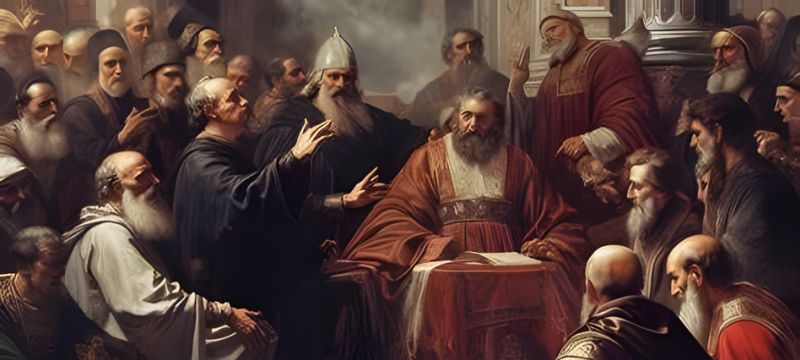
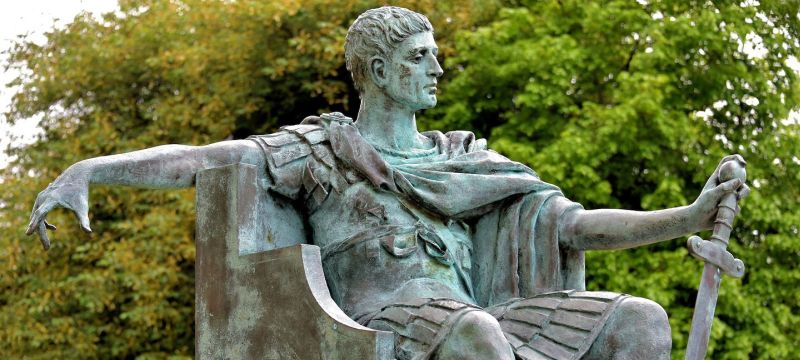
    One of the most common objections about the Bible is that it was supposedly created by Roman Emperor Constantine at the Council of Nicea in AD 325. Of course, that’s not true. It’s mythology, not history. So what really happened at the council of Nicea?

    Where?

    Nicea (Nicaea) was an ancient Greek city, now part of Iznik, Turkey. This was about 75 miles from Constantine’s capital in Nicomedia, and a convenient location for travelers.

    When?

    Constantine (Caesar Flavius Constantine I) became the western Roman emperor in AD 306, and became the sole ruler of the Roman empire in 324 after defeating eastern Roman emperor Licinius at the battle of Chrysopolis. The council at Nicea was convened the next year, from May/June through July, AD 325. Expenses were paid for by the Empire.

    Who?

    This is considered to be the first ecumenical council. That is, the first attempt to gather representatives from all of the Christian churches to settle disputes. Around 1800 bishops were invited – all of the bishops at that time – while only between 250 and 300 or so attended. Some wrote that 318 were in attendance, but that number may only symbolize the 318 trained men of Abraham’s household as found in Genesis 14. Because bishops often had multiple presbyters and deacons with them, the total attendance may have been around 1800. Constantine took part in discussions, but didn’t vote because he wasn’t a bishop. Pope Sylvester I was represented by emissaries. Claims that the council was attended by groups like Gnostics or Ebionites are unfounded.

    Why?

    It appears that Constantine considered religious disputes to be a problem for a united Roman empire, so the council of Nicea was convened to settle theological issues. This wasn’t the first time Constantine worked to settle religious disputes. Twelve years earlier, in AD 313, he and eastern emperor Licinius co-authored the Edict of Milan, granting official toleration to Christians in the Roman Empire. He later tried to resolve a dispute over Donatism, appointing Miltiades of Rome to hear the dispute and then calling the Council of Arles in 314. The need for the Nicene council began with a number of issues, especially a dispute over Arius’ view of the nature of Jesus as Son of God.

    Constantine’s Invitation

    The original proclamation of the council only survives in a Syriac translation. Here’s an English version:

    I believe it is obvious to everyone that there is nothing more honorable in my sight than the fear of God. 

    Though it was formerly agreed that a council of bishops should meet at Ancyra in Galatia, it seemed to us for many reasons that it would be better for the council to assemble at Nicaea, a city of Bithynia, because the bishops from Italy and the rest of the countries of Europe are coming, because of the excellent temperature of the air, and in order that I may be present as a spectator and participant in what will be done. Therefore I affirm for you, my beloved brothers, that you should all promptly assemble at the said city, that is at Nicaea.  

    Let every one of you therefore, as I said before, keep the greater good in mind and hurry to gather without any delay, so that each may be physically present as a spectator of those things which will be done. 

    May our God keep you, beloved brothers.

    Issues Discussed at the Council

    Arianism

    The exact nature of Jesus, the Son of God, had been an issue for some time. Nearly a century earlier, Sabellius taught that Father, Son and Holy Spirit were three separate modes in which God appeared throughout history. He was excommunicated in AD 220, and almost none of his writings survive. His modern followers include the Unitarians and Jehovah’s Witnesses.

    Arius, a priest in Alexandria (Egypt), argued with his bishop Alexander over whether the Son was a subordinate creation of the Father, or is eternally God… and whether the Father and Son were ‘of different substances’ (heteroousios) or ‘of one substance (homoousious). For this view, Arius was declared a heretic by 80 church leaders in 320, and again by more than 100 leaders in 321. While in exile, his position continued to gain a hearing, and Constantine wished to have the matter settled.

    In the meantime, Eusebius of Nicomedia (not to be confused with Eusebius of Caesarea) had reinstated Arius. Alexander wrote a statement of faith that 250 leaders signed, then convened a council that agreed that Arius was still excommunicated. Arius complained directly to Constantine, which led to him convening the Council of Nicea.

    The Nicene council consulted Scripture and discussed the issue at length. Beyond the obvious – that Arius’ views contradicted Scripture – a primary argument against his view was that his ideas were new, and were not taught in early church history. In other words, Christians had always understood Scripture to say that the Son is God (John 1), that He had always been God (John 1), and that He is equal to the Father (Philippians 2)… and that Arius contradicted both Scripture and the witness of centuries of faithful believers. Athanasius asked, “How many fathers [early Christian writers] can you cite for your phrases?” To settle the matter, the Nicene Creed was written – line by line – to ensure that Christians could properly express the three-fold nature of God.

    All but Arius and two other bishops signed the creed: Theonas of Marmarica and Secundus of Ptolemais. Arius’ teachings were declared heretical, and his books were to be burned… and, by Constantine’s order, anyone hiding copies of Arius’ writing would be put to death.

    All three were anathematized and exiled to Illyria, but this didn’t settle the matter. Arianism continued to plague the church for more than a century. It’s reported that Constantine’s sister urged him to support Arias, and it seems that his position softened over the years to a more inclusive view. The Synod of Jerusalem restored Arius in AD 336, and Constantine invited Arius to come back… but Arius died – weirdly, his intestines exited his body while in the bathroom – before he arrived.

    One of his followers, Eusebius of Nicomedia, became an advisor to Constantine, baptizing him just prior to his death in AD 337. This served to promote Arianism, and the following two emperors (Constantius II and Valens) were Arians. Athanasius continued to fight against Arianism, arguing from Scripture. Emperors removed him from his position as bishop 5 times, resulting in 4 different emperors reinstating him.

    Modern groups like The United Pentecostal Church and Oneness Pentecostals continue to promote the Sabellian heresy, while Jehovah’s Witnesses and, to some extent, Mormons continue to promote the Arian heresy.

    What else did they discuss?

    Twenty disciplinary decrees were issued, and a letter was written to Alexandria to announce the council’s decisions. Here are some of the topics of the day:

    • They formally denounced Gnosticism and other minor sects.
    • Soldiers who had renounced their position and returned to it were given penance.
    • Those who professed faith (catechumens) but lapsed prior to baptism were allowed to rejoin as catechumens after a period of three years.
    • Only specific people were allowed to offer the Eucharist, and others who did were to be suspended from their ministry.
    • Followers of deposed, anti-trinitarian teacher Paul of Samosota who wanted to rejoin the church could be rebaptized after affirming the Trinity.
    • The Nicene Creed was written to codify the consensus about Arius’ view.

    Clergy Stuff

    • Clerics lending money with interest were to be condemned.
    • Healthy clergy who castrated themselves were disqualified from ministry.
    • New bishops were to be chosen by all of the other bishops in their region, but three would do in a pinch… as long as the others wrote letters of approval.
    • Bishops, priests, and deacons were not allowed move from one church to another.
    • In light of the fact that recent converts had sometimes been made clergy, they were to be given time and grace to mature… but, “with the passage of time,” if they were found guilty of “sins of sensuality” they would forfeit their position.
    • No member of the clergy could have a woman living with him, other than a mother, sister or a person similarly “above suspicion.”
    • Discussions about excommunicated clergy should be held at twice-yearly meetings, to make sure they hadn’t been kicked out due to the pettiness of their bishop.
    • As was the custom, regional church authorities were to be recognized. For example, Egypt, Libya and Pentapolis were under the authority of the bishop of Alexandria. Anyone made bishop without proper regional authority was not to be considered a bishop.
    • They resolved the Miletian schism, dealing with clergy who had lapsed under persecution.

    Tried and Failed

    • Failed to establish a uniform date for Easter, which is still unresolved.
    • Socrates Scholasticus wrote that they had intended to make a law enforcing celibacy of the clergy, but failed due to objections.

    There is no record of any discussion of the biblical canon at the council.

    Objections

    Didn’t the Council of Nicea decide on the use of the word “trinity”?
    The word trinity originated in the 1200s. While the word didn’t yet exist, the doctrine did. Tertullian and Origen wrote about the three-fold nature of God 150 years before the Council of Nicea. The idea is found in other early writings, like the writings of Polycarp, Ignatius, and Justin Martyr.

    What’s the big deal about Arianism? Does it really matter?
    Yes, it matters. If Jesus is not God, He should not be worshiped. If Jesus is God, He should. As we see that Jesus was worshiped in Scripture and has been worshiped throughout history as God, this is considered an essential tenet of the faith.
  • What is the Edict of Milan?

    What is the Edict of Milan?

    The Edict of Milan is a proclamation by Roman emperor Constantine I, given in 313 AD, that ensured the right of all Roman citizens to worship freely. It also instructed that any property that had been confiscated from Christians should be returned.

    We have no copies of the original edict. What we have are quotations from Lactantius, a Christian scholar and advisor to Constantine. I present this to you not because it directly affects any Christians today, but because so many readers have been led to believe that Constantine, in the Edict of Milan, officially changed the sabbath from Saturday to Sunday. This is simply wrong, as simply reading the text will show. Sabbath-keeping is not something Christians need to be concerned with.

    When I, Constantine Augustus, as well as I Licinius Augustus fortunately met near Mediolanum (Milan), and were considering everything that pertained to the public welfare and security, we thought -, among other things which we saw would be for the good of many, those regulations pertaining to the reverence of the Divinity ought certainly to be made first, so that we might grant to the Christians and others full authority to observe that religion which each preferred; whence any Divinity whatsoever in the seat of the heavens may be propitious and kindly disposed to us and all who are placed under our rule And thus by this wholesome counsel and most upright provision we thought to arrange that no one whatsoever should be denied the opportunity to give his heart to the observance of the Christian religion, of that religion which he should think best for himself, so that the Supreme Deity, to whose worship we freely yield our hearts) may show in all things His usual favor and benevolence. Therefore, your Worship should know that it has pleased us to remove all conditions whatsoever, which were in the rescripts formerly given to you officially, concerning the Christians and now any one of these who wishes to observe Christian religion may do so freely and openly, without molestation. We thought it fit to commend these things most fully to your care that you may know that we have given to those Christians free and unrestricted opportunity of religious worship. When you see that this has been granted to them by us, your Worship will know that we have also conceded to other religions the right of open and free observance of their worship for the sake of the peace of our times, that each one may have the free opportunity to worship as he pleases ; this regulation is made we that we may not seem to detract from any dignity or any religion.

    Moreover, in the case of the Christians especially we esteemed it best to order that if it happens anyone heretofore has bought from our treasury from anyone whatsoever, those places where they were previously accustomed to assemble, concerning which a certain decree had been made and a letter sent to you officially, the same shall be restored to the Christians without payment or any claim of recompense and without any kind of fraud or deception, Those, moreover, who have obtained the same by gift, are likewise to return them at once to the Christians. Besides, both those who have purchased and those who have secured them by gift, are to appeal to the vicar if they seek any recompense from our bounty, that they may be cared for through our clemency,. All this property ought to be delivered at once to the community of the Christians through your intercession, and without delay. And since these Christians are known to have possessed not only those places in which they were accustomed to assemble, but also other property, namely the churches, belonging to them as a corporation and not as individuals, all these things which we have included under the above law, you will order to be restored, without any hesitation or controversy at all, to these Christians, that is to say to the corporations and their conventicles: providing, of course, that the above arrangements be followed so that those who return the same without payment, as we have said, may hope for an indemnity from our bounty. In all these circumstances you ought to tender your most efficacious intervention to the community of the Christians, that our command may be carried into effect as quickly as possible, whereby, moreover, through our clemency, public order may be secured. Let this be done so that, as we have said above, Divine favor towards us, which, under the most important circumstances we have already experienced, may, for all time, preserve and prosper our successes together with the good of the state. Moreover, in order that the statement of this decree of our good will may come to the notice of all, this rescript, published by your decree, shall be announced everywhere and brought to the knowledge of all, so that the decree of this, our benevolence, cannot be concealed.

    from Lactantius, De Mort. Pers., ch. 48. opera, ed. 0. F. Fritzsche, II, p 288 sq. (Bibl Patr. Ecc. Lat. XI).

  • What Does Spiritual Warfare Look Like?

    What Does Spiritual Warfare Look Like?

    A reader asks: What exactly does spiritual warfare look like? What about deliverance ministries? I’m not clear on what I believe about it. Why would we need to do any more than Jesus did when he was tempted?

    I’ve had the same kinds of questions over the years. The topic of spiritual warfare can be difficult. Here are a few thoughts:

    • First, we know it’s really a thing. Spiritual warfare is real, as we find it in Scripture.
    • Next, we don’t know everything about it because what happens in ‘the spiritual world’ is generally hidden from us. We can’t typically see angels as they go from place to place, and we can’t see demons… demoning.
    • Because we don’t watch them and don’t really know much about them, it’s easy to let our imaginations run wild about what happens, and how things work.
    • Because it’s easy to imagine things, and because humans have a tendency to try to make sense of everything, people will naturally and logically try to combine the limited info we have in Scripture with the things they imagine in ways that make sense to them.
    • Because this happens, if we look hard enough, we can find virtually every kind of wild idea about spiritual warfare somewhere in the world. The internet has helped these ideas spread, but this process has existed for a long, long time.
    • The longer an idea has been around, the more likely we are to assume that it’s true.
    • The more often an idea is repeated, the more likely we are to assume that it’s true.

    So we’re left to ponder the question: where can we find reliable, accurate information about spiritual warfare? As Clint Archer points out after doing a ton of research, “There are no experts in this field. No one person has any more reliable information than anyone else.” All of the information we can find on spiritual warfare either comes from the Bible or is anecdotal… that is, a story someone told to someone else. In a world filled with hucksters, shysters, con men, and gullible people, the Bible is the only source we can truly trust. The Bible, while fully reliable, doesn’t tell us much.

    We should be content with what we have. If God thought we should know more about spiritual warfare, He would have inspired more about spiritual warfare for the New Testament. Those who make a career out of spiritual warfare have exactly the same amount of 100%-reliable information that the rest of us have… and we shouldn’t pretend otherwise. That’s not to say that there aren’t people who have greater insight into this subject. It’s to say that we can’t rely fully on what any human says unless it matches what God has already said.

    You wisely refer to Ephesians 6. It’s worth mentioning that while these 10 verses are important, they’re not necessarily more important than the previous 166 verses that Paul wrote to the church in Ephesus… or the 4 verses after. Spiritual warfare is not a primary topic in any New Testament book, and a proper perspective of Christian doctrine should include this fact. It’s a subject that’s important enough to be in there, but it’s obviously not a top-level priority in the context of following Jesus. It’s not the secret to living victoriously, or the lynchpin or the keystone or whatever else people may claim about spiritual warfare. We should study the verses that address spiritual warfare in exactly the same way we study any other part of God’s Word. Not more, not less.

    So what does spiritual warfare look like? As far as I can tell from studying Scripture, it looks exactly like what you’ve described: what Jesus did. Your analysis is, in my opinion, brilliant. We see echoes of Jesus in many New Testament verses about spiritual warfare. Here are a few:

    • He submitted to God and resisted the devil – James 4:7
    • He demolished arguments and every pretension that sets itself up against the knowledge of God – 2 Corinthians 10:5
    • He forgave people and avoided being outwitted by Satan – 2 Corinthians 2:10-11
    • He was equipped, as we find in Ephesians 6, with truth (He IS the truth) and righteousness and the gospel of peace and faith, bringing salvation through knowing the Word of God.

    Spiritual warfare, rather than being a thrill-filled, action-packed process of hand-to-hand combat with dark spiritual forces, looks suspiciously like following Jesus. You know, learning what Jesus taught and then doing it. It’s more about what we personally know and do than it is about direct engagement with the enemy. We’re made aware of our enemy’s schemes by being familiar with the Bible. Spiritual warfare, as outlined in Scripture, starts with the gospel and is applied by looking in the mirror and making sure we’re not just hearing Jesus’ words, but living them.

    You might have noticed that there are no New Testament passages about Christians having demons cast out of them. There are no verses that speak of demons of alcoholism or demons of doubt that attach themselves to believers. Most of the things that “deliverance ministries” talk about are entirely absent from the Bible… they’re the result, as mentioned above, of combining what little we have in Scripture with our overactive imaginations. If anyone wants to be an expert in spiritual warfare, they need to simply be an expert on what God has said in the New Testament. Anything more is likely unnecessary, as God has not chosen to give us more.

  • Who has Dominion over the Earth – God or Man?

    Who has Dominion over the Earth – God or Man?

    There’s a lot of talk about dominion these days, and some comes from a bunch of false teachers. I think it’s an important subject, considering the depth of false teaching out there.

    In Genesis 1, God gave Adam dominion over the animals – fish, birds, livestock and wild animals, and all the creatures that move along the ground. Some translations include the phrase “over all the earth,” which – in Hebrew – typically means the land.

    So, yes: God gave Adam dominion over the earth.

    But wait: there’s more!

    That’s not the whole story, though. Certain false teachers claim that God gave Adam dominion – which is true – and so God no longer had dominion. That’s false. Here are a few verses that show it’s false:

    • Dominion and awe belong to God. (Job 25:2)
    • Do you know the laws of the heavens? Can you set up God’s dominion over the earth? (Job 38:33)
    • Dominion belongs to the Lord and he rules over the nations. (Psalm 22:28)
    • Praise the Lord, all his works everywhere in his dominion. (Psalm 103:22)
    • Judah became God’s sanctuary, Israel his dominion. (Psalm 114:2)
    • Your kingdom is an everlasting kingdom, and your dominion endures through all generations. (Psalm 145:13)

    False teachers – mostly false teachers in the Word of Faith movement – claim that God GAVE dominion to Adam and Eve, who LOST dominion when Satan tricked them. They then say that Jesus REGAINED dominion from Satan, and – because Jesus is human – RESTORED mankind’s sole dominion over the earth. Based on this false teaching, they claim that God needs our permission to act on earth.

    However: in Romans 13, we see that – without question – that the authorities that exist have been established by God… there is no authority except that which God has established.

    For a simple and clear example of the false teaching about dominion, here’s what false teacher Myles Munroe taught:

    God could do nothing on Earth, nothing has God ever done on Earth, without a human giving him access. So he’s always looking for a human to give him power permission. In other words, God has the power, but you have the permission. God has the authority and the power, you’ve got the license. So even though God could do anything, he can only do what you permit him to do.

    This is false. As you can see in the verses above, all of which were written after the Fall in the Garden of Eden, God still has dominion. It’s not either/or… it’s not that either God has dominion or we have dominion. It’s both. God gave us freedom and responsibility for the animals and the land… that doesn’t mean God was locked out of His creation. It’s like when a parent gives a child responsibility for their pets, or for their bedroom. The parents purposely share responsibility, but they are still in charge.

    Does that make sense? False teachers claim that God is powerless on earth, and needs our permission to enter. The Bible says otherwise, and it’s wise to stick with what the text says. I’m sure you’d agree with that.

  • Is David Jeremiah a False Teacher?

    Is David Jeremiah a False Teacher?

    Like clockwork, not a week goes by without someone writing to either ask whether David Jeremiah is a false teacher, or to recommend him as a reliable teacher of Scripture. This article will not satisfy either group, but it’s the best I can do at this moment.

    NOTE: I have not called David Jeremiah a false teacher. This article is in response to the question, asked by dozens of readers.

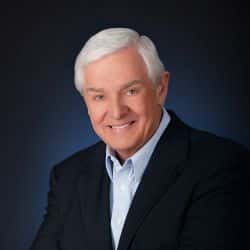
    David Jeremiah

    Our goal should be to simply be truthful, not to attack or defend anyone. I’ve heard David Jeremiah teach, on the radio, many times in the past. I’ve never personally heard him say anything that concerned me. However: as someone who has not followed him closely, I’m uncomfortable recommending him based solely on past impressions. I’m also entirely unwilling to call anyone a false teacher without seeing, objectively, that they’re teaching falsely.

    For more information on that, please read What is a False Teacher?

    The trouble with other people’s websites

    When I’m unfamiliar with a teacher, I begin my research by looking for the things that other people have found. There’s no need to reinvent the wheel, so if someone has already done solid research, I can begin there. Unfortunately, after reviewing around a hundred different websites that call David Jeremiah a false teacher, I’m no closer to having any answers. Why? Because different people have different ideas of what makes someone a false teacher. Here’s a short list of the reasons that some call Jeremiah a false teacher:

    • He’s on TBN.
    • He’s appeared onstage with false teachers.
    • He’s quoted some people whose beliefs contradict the Bible.
    • He’s an agent of Rome and a secret supporter of the Jesuits.
    • He doesn’t teach a pre-tribulation rapture.

    … and so on. That’s what I find when I look for hard answers about David Jeremiah.

    To be clear: Associating with non-believers, unbelievers, and false teachers is also not evidence that someone is a false teacher. There are plenty of examples of solid, Bible-believing Christians spending time with non-Christians and heretics without compromising their own faith, or teaching falsely.

    To be clear: simply quoting non-believers is not evidence that someone is a false teacher. There are many quotes in the Bible that originated with non-believers.

    To be clear: while some believe that the Roman Catholic church is the Babylon of Revelation, most do not. This is an interpretive question that can’t be answered at this point in history, so the charge amounts to little more than a conspiracy theory… and I see no direct connection between Jeremiah and the Vatican to begin with. This is overly dramatic at best, and certainly a kind of immature mud-slinging.

    To be clear: doctrinal disagreements between Christians are not evidence that someone is a false teacher. If you believe in the rapture but your brother does not, that isn’t evidence. That’s an “in-house debate” between Christians, not evidence that your brother is a wolf in sheep’s clothing.

    What does make someone a false teacher? Teaching falsely. I’ve seen virtually no actual quotes from David Jeremiah on the dozens of website that proclaim that he’s a false teacher. This simply should not be.

    Cause for concern

    However: these things are not to simply be dismissed. When someone aligns themselves with heretics, it’s wise to consider whether they’ve joined them… or, at the very least, whether they lack the discernment needed to be a wise teacher. There’s no question that David Jeremiah spends a lot of time with people who are demonstrably false teachers. 2 John 1:10-11 points to the fact that we are not to welcome a false teacher: If anyone comes to you and does not bring this teaching, do not take them into your house or welcome them. Anyone who welcomes them shares in their wicked work.

    I’ve not seen any quotes from David Jeremiah that contradict clear Scriptures, or the basic doctrines of the Christian faith. I’ve not heard him say anything directly that I can compare with a particular Bible verse to show that he’s a false teacher. That’s why he’s not on the List of False Teachers.

    That’s also why he’s not on the list of Bible Teachers I Can Recommend. I need to continue my research, which takes time. I can’t rely on any of the dozens and dozens of websites I’ve found that are essentially immature attempts at making a case against him. I have to take the time to listen to a bunch of his sermons.

    I’ve seen evidence that he’s joined the TBN false teaching of the prosperity gospel… but I haven’t seen the video. I’ve seen evidence that he lacks the discernment needed to be considered trustworthy… but I haven’t heard his unwise recommendations myself. For that reason, I write this warning.

    Until I know more, I’m unable to recommend David Jeremiah. Until I know more, it would be foolish and unwise and almost certainly sinful for me to suggest that he’s a false teacher. I refuse to bear false witness against my neighbor, let alone my brother in Christ.

    Please pray for David Jeremiah, that he will be faithful to the Scriptures. While you’re at it, please pray for me as I work to help those who trust me learn whether they can trust others. I don’t take this lightly, and I don’t do it for myself. I simply get too many requests for this kind of information, and can’t ignore them.

  • Is the Five-Fold Ministry False Teaching?

    Is the Five-Fold Ministry False Teaching?

    I’m often asked to assess what others teach. I do not do this lightly, but it is necessary. Before reading this page, or any of the pages about specific people, I recommend that you read What is a False Teacher?, which explains what the Bible says about false teachers, and why I would bother to research who they are and what they say. You may also want to check out a list of Bible Teachers I Can Recommend.

    I regularly get questions about those who call themselves ‘apostles’ or ‘prophets.’ My opinion is irrelevant, of course. The important question is whether anyone today should use those terms for themselves. In this article, I focus on the ‘apostle’ part of the five-fold ministry, to clear up the questions about modern-day apostles.

    The idea comes from Scripture

    The idea of the five-fold ministry comes directly from Ephesians 4:11 where Paul lists 5 (or four) kinds of roles that equip Christians for service. Here’s the verse, with some of its context:

    So Christ himself gave the apostles, the prophets, the evangelists, the pastors and teachers, to equip his people for works of service, so that the body of Christ may be built up until we all reach unity in the faith and in the knowledge of the Son of God and become mature, attaining to the whole measure of the fullness of Christ.

    That’s good stuff. Here are the 5:

    • Apostles
    • Prophets
    • Evangelists
    • Pastors
    • Teachers

    I say there might be four because many scholars suggest that pastor and teacher should be combined as pastor/teacher. The number isn’t really important for our discussion. The question is whether the five-fold ministry, as expressed today, matches what we see in the New Testament. Keep in mind that there’s some variety of belief within those who teach about this, and that not everyone sees things in exactly the same way.

    Is it for today?

    Is the ‘five-fold ministry’ only found in the first-century church, or is it something that should be emulated and repeated today? It’s my belief that the five-fold ministry, as expressed by Paul in Ephesians 4, is a thing of the past. When I say that, I don’t mean that it’s no longer needed. I mean that it’s a historical thing, like Jesus’ birth and death and resurrection. Those are obviously still relevant today, but they don’t need to be repeated. To be clear: the New Testament doesn’t talk about apostles and prophets in the way that five-fold folks do, and that raises a red flag.

    The idea is that today’s church has these 5 ‘offices’ or roles, and that all 5 are needed to today. If this were true, then each church could have their own apostles and prophets. That isn’t what we find in the New Testament. Instead, ‘apostles and prophets’ refer to specific people who laid the foundation of the church… and that foundation is the same for every church, rather than being localized.

    This passage is in Ephesians 4. Let’s go back a bit to Ephesians 2 and see another place where Paul mentions apostles and prophets:

    Consequently, you are no longer foreigners and strangers, but fellow citizens with God’s people and also members of his household, built on the foundation of the apostles and prophets, with Christ Jesus himself as the chief cornerstone.

    Note this phrase: “built on the foundation of the apostles and prophets.” The NIV (a fine translation) doesn’t quite capture what the Greek says. The NASB, a stricter word-for-word translation, expresses it more fully. They both express the meaning, but “having been built” is more precise than “built.” In context, Paul was saying that the Christians in Ephesus had been made one with the Jews because of Jesus, who made the two groups one. BOTH were built on the foundation of the apostles and prophets and “in Him the whole building is joined together.”

    The key is that the apostles and prophets were the foundation for both. The prophets for the Jews weren’t modern-day prophets, but Jewish prophets who warned Israel to return to God. The apostles weren’t modern-day prophets, but the apostles of Jesus… those who personally encountered Him while He ministered in Israel, who saw Him do what He did. THAT is the foundation on which the church has been built. Just as Jesus died and rose again and doesn’t need to repeat the process, so the work done by the apostles and prophets has been completed. The foundation of the church has been laid.

    The biblical definition of an apostle

    How do we know this? Let’s look at what happened after Judas betrayed Jesus and killed himself. The twelve had become eleven. They needed to choose a replacement for Judas, and here are the requirements, from Acts 1:17-22:

    Therefore it is necessary to choose one of the men who have been with us the whole time the Lord Jesus was living among us, beginning from John’s baptism to the time when Jesus was taken up from us. For one of these must become a witness with us of his resurrection.

    THAT is an apostle. They couldn’t replace Judas with just any old believer. They had to choose someone who could personally testify that they had witnessed Jesus in action. Paul wrote specifically in 1 Corinthians 15 about the ones to whom Jesus appeared:

    • Cephas (Peter)
    • then to the Twelve (the other 10 of Jesus’ closest disciples, minus Judas)
    • then to more than 500 of the ‘brothers and sisters,’ who were also disciples
    • then to James
    • then to all of the apostles
    • and last of all to Paul.

    Last of all to Paul. Now, Paul mentions several times that he’s not a typical apostle. Why? Because he didn’t follow Jesus when He was alive and ministering in Israel. The other apostles did. So, if Paul persecuted the church at that time, how could he be considered an apostle? It’s because He personally encountered Jesus after His resurrection, and was SENT (the meaning of the word ‘apostle’) to minister to the Gentiles by Jesus Himself.

    For verification: Luke, the writer of Acts, called Paul an apostle. Paul called himself an apostle in his writings, which Peter said were Scripture. The one common denominator in both the regular apostles and Paul, the atypical apostle, was that they saw Jesus alive after He had been killed and had been sent to teach others what He taught.

    The foundation has already been laid

    The church – everyone who has been born again, throughout all of history, all over the world – has been built on the foundation of the Old Testament prophets and the New Testament apostles. We have all we need for life and godliness in the Scriptures, in the one true gospel that was handed down once for all. Modern-day apostles and prophets can’t add to the gospel, or improve on it. We need no continuing revelation, which is the basis for the five-fold ministry.

    While there are lots of people who believe in the five-fold ministry that otherwise have orthodox theology, they can’t substantiate their position from Scripture. Instead – in my experience, and in the experiences of many others – those who consider themselves to be modern-day apostles and prophets both teach contrary to Scripture and go far beyond Scripture when they teach. For those reasons, I can never recommend an ‘apostle’ or ‘prophet’ as someone who can be trusted to handle Scripture responsibly.

  • Problematic Bibles

    Problematic Bibles

    I’m regularly asked about whether a specific Bible is good or bad. Most of the Bibles in the world are just fine. They adequately communicate God’s message to humanity without significantly substituting human ideas or traditions for divine revelation.

    That’s not the whole story, of course. There are a number of Bibles that should be avoided entirely. This list is incomplete, and I have not written about each individually to this point, but I will as time permits.

    Bible VersionProblems
    Bible in Living EnglishThe work of anarchist Steven T. Byington was published by the Jehovah’s Witnesses in 1972, presumably because they agreed with his work.
    Cepher BibleA non-scholarly work that claims to restore what’s missing from modern English Bibles, from single words to entire books. The implication is that modern Bibles are either wrong or incomplete, or both. Their process is not primarily translation, but transliteration.
    JST
    Joseph Smith Translation
    Also known as the IV (Inspired Version), the JST is an altered version of the King James Bible designed to fit the theology of Joseph Smith, founder of the Church of Jesus Christ of Latter-Day Saints (Mormons), a pseudo-Christian cult.
    NWT
    New World Translation
    Produced by the Jehovah’s Witnesses, a pseudo-Christian cult, to fit their own theology.
    RSV
    Revised Standard Version
    While the RSV is generally considered reliable, it suffers from the theologically-liberal positions of the National Council of Churches. Among their members, for example, is the Swedenborgian church. Their unbiblical teachings include that salvation is available through all religions, that Jesus has already returned, and that Heaven and Hell are simply our personal, present, inner experience as individuals.
    TCWB
    Clear Word Bible
    Produced by the Seventh-Day Adventists (but not their official Bible), this is a paraphrase that alters the text, and adds to the text, to fit SDA doctrines.
    TPT
    The Passion Bible
    Not translated by a qualified team, but paraphrased by one person, Brian Simmons. Designed to promote unbiblical New Apostolic Reformation principles, not to reflect what eyewitnesses to Jesus’ ministry originally wrote.
    The Pure Word BibleThe New Testament, translated by one person, Brent Miller. In addition to dubious claims about his work and the Greek language, Miller is known for sensationalist claims about the end of the earth, citing Nostradamus, Edgar Cayce, and Mayan and Incan prophets.

    What about The Message Bible?

    I’ve received a fair number of emails and comments about The Message, by Eugene Peterson. Some condemn it outright, others recommend it. It seems wise to mention it here.

    The Message is not a Bible in the traditional sense. It is – at best – a paraphrase. It’s what Eugene Peterson would say to help people better understand what the Bible says. It is better categorized, in my opinion, as a personal commentary on the Bible, and not a Bible itself.

    On a positive note, Peterson seems to enjoy a good reputation among conservative Bible scholars, including some who have spent decades on translation committees. Not being a Bible translator myself, I rely on a number of these folks to give me some guidance… and I’ve yet to hear anyone in that group condemn The Message outright.

    On a negative note, the real problem is not what Peterson has written. The problem is the perception about what Peterson has written. The Message has been marketed as a Bible in the traditional sense of Bibles, putting it in the same category as other Bibles. Those other translations were produced by large numbers of scholars, carefully considering every word with an eye toward the original manuscripts, linguistics, church traditions, modern language, and bias. The Message was produced by one person, and should not be put in the same category. Bible commentaries can be very helpful, and The Message can be useful when used as a commentary. Peterson was a scholar, including studies in ancient languages… so I wouldn’t rule out his point of view as unbiblical. I would, however, caution every reader in this way:

    Do not use The Message as your primary Bible. Not for reading, not for devotions, not for study. Use it to learn what Eugene Peterson thought, remembering that he was just one man. Where his thoughts match closely what God has revealed, we should be thankful. Where we have questions, we should be like the Bereans: we should receive the message with great eagerness, then go to the Scriptures to see if what Peterson has said is true.

  • What is the Secret Behind “The Secret”?

    What is the Secret Behind “The Secret”?

    A lot of people believe in the ‘law of attraction.’ It’s been promoted by people like Robert Schuller and Oprah Winfrey, and it’s the foundational idea behind most Word of Faith preachers. What is it? How does it work, if it works at all? Should Christians study it?

    The basic idea is related to a biblical truth: we reap what we sow. If you plant potatoes, you don’t get pineapples. This is taken beyond reason, however, when we pretend that we can sow words and reap reality.

    Go to the Original Article

  • Ranking #1 is a Symptom

    Ranking #1 is a Symptom

    Over the years, GodWords has been ranked #1 on search engines again and again… from the good old days of Webcrawler and HotBot and Ask Jeeves to Google and Bing today. I’m not bragging. I say this to make what should be an obvious point about the state of things.

    Most businesses and churches and non-profits would love to rank #1. For anything. Most don’t even rank #1 for their own name! A lot of companies pay a lot of money to try to reach #1. They pay fly-by-night SEO agencies. They pay local ad agencies who don’t know much about how the web works. They also pay big money to big agencies full of experts in the field, hoping to rank well enough to get just a bit more traffic than they would naturally get.

    Why have I had so many #1 rankings?

    Before I get to that, let me take a moment to provide a bit of credibility for my point of view.

    I’ve been hand-coding websites since 1999. I’ve been a full-time freelance web designer since 2005, working from home before it was cool necessary. Before that I was a world-class expert in pay-per-click advertising, consulting with the biggest ad agencies and largest online advertisers in the world. I ran a team of experts for the leader in the field. I’m not patting myself on the back… I’m just saying that my work has revolved around websites for a long time.

    I used to keep a file that listed my #1 rankings, organized by date and search engine, along with the total number of results for each search. Like this:

    Elevation Church false doctrine – #1 on Google – 1,640,000 results

    That’s from today. I stopped keeping track a long, long time ago… it was simply too much work to keep track of that much data. Those were the days when I longed to reach 10,000 visits per month.

    GodWords isn’t a gigantic blog. At the time of this writing, I’ve written fewer than 500 articles. I get plenty of traffic, and lots of comments and emails… but it’s not like I’m a serious influencer in the church world. I’m a very small fish in a very big pond. I’m not trying to be anonymous, yet almost nobody knows my name. Why? Because I’m not really into promoting myself. So how have I reached #1 so many times for so many years?

    How do I get to #1?

    Enough about me. This isn’t about me at all, really. It’s about YOU.

    If you’re like most GodWords readers, you arrived here for the first time today. You got here by asking a question at Google, or Bing, or DuckDuckGo, or some other search engine. You clicked on a result, and landed here. That’s the basics of how search engines work. You ask, they deliver, you browse.

    What were you looking for? I’m not sure. Here’s what I know: you were hoping to find answers. Most of my traffic comes from people asking questions about baptism, or false teachers, or sabbath-keeping. Some ask more questions when they get here, and I work hard to answer them all. Here’s the point: people are looking for help.

    We don’t know who to trust anymore

    Read that again. You know it’s true: we don’t know who to trust anymore. Here in America, we used to (mostly) trust our government, our pastors, and TV news. Things have changed. Today, we see that our government is as divided as the people on the street… if not more. Today, we see that TV news is less like real journalism and more like an argument about which points of view make you a better person. Today, we’re pretty cynical about pastors. Why? Because there are so many high-profile church leaders who aren’t much like Jesus. They seem more like politicians and news commentators.

    THAT is why GodWords has ranked #1 for so many years. People are hungry, and a lot of us aren’t getting fed properly. When it comes to the important questions in life – the stuff that really matters – we’re starving.

    The questions are shocking

    Again and again, I’m shocked at what people will ask me. I’m a stranger to 99.9% of you, yet people ask the most personal, transparent, intimate questions… all the time. Why? Because they don’t know who to trust. They’re willing to take a chance on being vulnerable to a stranger because they have nothing left to lose. They can’t ask their pastor (for whatever reason). Their politicians don’t seem like a good source of truth. TV news? Um, no.

    When it comes to the most important questions in life, most of them have something to do with the following:

    • Does God really care about me?
    • What does a “good life” really look like?
    • I need help to be the person I know I should be.
    • Who should I trust?

    That last one is the big one. When it comes to making important life decisions, we want to get things right… but we don’t know how life works, or who to listen to. We’re desperate for something we CAN believe in. For someone we CAN trust.

    Spoiler alert: you really can trust God… but that’s not the point today.

    False teachers make me more popular

    I’ve been fascinated by false teachers since the late 70’s. Yeah, I’m that old. However: I didn’t write anything about false teachers on GodWords for over 20 years. Why? Because that’s a big fat can of worms I didn’t really want to open. You can’t put the worms back in the can after that.

    My pastor asked whether I knew anything about the New Apostolic Reformation. I didn’t know much, so I did some research. I published my findings, and that broke the ice. I decided it was finally time to bust open that can of worms. Why? Because people have been asking about false teachers for years, and I only answered their questions via email. Rather than answering the same questions again and again, I should publish what I know so more people can learn the truth.

    Since then, I’ve written a number of articles about false teachers. They quickly became the most popular articles on GodWords. Why? Because people are STARVING FOR TRUTH. That’s why false teachers become popular in the first place, of course… and that’s why writing about them brings traffic to GodWords.

    Some examples

    This morning, Google gave me some numbers on my traffic. That’s why I’m writing this. I’m excited about bringing in new readers, but I’m sad that so many actually NEED to ask strangers important questions about what’s true and what’s not true. Today, here’s where I rank for some prominent searches:

    • Elevation Church false doctrine (that’s Steven Furtick’s church): #1
    • Steven Furtick false teacher: #1
    • Name changes in the Bible: #1
    • What happens if you never get baptized: #1
    • Steven Furtick heresy: #1
    • False teachers to avoid: #2
    • Is Steven Furtick a false prophet: #2
    • False teachers today: #3
    • False Christian teachers: #4
    • Word of Faith preachers list: #9

    Those are all first-page results. I could list more, but you get the point. I’m not patting myself on the back. I wish I didn’t have to answer questions about false teachers. I wish people were able to tell the difference between truth and lies. I wish more people could ask their pastors about the truth… but many of the questions I get are ABOUT those pastors.

    Conclusion

    Folks, I love you. I’m glad you’re here, as that gives me the opportunity to try to be helpful. I’m sorry you had to search the web to find a stranger to talk to.

    What would it take for me to no longer be useful to so many people? It’s simple:

    1. Churches need to teach and preach directly from the Bible, and primarily the New Testament. That’s you, pastor. That’s you, teacher. That’s me, too.
    2. Christians need to decide to take their faith more seriously. Being a Christian isn’t about reading the Bible or attending church or voting a certain way or donating to the right charities. Being a Christian isn’t about avoiding sin and making sure the ‘dirty world’ stays outside your bubble of godliness. Being a Christian is about laying down your life, taking up your cross, and following Jesus.

    That’s it. A Christian isn’t a believer. A Christian is a disciple… a student of Jesus, who works hard to listen, learn, and obey Him. If more churches taught directly from the Bible, more Christians would understand what it means to follow Jesus.

    If more Christians followed Jesus more closely, more non-Christians would realize that THAT is what they’ve been searching for all along. 1 John 5:12 is my closing thought:

    God has given us eternal life, and this life is in his Son. Whoever has the Son has life; whoever does not have the Son of God does not have life.

  • The False Teaching of Chris Oyakhilome

    The False Teaching of Chris Oyakhilome

    I’m often asked to assess what others teach. I do not do this lightly, but it is necessary. Before reading this page, or any of the pages about specific people, I recommend that you read What is a False Teacher?, which explains what the Bible says about false teachers, and why I would bother to research who they are and what they say. You may also want to check out a list of Bible Teachers I Can Recommend.

    Pastor Chris Oyakhilome is the president of LoveWorld Incorporated, also known as Christ Embassy, based in Lagos, Nigeria. He holds conferences around the world with a specific focus on healing. He operates an “International School of Healing,” and is undoubtedly a false teacher.

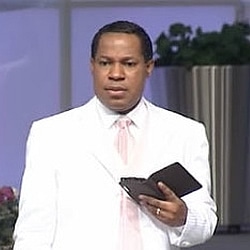
    Chris Oyakhilome

    Like so many others in the Word of Faith movement, “Pastor Chris” Oyakhilome twists Scripture, makes unbiblical claims about the nature of God, the nature of humans, faith, sickness, and more.

    God’s class of divine beings

    Oyakhilome’s website contains “Divine Health Confessions.” These display again and again the unbiblical ideas taught by many in the Word of Faith movement. For example:

    I live above the elements of this world. I live above sickness, disease, and death. I’m immune to anything that ravages the lives of men; I belong to God’s class of divine beings. I am a partaker of the divine nature; my body is sustained by a force that the ordinary man cannot perceive. My kidneys, lungs, heart, all tissues and every organ in my body function properly. 1

    These ‘confessions’ are designed to activate the ‘law of faith.’ That is, of course, the idea that we speak into existence the things we want, and avoid speaking of things we don’t want. By repeating these confessions, so we’re told, we manifest reality through faith. Time will tell if Pastor Chris Oyakhilome is ‘above death,’ but I’d suggest his chance of not dying at some point is near zero.

    Take note of the phrase “God’s class of divine beings.” This is the same nonsense taught by false teacher Kenneth Hagin, who famously taught this:

    Man… was created on terms of equality with God, and he could stand in God’s presence without any consciousness of inferiority… He made us the same class of being that He is Himself. 2

    This is, of course, entirely unbiblical. We are not in the same class as God. Don’t take my word for it… here’s what God Himself has to say about it:

     I am God, and there is no other; I am God, and there is none like me. Isaiah 46:9

    Like other false teachers, Oyakhilome takes familiar phrases from Scripture and re-uses them to say something else. In Colossians 2, Paul wrote that “in him (Christ) dwelleth all the fulness of the Godhead bodily.” What does Pastor Chris say?

    The fullness of the Godhead dwells in me bodily, making me impregnable to sickness, disease, death, and the devil. 3

    No, the fullness of the Godhead does not dwell in him bodily. The Father is in Heaven, and Christ is with Him. Jesus will return one day, but that day has not come… so the only one that could be dwelling in us bodily is the Holy Spirit, who indwells all believers. I don’t know whether Oyakhilome has been born again or not, so I can’t say whether the Holy Spirit dwells in him.

    Every creature reproduces after its kind. A dog gives birth to dogs, a cat gives birth to cats, a cow gives birth to cows, a monkey reproduces monkeys and a human reproduces humans. So when God gives birth, what do you think He’ll reproduce? Gods, of course! 4

    This, again, is heresy. God is not a creature. God does not give birth as creatures do, combining DNA to make a new creature. You are not a God. I am not a God. Pastor Chris Oyakhilome is not a God. God Himself told us there are NONE like Him.

    To make matters worse, Oyakhilome claims that the apostles got this wrong… that they erroneously thought that they, themselves, were human:

    I want you to understand, at a certain period the apostles thought there were humans. They said so, they thought so, when they tried to stop others from almost worshiping them. They said, ‘Look, we’re humans like you.’ No. That’s where they were wrong. 5

    Consider what this means: according to “Pastor Chris,” the Bible is quite simply wrong. We can’t trust what the apostles said about themselves, and now – according to this false teacher – we know better than they did.

    I have eternal life; thus, I have been elevated to God’s class of being. I am conscious of my divine origin. 6

    I am a carrier of divinity. The fullness of the Godhead dwells in me bodily. 7

    That one is particularly blasphemous… Oyakhilome says of himself, and encourages you to say of yourself, something that can only be said of Jesus. We read these words in Colossians 2:9: For in Christ all the fullness of the Deity lives in bodily form. This quote, by itself, is enough to condemn “Pastor Chris” as a false teacher.

    No sickness?

    Like so many others, “Pastor Chris” focuses heavily on healing. After all, he runs an international school of healing, so that makes sense. Also like so many others, he makes unbiblical claims about what God will and won’t do… and what Christians can expect with regard to health:

    The Word of God quickens my mortal body; this is my vital experience! My health flourishes daily because the power of Jesus Christ continually works in me. I do not get sick; no infirmity can thrive in my body because the Spirit of the Lord lives in me. Hallelujah! 8

    Perhaps Timothy, pastor in Ephesus, needed the apostle Paul to explain this to him. Instead, Paul told him to take a little wine for his stomach. We also see in Galatians 4 that Paul was sick. Maybe he didn’t know about positive confession. Had he known what Word of Faith teachers would say 2000 years later, maybe he wouldn’t have left Trophimus sick in Miletus, but schooled him in the supernatural ways of divine healing.

    Again and again, Oyakhilome claims that no Christian should ever be sick:

    I’ve been delivered from sin, sickness and death, and catapulted into God’s realm of abundant life. My body is the temple of the Holy Ghost; therefore, I am ‘uninfectable’. Hallelujah! 9

    I only speak life and health because I cannot be sick. 10

    No sickness, disease, or infirmity can clasp itself to my body. 11

    My whole being is immune to death, decay and the corrupting influences in the world! 12

    When we consider Oyakhilome’s own words, it’s clear that he is a false teacher. Of course, even false teachers say many true things… that’s not the issue. The issue is that the New Testament tells us again and again to not put up with those who teach falsely. Regardless of how one feels about a teacher, we should always be willing to compare their words with God’s words. Only those who teach the same gospel that Jesus handed down are true teachers.

    If you’ll stay in the Word, you’ll always be healthy and sound. If you’d meditate on the Word, it’ll cure that blood condition, get rid of the HIV, heal your bones, heart, and skin, and produce life in you! It’ll cure that wound that has defied treatment. Speak the Word to that infirmity; talk to that cancer; talk to your blood cells; command the diabetes to be healed! 13

    When the Holy Spirit takes over your life, He’ll drive every sickness out of your body; He’ll make right everything that was wrong. 14

    It’s a shame that Jesus disciples didn’t know this, or they would have written it down in the New Testament. The apostle Paul and his friends would have benefited greatly from this knowledge, but they apparently didn’t know it… or, logically, they weren’t filled with the Holy Spirit. No, Oyakhilome is clearly wrong.

    As with virtually every prosperity preacher, “Pastor Chris” teaches that every Christian who is living as they should will not be sick. Again, this is not what we see in the New Testament, so we must reject this teaching outright.

    No Sin?

    A man of God is handpicked by God, set on course by God. If you study the scriptures, you will not find one man of God go against God, sinning against God. 15

    This is another audacious claim, and it’s easy to unravel. Everyone would claim that King David was a man of God, yet David definitely sinned. After sleeping with another man’s wife, then having him killed, David said this:

    Then David said to Nathan, “I have sinned against the Lord.” 2 Samuel 12:13

    It’s simply amazing that a false teacher can be so obviously, blatantly wrong and still be followed by millions. Please pray for those who follow “Pastor Chris.”

    You are the Word of God?

    Do you know you are God’s Word?  When you were born again, you were born by the Word of God. This means your destiny in the realm of the Spirit is to be the Word of God because you were born by the word of God. It means your nature is of the Word and your character is of the word. 16

    To be sure, there’s nothing in the Bible to suggest any of this. As with other Word of Faith teachers, Pastor Chris seeks to elevate mankind to a higher place than the Scriptures tell us. The serpent’s lie in the garden was that we can become like God… but we can’t. God is God and we are not.

    Misquoting Scripture

    Your abilities are unlimited. Nothing is impossible for you to accomplish, because you’re sufficient in God’s sufficiency (2 Corinthians 3:5) 17

    Let’s read 2 Corinthians 3:5 to see if Pastor Chris quotes it accurately… but let’s include more of God’s Word for context:

    Not that we are competent in ourselves to claim anything for ourselves, but our competence comes from God. He has made us competent as ministers of a new covenant—not of the letter but of the Spirit; for the letter kills, but the Spirit gives life.

    Did Paul suggest anything like “your abilities are unlimited”? No, of course not. God has made us competent. Oyakhilome has twisted this passage to say something Paul did not intend.

    Born great?

    To become great, you have to be born great. If you are born again then you are the seed of Abraham. That means you have greatness in you. 18

    Again, Oyakhilome twists God’s Word. Who is great in the Kingdom? Let’s see what the Bible says:

    Jesus, in the Sermon on the Mount, explained that whoever practices and teaches these commands will be called great in the kingdom of heaven. Matthew 5:19. Not whoever is born again. What else can we learn about greatness, as God sees it?

    At that time the disciples came to Jesus and asked, “Who, then, is the greatest in the kingdom of heaven?” He called a little child to him, and placed the child among them. And he said: “Truly I tell you, unless you change and become like little children, you will never enter the kingdom of heaven. Therefore, whoever takes the lowly position of this child is the greatest in the kingdom of heaven. Matthew 14:1-4

    Jesus called them together and said, “You know that the rulers of the Gentiles lord it over them, and their high officials exercise authority over them. Not so with you. Instead, whoever wants to become great among you must be your servant, and whoever wants to be first must be your slave – just as the Son of Man did not come to be served, but to serve, and to give his life as a ransom for many.” Matthew 20:25-28

    Take the lowly position. Be a servant. Be a slave. This is not at all what Pastor Chris said. He talks about equality with God, about greatness, and living large. Jesus taught the opposite. The prosperity gospel is not almost the true gospel… in many ways it’s truly the exact opposite.

    Christ is a place?

    Christ is not only a person, Christ is a place. When you come into Christ, you don’t come into a person; you come into a place. 19

    This is nonsense, of course.

    Blessed?

    When you’re anointed, you become blessed of God such that everything you touch or do prospers. To be ‘blessed’ means to be empowered to prosper. 20

    Again and again, Oyakhilome twists the truth into something else. He claims to teach the Bible, yet the Bible’s definition of blessed – in both Hebrew and Greek – is happy. Not ’empowered to prosper,’ which comes directly from the imagination of prosperity preachers.

    Legal Troubles

    After a five-year investigation of the United Kingdom branch of Pastor Chris Oyakhilome’s church, the UK Charity Commission indicted the church’s board of trustees of a wide range of fraudulent practices, including and misconduct and mismanagement of funds, illegally registering properties in the name of trustees, failure to pay taxes, criminal violation of British regulations, and more.

    Remember that these folks teach the Word of Faith prosperity doctrine. Consider this question: why do so many prosperity preachers get into financial trouble? If what they teach is true, they should have all the money they need, and never even consider engaging in fraud, mismanagement, and tax evasion.

    Other false claims

    When you got born again your past was not erased, it became non-existent. 21

    Good things don’t happen to the child of God; the child of God brings forth good things out of him. 22

    All of creation, both living and non-living, has intelligence. 23

    Sources

    1. Facebook: September 17, 2021 LINK
    2. Hagin, Zoe: The God-Kind of Life, pages 35-36 and 41.
    3. Facebook: July 30, 2021 LINK
    4. 7 Things The Holy Spirit Will Do In You
    5. Reported by The Church Newspaper Zambia, December 11, 2025 LINK
    6. Divine Health Confessions, April 7, 2026 LINK
    7. Divine Health Confessions, April 9, 2026 LINK
    8. Sermon at Christ Assembly Los Angeles, April 3, 2020 LINK
    9. christembassy.org LINK
    10. Divine Health Confessions, February 12, 2026 LINK
    11. Divine Health Confessions, September 18, 2021 LINK
    12. Affirmation Train, August 24, 2002 LINK
    13. Rhapsody of Realities, February 13th , 2018 LINK
    14. Seven Things the Holy Spirit Will Do in You, 2004, Page 15
    15. Christ Embassy Communion Service, September 8, 2014
    16. Sermon: You Are God’s Word!, March 23, 2010
    17. Rhapsody of Realities, January 2015
    18. Rhapsody of Realities Topical Compendium
    19. You’re Not of This World devotional LINK
    20. Seven Things the Holy Spirit Will Do in You, Page 31
    21. Rhapsody of Realities Topical Compendium
    22. Rhapsody of Realities Topical Compendium
    23. Rhapsody of Realities, January 20, 2017

    See the complete but incomplete False Teachers List

    Disclaimer

    What matters is what the Bible teaches, and whether those who preach and teach in Jesus’ name are teaching falsely. Don’t comment or email to tell me that I’m “just wrong.” It’s a waste of your time and mine. If you have something to say, include Scripture. I am far from perfect, and I can be wrong… so I don’t do any of this lightly, and I’m open to correction.

    Don’t bother telling me how this person or that person helped you. It’s a waste of your time and mine. Nobody teaches lies and falsehoods all the time. In researching these topics, I’ve heard a LOT that I appreciated, and have been inspired by even those who are otherwise far from the truth. The number of times someone is right is irrelevant to the question of whether they also teach lies. We should appreciate anyone who teaches us the truth, but that doesn’t mean we should uncritically follow them when we see significant problems in their lives, in their ministries, and in their teaching. Neither your opinion nor mine matter here.

    If you can provide evidence that one of these people has recanted their false teaching, please let me know. I would love to amend their article to show that they have changed what they teach.

    Finally: false teachers are not our enemies. If they’re not saved, we should pray for their salvation. If they are saved, we should pray that God will lead them to teach only the truth.

    See also: a list of Bible Teachers I Can Recommend