Tag: Bible

The Bible is a collection of books considered sacred texts by Jews and Christians. Divided into two groups, the 39 books of the Old Testament address first the origin of the universe and then God’s interactions with ancient Israelites. The 27 books of the New Testament include biographies of Jesus, a history of early Christianity, and letters instructing first-century believers on how best to follow Jesus.

  • New! Bible Reading Checklist

    New! Bible Reading Checklist

    Need a little extra motivation to keep reading your Bible? Keep track of your reading, chapter by chapter. This free tool can help, and it works offline. Install it on your home screen or bookmark it, and keep reading!

    I made this tool because I needed a little extra motivation. I spent most of my time answering other peoples’ questions, and not enough time just reading for myself. So, to help me chart my progress, I created my own Bible Reading Checklist. You can use it too!

    Features

    • Works offline – out of range or out of service, your settings will be saved
    • Light theme and Dark theme
    • Counters and cute little meters to show your progress
    • Mark chapter by chapter or a whole book at once
    • Free
    • Personalized – add your name
    • Links to the first chapter of every book (BibleGateway)
    • When you’re all done, the Help page has a button to reset for your next time through the Bible

    I’m a web designer, but I’m not a programmer. I made this for myself, and you can use it. If you have suggestions to improve the Checklist, I’ll listen… but I won’t necessarily implement them. I might, or I might not. My concern isn’t to develop a super-tool that works for everybody, but to make a tool I can use. If you have a good idea, I might add it because it works for me. As long as it isn’t broken for you, consider it a gift from me to you, for being a loyal GodWords reader.

    Go to the Bible Reading Checklist

    More Stuff

    How to install the Checklist to your home screen (How-to Geek)

    The Checklist uses your browser’s “local storage.” The whole thing works offline. Because it works in each browser individually, it will not save your settings from one device to another.

  • Timeline: Bible Translations

    Timeline: Bible Translations

    In the 2000+ years since Jesus was born, died, and came back to life, the Bible has become the most-translated book in history. The entire Bible has been translated into over 700 languages, and the New Testament into over 1,700 languages. Portions of the Bible have been translated into over 3,700 different languages.

    This list is English-based… that is, I want to list the timeline from the original writings to major or notable modern English Bibles. Please be patient while I gather that information. I’m also including some historically-significant partial Bibles. If you have some of that information, please don’t hesitate to send it along.

    Most modern Bibles use the ancient Hebrew manuscripts for the Old Testament and the ancient Greek manuscripts for the New Testament. This timeline does not imply the ridiculous and ahistorical idea that modern Bibles are the end of long series of translations of translations of translations. It’s simply a historical list of the dates of publication for each new Bible translation or version. Some dates are approximate. Beginning with the KJV, I have noted whether I would recommend a particular Bible for reading and study today.

    See a list of Problematic Bibles

    The Old Testament

    There is little doubt about the accuracy of the translation and transmission of the Hebrew Scriptures. The ancient Israelites were incredibly careful and diligent to make sure that what God had said was faithfully recorded and copied.

    The Septuagint

    The Latin name for the Greek translation of the Hebrew Scriptures means ‘seventy,’ and comes from the idea that 70 (or 72) Jewish scholars were asked by Egyptian king Ptolemy II (who was Greek), to complete individual copies to be placed in the Library of Alexandria.

    The New Testament

    As of this writing, we have almost 6000 Greek manuscripts of the New Testament. Some of these manuscripts are small, and many are only fragments of the full text, but that doesn’t mean much: the average Greek New Testament manuscript is 450 pages. Combined with tens of thousands of ancient manuscripts in Latin, Coptic, Syriac, Armenian (and more), it’s clear that the New Testament is comprised of the best-attested writings from the ancient world.

    For approximate dates of each New Testament book, read When Was the New Testament Written? For a list of biblical authors, read The Books of the Bible by Author.

    Vulgate

    Jerome of Stridon, at the request of Pope Damasus I, compiled and retranslated existing Hebrew, Aramaic, Latin, and Greek manuscripts to create a Latin Bible.

    Wessex Gospels

    Also known as the West-Saxon Gospels. This was not a complete Bible, but a translation of the four Gospels from Latin into a West Saxon dialect of Old English. This is noteworthy in part because the translation didn’t use any of the known Latin-language versions as its base. Seven manuscript copies survive, the earliest from 990.

    Old English Hexateuch

    The earliest English translation of the first six books of the Old Testament: Genesis, Exodus, Leviticus, Numbers, Deuteronomy, and Joshua.

    Wycliffe’s Bible

    John Wycliffe thought that Christians should be able to read the Scriptures in the language they know best. For him and his countrymen, that was English. His work began a process that was completed by a number of pre-Reformation scholars, resulting in the first English translation of the Latin Vulgate.

    A forerunner of Protestantism, Wycliffe found no Scriptural justification for the papacy, and was excommunicated from the Roman Catholic church 31 years after his death.

    Tyndale Bible

    William Tyndale’s version is considered the first English translation of the Hebrew and Greek texts, and the first to be mass-produced. He did not complete the whole Bible during his lifetime. His New Testament was published in 1525, and the Old Testament in 1530. In response to his writings, Tyndale was strangled for the charge of heresy by the Roman Catholic church. Among his crimes: maintaining the biblical teaching that faith alone justifies a man before God. Miles Coverdale finished Tyndale’s work about 2 years after his execution. According to recent scholarship, 75% of the KJV’s Old Testament and 84% of the New Testament comes directly from Tyndale’s translation.

    Coverdale Bible

    The first complete modern English translation and the first complete printed English translation, the Coverdale Bible was produced by Myles Coverdale. His New Testament was primarily based on Tyndale’s translation. For the Old Testament, not being a Hebrew or Greek scholar, he worked primarily from German Bibles and some Latin sources, including the Vulgate.

    Matthew’s Bible

    Following Tyndale’s execution, King Henry VIII promised an authorized version of the Bible. Because work on the later-published Great Bible was slow, an interim work was published. Working under the false name Thomas Matthew, John Rogers combined Tyndale’s New Testament, a combination of Tyndale’s and Coverdale’s Old Testament, and his own translation of the Prayer of Manasseh (an apocryphal work).

    The pseudonym “Thomas Matthew” may have been a poke at those opposed to Tyndale, as the meaning of those names in Greek is “a twin to the original gift from God.” Rogers may have used this name to hide from King Henry the fact that most of the work had been done by Tyndale, who was executed for it. Rogers was later killed by the Roman Catholic church for heresy, like his friend William Tyndale.

    Taverner’s Bible

    A minor revision of Matthew’s Bible, edited by Richard Taverner.

    Great Bible

    After Tyndale’s execution, King Henry VIII of England authorized Miles Coverdale to create an edited version of Tyndale’s work. Called “great” because of its large size, it was revised to remove the ‘objectionable’ parts of Tyndale’s previous work. Coverdale didn’t translate from the original Hebrew, Aramaic, and Greek texts, and this led to the creation of the Bishops’ Bible.

    Geneva Bible

    This was the first English Bible to include verse numbers, thanks to translator William Whittingham. It was also the first to translate the Old Testament directly from Hebrew. This was the Bible used by such prominent historical figures William Shakespeare, Oliver Cromwell, John Knox, John Donne, and John Bunyan.

    King James I of English so disliked the Geneva Bible that he commissioned his own Bible, the King James.

    Bishop’s Bible

    During the reign of Queen Elizabeth I, the Church of England authorized the production of a new English Bible in 1568. The 1602 edition was used as the starting point for the King James Bible.

    Douay-Rheims Bible

    In response to Protestant challenges to their authority, the Roman Catholic church published an English translation from Latin manuscripts. Scholars from the English College at Douay, France created the work, which was later published in Rheims, France. The New Testament portion was published in 1582, with the Old Testament coming in two parts in 1609-1610.

    King James Bible

    In 1534, King Henry VIII wanted to annul his marriage to Catherine of Aragon. When the Roman Catholic church denied his request, he separated from them, creating the Church of England. When King James later commissioned the KJV, it was specifically designed to conform to the structure and beliefs of the Church of England, replacing the Bishop’s Bible.

    Created by 47 of the best Church of England scholars, the KJV (also known as “The Authorized Version”) was seen as an improvement on previous English-language Bibles, and the translators hoped that others would make similar improvements to their work in the future. You can read their words in The Original Preface to the King James Bible. Most modern KJV Bibles are not the 1611 version, but the 1769 Oxford edition, edited by Benjamin Blayney.

    The KJV became the most popular Bible in history, and may be the most influential book in history. Even skeptics of Christianity regard the KJV as an important part of the development of the English language, even considering as ignorant those who have never read from it. Some adherents consider it the only acceptable English Bible in history. For more, read The King James Only Controversy.

    Not Recommended. The KJV is a good Bible, and should be considered trustworthy. However, since 1600, older and more reliable manuscripts have been discovered and translation methods have improved. Modern Bibles generally take advantage of both, which makes them more useful. Also, English has changed greatly over the past 400+ years. This Bible should not, for most, be used as a primary text for reading or study.

    Quaker Bible

    Anthony Purver, a Quaker (The Religious Society of Friends), worked for 30 years to produce ‘a new and literal translation of all the books of the Old and New Testament, with notes critical and explanatory.’ In direct competition with the KJV, the Quaker Bible was never popular. His work was not backed by any church, including the Quakers, and having one person produce a Bible isn’t generally a positive thing. Charles Haddon Spurgeon’s comment may explain it all: “Often ungrammatical and unintelligible. Not without its good points, but much more curious than useful.”

    Thomson’s Translation

    Charles Thomson took 19 years to complete his translation of the Greek Septuagint (Old Testament). A Greek scholar, his was the first English translation. He released a New Testament in the same year. His finished work was published in four volumes and was printed in Philadelphia. One thousand sets were published. Considered to be very serious scholarship, and the scholars working on the 1881 Revised Version in England consulted his work.

    Webster’s Revision

    Noah Webster, whose name is synonymous with the term “dictionary,” produced a limited revision of the KJV, mainly to update some of the more archaic language. He made very few changes, and the changes he did make were generally limited to English vocabulary and grammar, rather than translation improvements. There are two notable exceptions. The first was changing “Easter” in Acts 12 to “Passover,” as the KJV translators had erred. The second was replacing “Holy Ghost” with “Holy Spirit,” as common English usage of ‘ghost’ suggested something other than God Himself.

    Young’s Literal Translation

    Robert Young used the Textus Receptus and the Masoretic Text to create a very literal translation of the Bible. One notable quality of his work is the use of the present tense, which is often not sufficiently expressed in English. For example, most English Bibles render Genesis 1:3 as “And God said, let there be light; and there was light.” the YLT renders the Hebrew in this way: “and God saith, let light be; and light is.”

    Julia E. Smith Parker Translation

    The daughter of a minister, Smith was disappointed when William Miller’s prediction of Jesus’ return didn’t happen as expected. She believed that was due to straying from the original languages of the Bible, so she made her own. At this writing, it’s the only complete, unaided translation of the Bible by a woman.

    Because Smith translated very literally, using strict word-for-word techniques, her work was very difficult to read. She took eight years to complete it, but didn’t seek publication for 21 years. At the age of 84, she had 1,000 copies printed… at a retail price of $2.50 each.

    Revised Version

    Still the only authorized revision of the King James Bible in England, the Revised Version was released in two parts: the New Testament in 1881, and the Old Testament in 1885. The translation team’s goal was “to adapt King James’ version to the present state of the English language without changing the idiom and vocabulary,” and “to adapt it to the present standard of Biblical scholarship.” This is significant because the RV is considered the forerunner of modern Bibles, which are designed to update the language of the text to make it more easily understood by modern readers.

    Notable features: the text was arranged into paragraphs for the first time, Old Testament poetry was printed in poetic arrangements, and marginal notes were added to alert readers to variations in ancient manuscripts.

    Not Recommended. The RV, to a lesser extent than the KJV, lacks the benefits that come from updated language and the availability of older manuscripts.

    Darby Bible

    John Nelson Darby led a team that published a translation of the New Testament in 1867, and his students published an Old Testament translation based on his French and German translations in 1890. Darby’s work was not intended to be read aloud, but was only for study. Considered the father of modern dispensationalism, Darby popularized the theory of a pre-tribulation rapture. His translation decisions were questioned for being biased, and drew criticism from Charles Spurgeon and others.

    American Standard Version

    The ASV is a revision of the Revised Version for American audiences. American scholars were invited to take part in the RV by correspondence, and they published their own version after a contractual delay of 15 years.

    Notable features: God’s name (the Tetragrammaton) is rendered as Jehovah, rather than Lord, and ‘Holy Ghost’ was dropped in favor of ‘Holy Spirit.’

    Not Recommended. As with the RV it’s based on, most readers should replace the ASV with a more modern version.

    Bible in Basic English

    The BBE was translated by S.H. Hooke using only 850 of the most basic English words. One hundred words were added to assist in understanding poetry, and 50 “Bible words” brought the total to 1,000 different words. The New Testament was published in 1941, with the Old Testament in 1949.

    Revised Standard Version

    The RSV, commissioned by the National Council of Churches, is a revision of the American Standard Version of 1901. Notably, translators used the Nestle-Aland Greek text for the New Testament and the Masoretic Text for the Old Testament. Some portions of Isaiah followed the text found in the Dead Sea Scrolls. Later editions, at the request of the Episcopal Church in the US, included the Deuterocanonical books.

    Not Recommended. The RSV suffers from the theologically-liberal positions of the National Council of Churches. Among their members, for example, is the Swedenborgian church. Their unbiblical teachings include that salvation is available through all religions, that Jesus has already returned, and that Heaven and Hell are simply our personal, present, inner experience as individuals. While it’s clear that the NCC holds to many biblical positions, and that there are undoubtedly many among their members who are born again, I cannot recommend a Bible produced by them.

    New American Standard Bible

    The NASB (also known as the NAS) is a revision of the American Standard Version of 1901, published by the Lockman Foundation. Widely considered the most technically accurate translation at that time, it provided an alternative to the RSV, which was considered to be theologically liberal. The Gospel of John was released in 1960, the New Testament in 1963, and the complete Bible in 1971.

    Recommended.

    New International Version

    Published by Biblica (formerly the International Bible Society), the NIV is one of the most popular English translations in the world. Notably, the NIV is not a revision of a previous Bible, but a fresh translation from the oldest copies of reliable texts. For the Old Testament, translators used the Biblia Hebraica Stuttgartensia Masoretic Hebrew Text. For the New Testament they used the Koine Greek editions of United Bible Societies and Nestle-Aland. In addition, they consulted a number of other texts: the Dead Sea Scrolls, the Samaritan Pentateuch, the Aquila, the Symmachus, the Theodotion, the Latin Vulgate, the Syriac Peshitta, the Aramaic Targum, and the Juxta Hebraica. Updates were produced in 1984 and 2011.

    Recommended.

    New King James Version

    Also known as the Revised Authorized Version, the NKJV was produced to update the vocabulary and grammar of the King James Version. The New Testament was published in 1979, and a complete Bible in 1982. In addition to the original KJV text, translators used additional manuscripts not available in 1600. Efforts were made to preserve the poetic nature of the KJV text while being faithful to a broader number of ancient manuscripts. Today, the NKJV is one of the most popular English translations.

    Recommended.

    New Revised Standard Version

    The NRSV is a revision of the RSV, which is a revision of the ASV, which is a revision of the RV, which is a revision of the KJV, which was produced in response to the Roman Catholic church’s refusal to grant King Henry VIII a church-sanctioned divorce. Published by the National Council of Churches, the NRSV is generally considered by scholars to be reliable. The translators took advantage of the recent discovery of the Dead Sea Scrolls and other significant manuscript discoveries.

    However: its publication is not without controversy. The National Council of Churches is theologically very liberal, and that is somewhat reflected in the text. Most Catholic Bishops require other translations, and the Orthodox Church in America does not permit its use in liturgy or Bible studies on the grounds that it is “highly divergent” from traditional readings.

    Not Recommended. While this version appears to suffer less from the theologically liberal bent of the National Council of Churches, I still can’t recommend it. Their theologically-liberal interpretations of both Scripture and history have, in my mind, left behind the ‘gospel handed down’ as expressed in Luke 1:1-4 and in Jude 1:3.

    World English Bible

    The WEB is an updated revision of the 1901 American Standard Version. Produced to be freely available to all, it uses readable modern English (but not “Basic English”). It includes the Apocryphal books, which are useful but should not be considered Scripture.

    Recommended.

    English Standard Version

    The ESV, published by Crossway, is derived from the text of the Revised Standard Version. The theologically liberal influences that had created much criticism of the RSV were purposefully removed by the translation committee, who worked to make the text reflect the intent of the original writings. Well-known individuals on the oversight committed include Wayne Grudem, Kent Hughes, and J.I. Packer. A number of well-known study Bibles use the ESV as their primary text.

    Recommended.

    Holman Christian Standard Bible

    Work on the HCSB was begun by Arthur Farstad, a general editor of the NKJV. Published by Lifeway, it takes advantage of a broad range of ancient manuscripts to produce the most reliable text possible. The New Testament was published in 1999, with the full Bible published in 2004. Considered a very good translation, the translation committee gathered a team of 100 scholars and proofreaders, all of whom were committed to the belief that the Bible, as originally written, is inerrant. Their goal was to make the original text as readable and clear to modern readers as possible.

    Recommended.

    New English Translation

    The NET Bible is a completely new translation, not a revision of an older version. Originally conceived as a digital Bible to be shared on CD-ROM and over the internet, it’s free for anyone to use. A unique feature of the NET is the compilation of over 60,000 translators’ notes, explaining background information on the text as well as information related to translation decisions.

    Recommended.

    Modern English Version

    The MEV is an update to the King James Version. Designed to make the text more accessible to modern readers, it’s based on retranslations of the Textus Receptus. The New Testament was completed in 2011, the Old Testament in 2014.

    Not Recommended. The MEV ignores the hundreds of important manuscripts found since 1600. Many of these manuscripts are far older, and so closer to the original writings, than the manuscripts contained in the Textus Receptus.

    Christian Standard Bible

    The CSB is a substantial revision of the HCSB, taking advantage of better translation techniques to update the wording of certain texts. Considered by many to be the most readable modern Bible, it uses the latest Greek, Hebrew, and Aramaic texts.

    Recommended.

    Recommended / Not Recommended / Avoid

    I’m regularly asked which Bibles are best. Generally speaking, I would recommend almost any English Bible to English readers. It’s better to read the Bible than to not read it.

    However: the Bible is not simply a historical document. Christians consider the Bible to be God’s Word, and our primary guide for living. As we read in 2 Timothy 3:16, all Scripture is God-breathed and is useful for teaching, rebuking, correcting and training in righteousness, so that the servant of God may be thoroughly equipped for every good work.

    Because the Bible is so important, it’s equally important to understand what it says. Generally speaking, newer translations use a much larger number of ancient manuscripts for translation than were available prior to the 1900s, so they’re closer to what was originally written. They’re also translated to match the way we speak today. Most Bibles are, in fact. The King James, for example, was translated in a way that English speakers of that time could understand. There’s nothing wrong with the King James… but, because the type of English spoken more than 400 years ago is hard for a typical modern reader to understand, the KJV should probably not be a Christian’s primary Bible for reading and study. I use the KJV regularly, but I don’t consider it the best translation available. The KJV translation team presumed – and hoped – that others would follow in their footsteps and create translations that are even more accurate.

    A note of Not Recommended does not mean “bad.” It means that I would substitute a Bible that’s more functional for today’s English speakers. My goal is to encourage people to read more and to understand more, and Bibles are translated to make comprehension a priority.

    From time to time, however, Bibles are produced badly… that is, they aren’t so much concerned about being faithful to translate the meaning of the original texts, but to promote a particular brand of teaching. This was true of the KJV: it was, in part, a Bible created for the Church of England. More egregious are Bibles like The Passion Bible which isn’t a translation at all. It’s a paraphrase done by one man, designed to promote unbiblical New Apostolic Reformation principles, not to reflect what eyewitnesses to Jesus’ ministry originally wrote. When a Bible falls into that category, I will suggest that it be avoided entirely.

    You may want to read about Problematic Bibles as well.

  • Prophets in the Bible

    Prophets in the Bible

    Looking for a prophet? Who doesn’t want to know the future? In the Bible, there are two kinds of prophecy: foretelling and forth-telling. Foretelling is predicting the future. Those who spoke in God’s name would be put to death if a prophecy didn’t happen, so the standard is 100% accuracy. Forth-telling is obeying God by telling the truth to people who need to hear it.

    Below is a list of people in the Bible who were called prophets, who wrote prophetic books, whose lives were considered prophetic in nature, or who prophesied (truly or falsely). Where their names are unknown, they’re listed as we see it in the text. God, of course, is the source of all true prophecy and has His own prophecies throughout all of Scripture…so He’s not listed. The list is incomplete, so let me know if you think of anyone who’s missing.

    Key:
    Old Testament
    New Testament

    Click column headers to sort

    Name References
    2 Apocalyptic prophets Revelation 11:3-10
    “A prophet” Judges 6:8
    “A Prophet” 1 Kings 20:12
    “A prophet” 2 Chronicles 25:15
    Aaron Exodus 7:1
    Abraham Genesis 20:7
    Agabus and other prophets from Jerusalem Acts 11:27, 13:1, 21:9
    Ahijah 1 Kings 11:29, 1 Kings 14
    Amos Amos
    Anna Luke 2:36
    At least 100 “Sons of the Prophets” 1 Samuel 10, 19:20, 1 Kings 18:4, 2 Kings 1-5, 9
    Azariah 2 Chronicles 15, 28:9
    Balaam Numbers 22, 2 Peter 2:15-16
    Bar-Jesus (Elymas the sorceror, a false prophet) Acts 13:6
    Cretan prophet Titus 1:12
    Daniel Daniel
    David Psalm 2, 22, 40, 45, etc.
    Deborah Judges 4:4
    Elijah 1 Kings 18, 1 Kings 21, 2 Chronicles 21:12
    Elisha 1 Kings 19:15, 2 Kings 3-7
    Ezekiel Ezekiel
    Gad 1 Samuel 22:5, 2 Samuel 12:25, 2 Chronicles 29:25
    Habakkuk Habakkuk
    Haggai Ezra 5:1, 6:14, Haggai
    Hananiah and other false prophets Jeremiah 26, Jeremiah 28
    Hosea Hosea
    Hulda 2 Chronicles 34, 2 Kings 22:14
    Iddo 2 Chronicles 12:15
    Isaiah 2 Kings 19-20, Isaiah
    Jehaziel 2 Chronicles 20:14
    Jehu 1 Kings 16
    Jeremiah 2 Chronicles 36:12, Jeremiah
    Jesus Matthew 13:57, Luke 1:76, Luke 24:19
    Jezebel (false prophet) Revelation 2:20
    Joel Joel
    John Revelation
    John the Baptist Matthew 11:9
    Jonah Jonah, 2 Kings 14:23
    Judas Acts 15:32
    Malachi Malachi
    Man of God from Judah 1 Kings 13
    Micah Micah
    Micaiah 1 Kings 22
    Miriam Exodus 15:20
    Moses Deuteronomy 34:10, Hosea 12:13
    Nahum Nahum
    Nathan 2 Samuel 7:2, Psalm 51
    Nehemiah Nehemiah
    Noadiah (false prophet) Nehemiah 6:14
    Obadiah Obadiah
    Old Prophet in Bethel 1 Kings 13
    Prophets of Baal 1 Kings 18
    Samuel 1 Samuel 3:20, 9:9
    Shemaiah 2 Chronicles 12:15
    Shemaiah (false prophet) Jeremiah 29:27
    Silas Acts 15:32
    “The company of the prophets at Bethel” 2 Kings 2:3
    “The company of the prophets at Jericho” 2 Kings 2:5
    The False Prophet Revelation 16:13, 19:20
    “The Holy Prophets” Ephesians 3:5
    “The Prophetess” (Isaiah’s Wife?) Isaiah 8:3
    Uriah, son of Shemaiah Jeremiah 26:20
    Zechariah ben-Iddo Ezra 5:1
    Zechariah (John the Baptist’s father) Luke 1:67
    Zechariah ben-Jehoida 2 Chronicles 24:20
    Zechariah, son of Berekiah Ezra 5:1, 6:14, Zechariah
    Zedekiah and 400 false prophets in the courts of King Jehosaphat 1 Kings 22
    Zephaniah Zephaniah

    Add to the List

    Please select a valid form
  • Name Meanings in the Bible

    Name Meanings in the Bible

    A lot of people have written and asked for a list of the meanings of the names of people in the Bible. Most of them come from readers of Name Changes in the Bible, one of the most popular GodWords articles. So: you asked for it, you’ve got it. Keep in mind that many names found in the Bible are not translated in the Bible, and that we often rely on translations of the name from other sources.

    This list is, of course, incomplete. I mean, just look at how short it is. We’re just getting started. If you can add a name and meaning to it, just use the form at the bottom of the page and let me know.

    Name Language Meaning Notes
    Abba Chaldee Father In the Bible, Abba is a name applied to God three times, all in the New Testament.
    Abda Hebrew Servant of Jehovah There are two Abbas in the Bible:
    1. The father of Adoniram
    2. The son of Shammua
    Abel Hebrew Breath The second son of Adam and Eve, Abel’s name may reflect the shortness of his life.
    Abijah Hebrew Yahweh is my Father Abijah combines abi (my father) and jah (Yahweh).
    Abraham Hebrew Father of many Abraham combines abi (my father) and raham, (plentiful).
    Abram Hebrew Exalted Father Abram combines ab (father) and ram (exalted), where “father” refers to God.
    Cephas (Peter) Aramaic Rock
    Daniel Hebrew My judge is God There are three Daniels in the Bible:
    1. Daniel the Prophet
    2. The second son of King David and Abigail, also known as Kileab
    3. A leader of the Jews and descendant of Ithamar who returned from Babylon with Ezra
    Elijah Hebrew My God is Yahweh There are four Elijahs in the Bible:
    1. Elijah the Prophet
    2. The The son of Jeroham and a clan leader
    3. A man who married and divorced a foreign wife
    4. Another man who married and divorced a foreign wife
    Elisha Hebrew My God is Yahweh This is the same name as Elijah.
    Enoch Hebrew Dedicated There are two Enochs in the Bible:
    1. The son of Cain
    2. The father of Methusaleh, descendant of Seth, who did not die
    Hosea Hebrew Yahweh is salvation Hosea is a Hebrew name, a variant form of Hoshe’a, which was Joshua’s name before Moses changed it.
    Israel Hebrew To prevail, to become great in number From both isra (Arabic: to prevail) and tharrah (Arabic: to become great in number)
    Jacob Hebrew Heel From both aqeb (heel) and aqob (deceitful)
    Jesus 16 Languages Yahweh is salvation Jesus is a transliteration of Iesous, which is a Greek form of the Aramaic Yeshu’a, which is a shortened form of Yehoshu’a. This is the same name as Joshua.
    Jonah Hebrew A dove
    Joshua Hebrew Yahweh is salvation Joshua is the same name as Hosea and Jesus.
    Jotham Hebrew Yahweh is perfect There are three Jothams in the Bible:
    1. The king of Judah, son of Uzziah
    2. The son of Caleb and Jahdai
    3. The son of Gideon
    Methusaleh Hebrew Two-hundred and thirty His name appears to be a combination of matayim and shloshim, meaning two hundred and thirty. According to certain Jewish traditions, this refers to the number of parables about God that Methusaleh would share. His name may also suggest having the name of God engraved on his sword. Alternate traditions suggest meanings like “man of the deity” and “man of the weapon.” Yet another tradition suggest that his name is a form of Met-Ushelach, which means death and dispatch.
    Michael Hebrew (Mikael) Who is like God There are eleven Michaels in the Bible:
    1. The Father of Sethur, one of Israel’s spies sent into Canaan.
    2. Head of one of the seven Gadite clans who settled near Gilead and Bashan.
    3. A son of Jeshishai and an ancestor of Michael #2.
    4. A son of Baaseiah, and Levite and ancestor of Asaph.
    5. A son of Izrahiah and a chief in the tribe of Issachar.
    6. A son of Beriah and a leader in the tribe of Benjamin, who lived in Aijalon. Related to King Saul.
    7. One of King David’s warriors at Ziklag.
    8. The father of Omri, who was an official during the reign of King David.
    9. A son of Jehoshaphat, killed when his brother Jehoram succeeded their father.
    10. The father of Zebadiah, who returned from Babylon to Jerusalem with Ezra.
    11. An archangel, one of the chief princes and “one who protects” God’s people. He fought on God’s behalf against satanic forces in Persia and Greece, and protects those whose name is found ‘written in the book.’ He oversees the work of the nations so that God’s purposes will come to pass, fights with Satan, and disputed with the devil over Moses’ body.
    Nehemiah Hebrew Yahweh Comforts There are three Nehemiahs in the Bible:
    1. Cupbearer to Artaxerxes, king of Persia. Governor of Judea, son of Hakaliah, for whom the biblical book Nehemiah is named, who led the Israelites back from exile in Babylon
    2. Son of Azbuk, a district governor who helped the exiles rebuild Jerusalem
    3. Another of the exiles returning to Jerusalem
    Noah Hebrew Rest There are two Noahs in the Bible:
    1. Son of Lamech and grandson of Methuselah, Noah was a righteous man who obeyed God and built an ark to save his family and animals from a great flood. His name means ‘rest’ in the sense of ‘coming to rest,’ or quietness. It may also mean ‘comfort.’
    2. One of the daughters of Zelophehad, who lived during the time of Moses. While her name is spelled the same, the meaning is different because it comes from a root word meaning ‘wanderer’ or ‘shaker.’
    Peter Greek Rock
    Sarai Hebrew Princess
    Sarah Hebrew Mother of multitudes Sarah appears to be a form of the Arabic tharrah, ‘to become great in number’
    Simeon Hebrew To hear There are three Simeons in the Bible:
    1. The second son of Jacob and Leah and head of one of Israel’s 12 tribes
    2. A devout man who blessed Jesus as a child
    3. Simeon Niger, a prophet and teacher who helped ordain Saul and Barnabas
    Simon Greek Obedient (to hear and obey) Simon is the Greek rendering of the Hebrew name Shimon or Simeon. There are nine Simons in the Bible. They are described differently in Scripture, to tell them apart:
    1. Simon Peter, one of Jesus’ 12 disciples
    2. Jesus’ brother
    3. A Pharisee
    4. Simon the Zealot, another of Jesus’ apostles
    5. Simon the Leper, who owned the home where a woman anointed Jesus’ feet
    6. Simon Iscariot, father of Judas Iscariot
    7. Simon the Cyrene, who was forced to carry Jesus’ cross
    8. Simon the Sorcerer
    9. Simon the Tanner

    Add to the List

    Please select a valid form
  • Was Junia a Female Apostle?

    Was Junia a Female Apostle?

    Let’s look at Romans 16:7.

    Greet Andronicus and Junia, my fellow Jews who have been in prison with me. They are outstanding among the apostles, and they were in Christ before I was.

    Two questions about this passage have been debated for many years:

    1. Was Junia a man or a woman?
    2. Was Junia an apostle?

    Some would ask, “Who cares?” Well, the reason this is debated – even among non-scholars – is that the passage may show that women could be apostles in the early church. This would undermine those who believe that women shouldn’t teach men, or be in authority over men. If the Bible says that a woman was an apostle, as the argument goes, there’s no reason that a woman can’t be a pastor today.

    My conclusions about Junia are entirely unrelated to the question of Christian women in leadership. My conclusions are – as they should be – based on the evidence, and not on some more modern argument about the implications of the text. If the text tells of a woman apostle, so be it. If not, so be it. Our doctrine and practice should come from the Scriptures. So what does the evidence show?

    Unfortunately, the evidence isn’t clear.

    What is an apostle? Would Junia qualify as an apostle?

    If the Bible specifically said that only men could be apostles, that would settle the issue. The Bible doesn’t say that. The Greek word translated “apostle” is apostolos. It only appears in the New Testament, and it means a delegate, or a messenger, sent forth with orders. That could be anybody: a man or woman, a child, or even an angel (though the word used for an angel would more likely be angelos, which means “messenger”). Apostolos is usually applied to Jesus’ twelve disciples, but is also applied to others. For an example of how the word simply means “messenger,” see John 13:16: Very truly I tell you, no servant is greater than his master, nor is a messenger greater than the one who sent him. The word translated “messenger” is apostolos. Here are more examples of apostolos in the New Testament:

    • After Judas betrayed Jesus and killed himself, the eleven remaining disciples chose a replacement. As we see in Acts 1:21-22, they had specific criteria in mind: Therefore it is necessary to choose one of the men who have been with us the whole time the Lord Jesus was living among us, beginning from John’s baptism to the time when Jesus was taken up from us. There were apparently a number of people who witnessed Jesus’ entire ministry. Junia may have been among them. They chose Matthias.
    • Paul was an apostle as well. He referred to himself as an apostle because Jesus appeared to him personally, and commissioned him personally. This is considered a unique situation in Scripture. Paul also wrote that he demonstrated “the marks of a true apostle, including signs, wonders and miracles” in 2 Corinthians 12:12. This suggests that apostles exhibited certain supernatural actions or abilities that could be identified by those who witnessed them.
    • Barnabas is called an apostle in Acts 14:4.
    • Titus and a number of others are called apostles in 2 Corinthians 8:23.
    • Apollos is called an apostle in 1 Corinthians 4:9.
    • Epaphroditus is called an apostle in Philippians 2:25.
    • Jesus is called an apostle in Hebrews 3:1. Some find this odd, as they believe an apostle must be a follower of Jesus…but the word simply describes a person who has been sent with a message. This obviously describes Jesus (as in John 12:49).

    These people are variously interpreted, in English, to have been “messengers” and “representatives” and “emissaries.” Could a woman, based on the above information, be considered an apostle? It appears so. There’s no passage that limits this to men, and nobody seems troubled by the idea that a number of women witnessed Jesus’ ministry from His baptism to his resurrection. If Junia was a woman, it seems reasonable to conclude that she might have been an apostle.

    Was Junia a woman?

    Ideally, we could just look up other biblical references to Junia and find out. Romans 16:7 is the only biblical reference to Junia, so we get no help there. The Greek construction of the name could be useful…if it was written after the ninth century. Because the accent marks that would tell us Junia’s sex don’t appear in ancient manuscripts, we get no help there, either. The consensus among the early church fathers appears to be that Junia was a woman. Later writers say that Junia is a man’s name, but by “later” we mean those writing in the twelfth century. We should, of course, prefer the earlier references to the later ones…so it’s preferable to consider the early consensus more reliable. Being diligent, we can also look for the name Junia in extrabiblical texts from that time period. If Junia was a common woman’s name and was never used in the literature for a man, we could say with some confidence that Paul’s friend Junia was a woman. Unfortunately, we simply don’t have much information from other documents. There are no instances of Junias (a masculine spelling of the same name) as a man’s name in Greek literature, while there are three of Junia as a woman.

    While it seems safe to say that Junia was probably a woman, we can’t say it with the kind of certainty we’d prefer.

    Was Junia an apostle?

    Based on the definition of an apostle, there’s no textual basis for saying that a woman, including Junia, could not have been an apostle.

    Why the debate?

    Because so many consider the idea of women in (or not in) ministry so important, and because our information about Junia is inconclusive, this information hasn’t settled the issue. We need to go back to the text. The Greek phrase translated “outstanding among the apostles” is episemos en apostolos. This can be understood in two different ways:

    1. The apostles knew Andronicus and Junia well, or
    2. Of all of the apostles in the early church, Andronicus and Junia were prominent apostles.

    The text itself isn’t conclusive. I studied Greek in college, and have used Greek language tools in the decades since, but I’m no Greek scholar. It’s difficult for a layperson to draw conclusions about which translation most accurately reflects Paul’s intent, because most (including myself) lack sufficient experience with ancient Greek. Scholars differ, so we don’t really know whether Paul meant that Junia was an outstanding apostle (when compared with other apostles) or that Junia was simply well-known among those who were apostles. Apparently, this is an issue that we may never settle.

    I think I should mention Daniel Wallace here. He is currently a professor of New Testament Studies at Dallas Theological Seminary. His Greek grammar is a standard college and seminary textbook. He’s the senior New Testament editor of the NET Bible (which appears to be a very good translation), and he is also the Executive Director for the Center for the Study of New Testament Manuscripts. In other words, he is a very well-known and respected scholar. Wallace believes that Junia was probably a woman, but that she and Andronicus were simply well-known by those who were apostles. I respect his opinion on the matter, as I know nobody better able to address the question of Greek grammar. Some will disagree, and – according to Wallace himself – maybe they should. We simply can’t make a final determination at this point.

    Implications: what if Junia was an apostle?

    Let’s say that Junia was an apostle. What would that mean? Well, it would mean that Junia (based on the definition of apostolos) was sent, by someone in authority, to deliver a message. This could be as simple as being a witness of Jesus’ ministry (sharing the gospel with others) or it could mean being a traveling evangelist, or it could mean that Junia was a local church leader as in 2 Corinthians 8:23.

    Some believe the admission that Junia was probably a woman and likely an apostle is problematic, because Paul told Timothy that he doesn’t allow a woman to teach or assume authority over a man. They consider this a universal statement of the way God wants things to be. Others believe that Paul’s instructions to Timothy were prescriptive and not universal. As evidence that God uses women in positions of spiritual and political authority over men, they cite the many women of the Bible who taught men, and ruled over them… including some women that Paul mentions specifically. Having studied the issue broadly, I can’t conclude that Paul was speaking of all women, in all situations. Judah didn’t only have kings, for example. Athaliah ruled for six years. Deborah was a prophet, and Judge over the nation of Israel. Huldah was a prophet. Anna worked in the Temple, and taught people, both men and women, about the Messiah. You may read a bit more about that here: Does God Use Women in Ministry?.

    Hat tip to David, who sent in this question.

  • What did the animals eat on Noah’s ark?

    What did the animals eat on Noah’s ark?

    Adrian asked a question that I’d never heard before:

    If Noah had obligate carnivores (carnivores that must eat meat to thrive) on the ark, what did they eat? I have asked other people and they give me a cliche answer of ‘God told them to eat grass’ or something along those lines. But I don’t think they could survive for 40 nights and 40 days on strictly grass. Since they would die of malnutrition in a short period of time. Thanks in advance.

    Thanks, Adrian. The first step to clearing up any confusion is to actually go directly to the source material in question. In this case, it’s the Bible…specifically, Genesis 6. Go read the events surrounding Noah’s ark and you’ll see that Noah was instructed by God to do very specific things. Here’s a quote (verses 19-22):

    You are to bring into the ark two of all living creatures, male and female, to keep them alive with you. Two of every kind of bird, of every kind of animal and of every kind of creature that moves along the ground will come to you to be kept alive. You are to take every kind of food that is to be eaten and store it away as food for you and for them. Noah did everything just as God commanded him.

    They were on the ark to be kept alive, so Noah brought along not just animals, but food as well. I’m not sure why those other people you asked weren’t able to just look it up, but there you go. Easy peasy.

    Thanks for asking, Adrian.

  • The King James Only Controversy

    The King James Only Controversy

    What is it?

    The KJVO controversy is about whether Christians should consider only the King James Version of the Bible to be reliable and trustworthy. While there are a variety of views within the KJVO movement, the basic idea is simple: no other Bible will do.

    The King James Only movement is largely built on the claim that modern Bibles are doctrinally corrupt… that they have strayed from responsible and accurate translation of the Greek texts. There are a variety of other claims in the movement. Here are a few:

    • The KJV is the only true word of God.
    • The KJV is the only English translation that can be trusted.
    • The KJV contains no errors.
    • The KJV was supernaturally translated by God.
    • The KJV is more perfect than the manuscripts from which it was translated.
    • The KJV contains no errors or problems with translation.
    • To understand God’s Word, everyone on earth should learn English…so they can read the KJV.
    • Any deviation from the KJV is wrong, and may create doctrinal errors.
    • Translators (and possibly readers) of modern Bibles have a sinister ulterior motive.
    • Modern Bibles are a perversion of God’s Word.
    • Modern Bibles like the NASB and NIV are part of a satanic conspiracy to lead the world astray.
    • People who use other Bibles are not Christians.

    The Inconsistency

    The King James Bible was created by, and created for, Anglicans. In my decades of conversation with these KJVO folks, I’ll bet that not one of them would ever consider becoming Anglican… yet they promote the Anglican Bible as if the Anglican Church produced the purest, most accurate, most inspired translation in history.

    That’s pretty inconsistent.

    Which KJV?

    There are a number of different versions of the King James Version. Most KJVO advocates do not use the version finished in 1611, but the Blayney version from 1769. Between the two are revisions from 1613, 1629, 1638, and 1762. After many years of discussing this issue, no KJVO person has suggested to me that one is better than the other. This is a serious problem for their point of view, as each differs from the others.

    Errors in the KJV

    Most KJVO advocates claim that the KJV is better than all other Bibles because it alone is without error. This is absurd, and demonstrably false. The errors in the KJV are too numerous to list here, but it only takes one error to prove them wrong. I’ve made note of a few that should be persuasive for anyone willing to consider the evidence. Unfortunately, I’ve never met a KJVO advocate that was willing to consider the evidence… they usually run away from it. If you’re a KJVO person who wants to discuss the evidence, please leave a comment!

    Unicorns

    Most adults realize that unicorns don’t really exist. KJVO advocates must overlook the nine times that the word “unicorn” appears in the KJV: in Numbers 23:22, Numbers 24:8, Deuteronomy 33:17, Job 39:9, Job 39:10, Psalm 22:21, Psalm 29:6, Psalm 92:10, and Isaiah 34:7 (read on Biblegateway). The Hebrew word is RE-EM, and probably means an auroch or other, now extinct, wild bull.

    Easter / Passover

    In Acts 12:4, the KJV mistranslates Pascha as Easter, rather than Passover. I’ve written more about this in Easter in the KJV.

    Jupiter/Zeus, Mercury/Hermes

    In Acts 14:12, the KJV says that the people in Lystra called Paul “Mercury” and Barnabas “Jupiter.” This is in spite of the fact that the Greek uses the words “Zeus” and “Hermes.”

    Don’t trust the demons

    In Acts 16 we read about a young lady, possessed by a demon, who followed Paul and Silas. The demon – according to the KJV – said that they were servants of the most high God, which shew unto us the way of salvation. Unfortunately, this is simply wrong. The Greek (the original language of the New Testament) doesn’t say “the way of salvation.” It says “a way of salvation.” The Greek word is Hodos, which means “a way” (see the definition in context). The demon wasn’t agreeing that Paul and Silas taught the only way to be saved… it suggested that they taught one of many ways. The King James is simply inaccurate here.

    Listen to the KJV translators

    Most Bibles have a preface, in which the translation team explains their motives and methodology. The KJV is no different. The 1611 version of the KVJ had an extensive preface, removed from later versions. Read the full preface. In it, the translators themselves demolish the KJVO controversy:

    • They didn’t intend to make a new translation, but to improve on previous ones
    • They acknowledged that previous Bibles were “the word of God” despite containing “imperfections and blemishes”
    • They wrote that translations will never be infallible.
    • They noted the supremacy of the original manuscripts over any translation
    • They wrote that one should not object to the continual process of correcting and improving English translations of the Bible
    • They were often unsure how to translate specific words or phrases
    • They did not always translate the same Greek or Hebrew words into the same English words

    The Greek texts from which the KJV were translated come from around the 11th century. Bible translators have access to those, of course, and far more that have been discovered in the past 400 years. Most modern Bibles are translated from manuscripts that are 700-1000 years older… far closer to the original documents, and less prone to that changes that naturally come from copying errors and insertions.

    Questions and Objections

    But it’s so beautiful

    Some people, especially those who grew up reading Renaissance literature like the works of Shakespeare, appreciate the KJV because of its more ‘poetic’ nature. There’s nothing wrong with this. If you like the KJV, read it.

    Unfortunately, when someone suggests that more modern Bibles might be more helpful to those less familiar with older English, a typical response is that they should simply become more educated. This isn’t helpful, of course. A similar argument could be made about any translation, including the King James: ‘What’s wrong with the Latin Vulgate? If you can’t understand Latin, that’s your problem. You should study more so you can understand God’s word clearly.’ No, that’s a dumb argument, especially for those who aren’t native English speakers.

    Even those who are more well-read can struggle with the language of the KJV. Here’s James 3:1, for example:

    My brethren, be not many masters, knowing that we shall receive the greater condemnation.

    Because the common usage of words change over time, this verse may lead some to believe that it’s endorsing slavery (that some should indeed be masters), or that slave owners (like James?) will receive greater condemnation than others, or that Christians in general will receive greater condemnation than those who are not “brethren.”

    The point of translation is to make sure people can understand God’s Word. If you like the KJV, great. Read it. If someone else struggles with it, a more current translation will serve them better.

    But the NIV takes out stuff

    The primary target of KJVO folks is the New International Version (NIV). Their claim is that the NIV translators have removed crucial words and phrases from the Bible, undermining God’s word and leading unwitting people astray. There is a very serious flaw in this argument: they invariably use the KJV as the standard. Any word or phrase that differs from the King James is then suspect.

    Is this logical? Of course not. The KJV translators themselves would object to this method. They would never consider the KJV to be the standard by which all future Bibles should be judged. Instead, they would recommend exactly what the NIV translators have done: go back to the manuscripts, in their original languages, and try to improve on the Bibles that already exist.

    Trickery: comparing the KJV and NIV

    The KJVO folks like to compare verses side by side, to show how the NIV (or other Bible) differs from the “right Bible” – that is, the KJV. That seems reasonable, on the surface. It’s a serious problem, however. It presumes that the KJV is always right, and that other Bibles are corrupt because, well, they’re not the KJV. The proper approach is not to compare one translation or version with another, but to compare all of them with all available ancient manuscripts.

    There are more scholarly ways to describe this controversy, involving more complex considerations like different manuscript families, formal vs dynamic equivalence, and so on. This article is meant as an overview… a summary of the controversy and why I believe the KJVO folks have no real argument. If you have specific questions, feel free to ask them.

    What I am NOT saying

    I am not suggesting that there is anything wrong with the King James Version of the Bible. In fact, I recommend it. One could read the KJV and learn all they need to know about being in a right relationship with God. I’m not criticizing the KJV here. I’m only criticizing the idea that the KJV is in any way superior to every other quality Bible. I agree with the KJV translators: it’s good, but not perfect. Those who claim that the KJV is better than any other Bible must not only claim it, but also demonstrate it. Simply put: they cannot.

  • A Higher Authority: Church vs Bible

    A Higher Authority: Church vs Bible

    Is the Church over the Bible, or is the Bible over the Church? That’s the question Michael J. Kruger addresses, in response to an article by Friar Stephen Freeman. In his article, entitled There Is No “Bible” in the Bible, Freeman lays out what appears to be a very poorly constructed argument. Kruger’s article addresses Freeman’s main flaws better than I might, but I’d like to focus on one point in particular.

    Freeman makes the following claim: The word “Bible” simply means “book.” Thus, it is a name that means “the Book.” It is a particularly late notion if for no other reason than that books are a rather late invention. There are examples of bound folios of the New Testament dating to around the 4th century, but they may very well have been some of the earliest examples of such productions. This isn’t just a bad argument, it’s ridiculous. By claiming that books are a modern invention, Freeman suggests that Biblical authority is a modern, Protestant invention as well.

    First, the word book isn’t all that new. In fact, the Christian Scriptures are referred to as ta biblia as early as 223 AD. John Chrysostom wrote of ta biblia as early as 388 AD. These are well before the Reformation, and can’t be considered, as Freeman claims, a “by-product of the printing press”.

    It’s easy to make crazy claims. It’s so easy that one can search the internet and find almost every claim imaginable. Unfortunately, many people are easily swayed by such claims, and are quickly led astray by claims that don’t deserve an audience. Take the time to read both articles, and think through the evidence, and come to your own conclusions.

  • Should Christian Women Have Long Hair?

    Should Christian Women Have Long Hair?

    I do not cut my hair because I believe the bible says not to. This may seem silly, but I would like to style my hair by putting lots of layers but keeping it looking long. I am 54 and look 20 years older with long hair but feel like it is wrong to cut it in any way. I know one Pastor says never ever cut your hair and others just do not care one way or the other. What do you think? Thank you for your help and God Bless.

    Doreen

    Doreen:

    Thanks for writing! Clearly, your question isn’t exactly about hair, but about how to understand what the Bible teaches. I commend you for wanting to do the right thing, and hope that I can clarify the situation for you.

    It’s important to ask the simplest questions first: does the Bible teach that women shouldn’t have short hair? Certainly not. If we look at Numbers 6, we’ll see the following:

    “If a man or woman wants to make a special vow, a vow of dedication to the Lord as a Nazirite…no razor may be used on their head. They must be holy until the period of their dedication to the Lord is over; they must let their hair grow long…when the period of their dedication is over…they are to be brought to the entrance to the tent of meeting. Then at the entrance to the tent of meeting, the Nazirite must shave off the hair that symbolizes their dedication. They are to take the hair and put it in the fire that is under the sacrifice of the fellowship offering.” (vv. 2, 5, 13, 18)

    As you can see, both men and women made this vow. They grew their hair as a symbol of their dedication to God, then shaved it all off. If women aren’t supposed to cut their hair, they could never take part in the Nazirite vows. Women took the Nazirite vow and shaved their heads, and that was good. In case anyone thinks that this is an ‘Old Testament vs New Testament’ thing, I refer you to Acts 21:17-26, where we see four men who took the vows.

    If women shaving their heads to take part in an important vow to God was good, why would it be bad for you (or any other woman) to cut your hair?

    Those who teach that it’s wrong for Christian women to cut their hair generally refer to several verses in 1 Corinthians 11 . “every woman who prays or prophesies with her head uncovered dishonors her head – it is the same as having her head shaved.” (v.5)

    If Paul’s words to the Christians in Corinth weren’t about the length of a woman’s hair, what was he talking about? Look at v5: a woman was expected to cover her head during prayer, or when she prophesied. Paul likens a woman who prays or prophesies with her head uncovered to one who has her head shaved. The Greek word used is KEIRO…the same word use to describe the shearing of sheep.

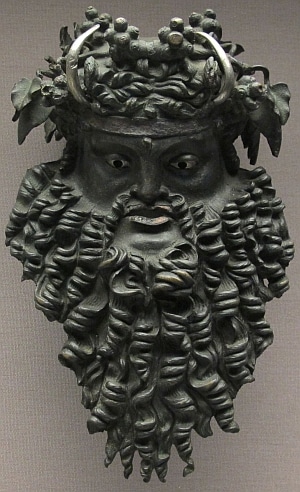
    Paul’s instructions had nothing to do with cutting your hair, and everything to do with living in Corinth. Corinth was a city where many pagan gods were worshipped, including Dionysus. One of the names used in ancient Macedonia (Greece) for Dionysus was “Pseudanor”. It means “false man”, as in “effeminate man”. He was pictured in art from that time as a beardless, sensuous, naked or half-naked androgynous youth. Literature described him as womanly or “man-womanish”. Because of this, worshippers of Dionysus would often engage in cross-dressing, where men would grow their hair and wear women’s clothing…and women would cut their hair and dress in men’s clothing. These women were known, for hundreds of years prior to Paul’s letter, as “imitators of men”.

    Dionysus is the Greco-Roman god of wine, ecstasy and theater.

    That is why women having short hair was a big deal in Corinth: everybody would assume that they worshipped Dionysus instead of worshipping Jesus Christ.

    Paul didn’t teach that women should have long hair. He taught, as was the custom of the day, that women should cover their heads while praying or prophesying. Keeping their heads uncovered at those times would have been considered shameful…as shameful as having people assume you worshipped a pagan god.

    I don’t know where you live, but it’s unlikely that cutting your hair will confuse your neighbors and convince them that you worship Dionysus, or make you look like a man. That’s what Paul was saying, clearly…so please feel free to cut and style your hair.

    While you’re at it, you might take a moment to read another article: Should Christians Separate from the World?. From where I stand, those who teach that you shouldn’t cut your hair are guilty of misrepresenting God, making it harder for others to trust Him.

  • Were Cain and Abel Twins?

    Were Cain and Abel Twins?

    I have heard that Cain and Abel were twins. If this is true, how would I find this in the bible? Thank you.

    Doreen

    That’s an interesting question. The Bible doesn’t specifically say either way. Cain was born first, and Abel after…but Genesis 4:1-2 doesn’t tell us how long after: Adam made love to his wife Eve, and she became pregnant and gave birth to Cain. She said, “With the help of the Lord I have brought forth a man.” Later she gave birth to his brother Abel.

    The Hebrew word used in the text is YACAPH, which has more than one meaning. One meaning is ‘to do again’ and another is ‘to add’. It could be that Abel was born in a separate pregnancy, or that the one pregnancy had two births. Without more information from Scripture (which we don’t have), we simply don’t know.