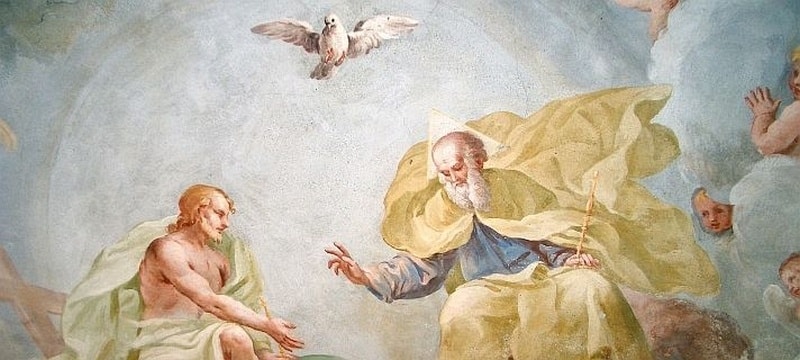
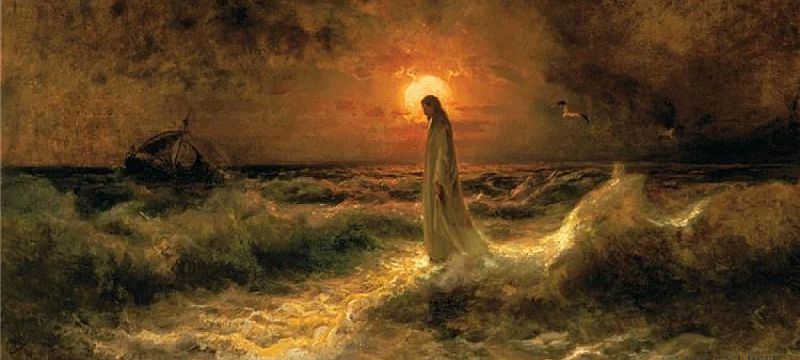
Jesus of Nazareth is the founder of Christianity. Jesus is God, become human. His life and teachings form the foundation of all Christian belief and practice.
Apollinarism is an ancient heresy related to the nature of Jesus, and was deemed heretical by the First Council of Constantinople in 381.
Apollinaris was bishop of Laodicea (in Syria), and he died in 382 AD. He believed that Jesus had a human body and soul, but did not have a human mind. Instead, he believed that Jesus’ mind was the divine Logos.
Apollinaris’ position was, in part, in response to the heresy of Arianism, which taught that Jesus was the first created being. While Arius taught that Jesus was a lesser god, Apollinaris sought to protect the idea that Jesus was truly God by claiming that a human body was, more or less, empty of a human mind and filled with the mind of God.
Jesus is God become man. Why did God become a baby, then grow to man, then die on a cross? There isn’t one single reason. Here are a series of statements from the New Testament about why Jesus came, and what He came to do.
While a lot of people believe that Melchizedek was an appearance of the pre-incarnate Son, that can’t be established in Scripture. They may be right, but they may not be aware of the other possibilities.
Here are some reasons why Melchizedek might not have been Jesus:
This would be a unique kind of theophany, without precedent. That alone doesn’t invalidate the idea, but we can identify a good number of probable theophanies in the Old Testament that fit a general pattern, and this would be entirely outside of that pattern. Rather than an episodic appearance, as with Moses’ burning bush, this appearance would have been long-term… and independent of the narrative of Scripture during that period.
It’s generally believed that Abram tithed to Melchizedek because the king had allowed Abram to travel through his lands for a battle. This form of tribute, offering a tenth of the spoils of war, wasn’t unknown in the ancient world. This would suggest that Melchizedek was a regular old king of Salem… unless the Son lived as man before becoming Jesus, which would be a theologically difficult idea.
Hebrews mentions Melchizedek around a dozen times… and only in comparison. At no point do any passages indicate that he WAS the Son… only that the two can be compared.
In Hebrews, Jesus is not said to be Melchizedek, but a high priest “in the order of” Melchizedek. This suggests that Jesus’ ministry is similar to that of the old-timer, not synonymous.
Melchizedek was said to have no mother or father, but Jesus has both.
Melchizedek was said to “resemble” the Son of God… not to BE the Son of God.
The New Testament talks about the incarnation, but never suggests that it had happened before. For example, John 1:18 would be a good place to read that God Himself had come to earth before, lived as a man, was a high priest, and so on. Because the only statements in the New Testament about the two are comparative, and because we have no verses that suggest Jesus’ supposed previous incarnation, we can’t clearly connect the two.
Here are some reasons why Melchizedek might have been Jesus:
The obvious mentions in Hebrews make some connection, even though the language is comparative. It could be the author referred to Melchizedek’s legendary status, equating it with Jesus’ earthly ministry.
His name means ‘king of righteousness, king of peace.’ That would certainly fit Jesus as well.
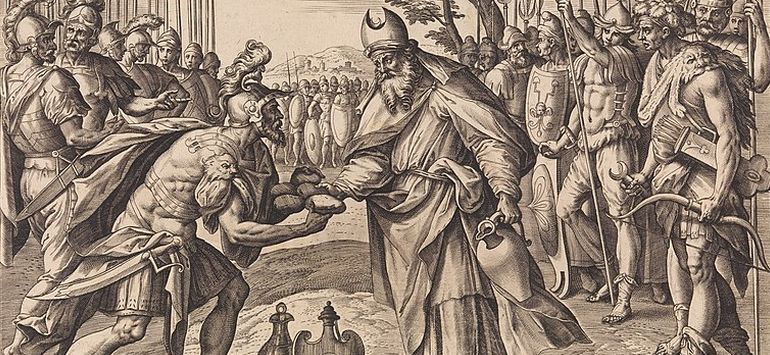
He offered Abram bread and wine. This might connect to the Last Supper, where Jesus did the same.
In Psalm 110, David mentions Melchizedek. This is possibly the most important of the Messianic Psalms, which may suggest more than an interesting connection between the two men.
It’s okay to speculate about whether the eternal Son had previously come to earth, lived and served as an earthly king, and then disappeared from the historical record. In the end, we’re just not sure… so it would be a serious problem for anyone to teach it as if it’s true.
A little more info, just for fun:
The idea that Melchizedek was the Jewish Messiah predates the New Testament, being known in the Second Temple period.
The Nag Hammadi library contains gnostic texts in which Melchizedek, as Jesus Christ, lives, preaches, dies and is resurrected.
Gary Habermas is a New Testament scholar and theologian. One area of his expertise is in the historicity of Jesus, and His resurrection in particular. He may be best-known for his “Minimal Facts” approach, which outlines the agreement among religious and skeptical scholars regarding what we know about Jesus’ death and resurrection from a historical perspective.
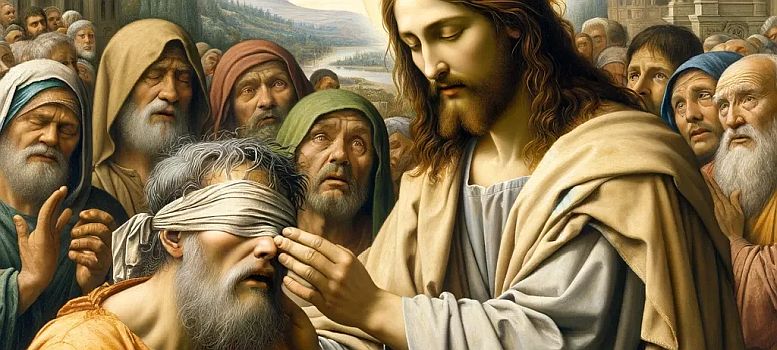
This is a valuable approach when dealing with skeptics, as you might imagine. When some random internet dude tries to tell you there’s no evidence that Jesus even existed, you need to be prepared with at least some knowledge of the facts. Not only did Jesus actually exist – as atheist scholar Bart Ehrman points out – but skeptical scholars go even further. In this article from The Worldview Bulletin, Habermas explains that Jesus’ miracles and exorcisms are among the best-attested facts of His life.
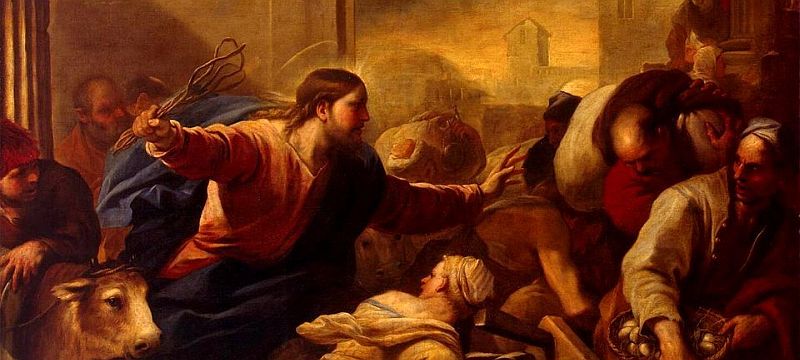
Most of us are familiar with the gospel accounts of Jesus cleansing the temple. You know, where He flipped tables and ran out the moneychangers. That happened right before His crucifixion, right? Well… yes, but maybe He did it twice.
In this short, interesting article by Mitch Chase of Biblical Theology, we can easily see the pattern of Jesus’ actions in Matthew, Mark, and Luke. They wrote that the event happened during Holy Week. Clearly, John’s account doesn’t quite match up. In John’s gospel, Jesus cleansed the temple at the beginning of His ministry, after the wedding in Cana… after His very first recorded miracle.
Some might suggest that we have to take sides, and pick one. Maybe we don’t. Maybe Jesus did it twice.
How many parables did Jesus teach? What are they about? Where can I find them? Jesus taught many times using parables, which are simple, earthly stories that explain a more complex, spiritual truth.
What is a Parable?
The English word parable comes from the Greek word parabole. Its primary meaning is ‘to place one thing alongside another.’ That’s a visual expression that suggests comparison: when you put two things side by side, it’s easy to see the similarities and differences. We find parables in all kinds of literature, including the Old Testament and New Testament. Jesus regularly taught using parables because they’re powerful, useful tools for teaching.
This side-by-side comparison can be readily seen, for example, in Jesus’ teaching on the wise and foolish builders. One built his house on sand, the other on rock. When a storm came, the first house was destroyed… but the second stood firm. The two builders are put side by side, and contrasted. Then Jesus used this simple example to say that people who do what He taught are like the wise builder, able to withstand difficult situations in life.
Titles of Parables
While the text of the Bible has been inspired by God, the chapters, chapter headings, and verse numbers have not. They were added later, to make it easier to find specific passages. The titles of Jesus’ parables are suggestions made by commentators and translators, and do not necessarily represent the full message conveyed in each parable. At the same time, each title may be instructive. If we consider them commentary, forged over many centuries, we may consider them useful in understanding the main point of the parable.
How to understand a Parable
A parable is usually a fairly simple story, told using analogies. That is, one thing is said to be like another thing. Too often, we tend to stretch an analogy too far, looking for more than the analogy can support. It’s important to keep in mind that most parables have a single main point. We should avoid making Jesus’ words mean more than He did. That’s not to say that examining His words closely is a bad idea, of course. It’s a good idea… but we should be careful to make the point that Jesus Himself made, rather than using His words to make a point of our own. The Scriptures are enough.
How many Parables did Jesus use?
Nobody knows exactly how many parables Jesus used in His teaching. There are several reasons:
Jesus taught far more than what we find in the gospels. It’s possible that He used many other parables that have not been included in Scripture.
The New Testament undoubtedly records Jesus saying things that we would not recognize as parables. Most are easy to spot, and are even described as parables. While we have the text of some of Jesus’ teaching, we lack all non-verbal information and spoken emphasis. If Jesus, for example, pointed to the temple when saying something about generosity, only those who saw His gesture would get the full impact of His teaching.
There are questions as to whether certain of Jesus’ teachings were real or parabolic. The most common example is Jesus’ teaching on Lazarus and the Rich Man. Was Jesus making up a story to make a point, or was He recounting actual events? We don’t know. A parable uses one thing as an example for another… but if the example itself is real, it wouldn’t be a parable at all.
A list of Jesus’ Parables
If you think I’ve missed a parable, feel free to contact me.
Can a person be TOO religious? In much of the world, being a Christian doesn’t present any real social problems… but being vocal about your faith is often seen as going too far. How much is too much, and how much is just right?
As one who grew up in church, I appreciate this article very much. It’s hard to put myself in the shoes of one who first trusted God later in life. I consider my faith to be the rational, logical extension of reality, and sometimes forget how radical the claims of Jesus really are.
Go to the Original Article
Bonus
In case you haven’t heard it, here’s DC Talk’s chart-busting Jesus Freak.
These days, many who claim the name of Jesus are also politically and theologically “progressive.” They don’t view God, Jesus, or the Bible in the traditional sense of what Christians have believed from the first century forward. They often substitute their own views for those found in Scripture. For this reason, it’s important to be able to compare progressive beliefs with Scriptural truths.
Throughout history, Christians have used simple symbols – called monograms or Christograms – to represent Jesus. Some appear in early biblical manuscripts. Explore the history and meaning of some of these symbols.
Skeptics often claim that the gospels weren’t written by eyewitnesses… that they were written later, embellished the facts, and so are unreliable accounts of history. Here we see that the authors have extensive knowledge of local geography, including towns, water, and directions.