Tag: Sabbath

To sabbath is to cease, or to rest. God sabbathed – rested – on the seventh day, after creating the universe. Later, God commanded the ancient Israelites to observe a weekly day of rest as a sign and symbol of God’s provision for them… both in creation, and while they traveled in the wilderness after He freed them from slavery in Egypt.

  • What is the Edict of Milan?

    What is the Edict of Milan?

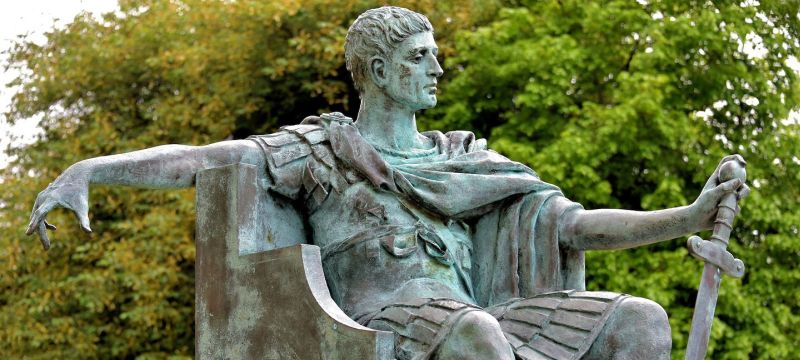
    The Edict of Milan is a proclamation by Roman emperor Constantine I, given in 313 AD, that ensured the right of all Roman citizens to worship freely. It also instructed that any property that had been confiscated from Christians should be returned.

    We have no copies of the original edict. What we have are quotations from Lactantius, a Christian scholar and advisor to Constantine. I present this to you not because it directly affects any Christians today, but because so many readers have been led to believe that Constantine, in the Edict of Milan, officially changed the sabbath from Saturday to Sunday. This is simply wrong, as simply reading the text will show. Sabbath-keeping is not something Christians need to be concerned with.

    When I, Constantine Augustus, as well as I Licinius Augustus fortunately met near Mediolanum (Milan), and were considering everything that pertained to the public welfare and security, we thought -, among other things which we saw would be for the good of many, those regulations pertaining to the reverence of the Divinity ought certainly to be made first, so that we might grant to the Christians and others full authority to observe that religion which each preferred; whence any Divinity whatsoever in the seat of the heavens may be propitious and kindly disposed to us and all who are placed under our rule And thus by this wholesome counsel and most upright provision we thought to arrange that no one whatsoever should be denied the opportunity to give his heart to the observance of the Christian religion, of that religion which he should think best for himself, so that the Supreme Deity, to whose worship we freely yield our hearts) may show in all things His usual favor and benevolence. Therefore, your Worship should know that it has pleased us to remove all conditions whatsoever, which were in the rescripts formerly given to you officially, concerning the Christians and now any one of these who wishes to observe Christian religion may do so freely and openly, without molestation. We thought it fit to commend these things most fully to your care that you may know that we have given to those Christians free and unrestricted opportunity of religious worship. When you see that this has been granted to them by us, your Worship will know that we have also conceded to other religions the right of open and free observance of their worship for the sake of the peace of our times, that each one may have the free opportunity to worship as he pleases ; this regulation is made we that we may not seem to detract from any dignity or any religion.

    Moreover, in the case of the Christians especially we esteemed it best to order that if it happens anyone heretofore has bought from our treasury from anyone whatsoever, those places where they were previously accustomed to assemble, concerning which a certain decree had been made and a letter sent to you officially, the same shall be restored to the Christians without payment or any claim of recompense and without any kind of fraud or deception, Those, moreover, who have obtained the same by gift, are likewise to return them at once to the Christians. Besides, both those who have purchased and those who have secured them by gift, are to appeal to the vicar if they seek any recompense from our bounty, that they may be cared for through our clemency,. All this property ought to be delivered at once to the community of the Christians through your intercession, and without delay. And since these Christians are known to have possessed not only those places in which they were accustomed to assemble, but also other property, namely the churches, belonging to them as a corporation and not as individuals, all these things which we have included under the above law, you will order to be restored, without any hesitation or controversy at all, to these Christians, that is to say to the corporations and their conventicles: providing, of course, that the above arrangements be followed so that those who return the same without payment, as we have said, may hope for an indemnity from our bounty. In all these circumstances you ought to tender your most efficacious intervention to the community of the Christians, that our command may be carried into effect as quickly as possible, whereby, moreover, through our clemency, public order may be secured. Let this be done so that, as we have said above, Divine favor towards us, which, under the most important circumstances we have already experienced, may, for all time, preserve and prosper our successes together with the good of the state. Moreover, in order that the statement of this decree of our good will may come to the notice of all, this rescript, published by your decree, shall be announced everywhere and brought to the knowledge of all, so that the decree of this, our benevolence, cannot be concealed.

    from Lactantius, De Mort. Pers., ch. 48. opera, ed. 0. F. Fritzsche, II, p 288 sq. (Bibl Patr. Ecc. Lat. XI).
  • The 10 Commandments in the New Testament

    The 10 Commandments in the New Testament

    A lot of people, including many Christians, are confused about whether Christians should live by the 10 Commandments. There should be no confusion.

    When God made a covenant with Israel in Exodus 20, the only people involved were Israelites and those who chose to live with them. This covenant, including the 10 Commandments, never applied to anyone else… ever. Christians were never under the Law.

    When I explain this, I get complaints from people who don’t know what the Bible says about the Law. If we’re not under the Law, they ask, are we then free to steal and kill and worship other gods? They’re not asking it seriously, as if they’re wondering about the answer. They’re complaining that by pointing out that Christians are not under the Law, I’m telling people that God doesn’t care about their behavior.

    Christians aren’t under the Mosaic Law, but that doesn’t mean we have no law at all.  Jesus said, “If you love me, keep my commands.” Just before going to Heaven, Jesus said to make disciples, and to “teach them to obey everything I have commanded you.” That seems pretty clear. We have commandments, but they come from Jesus, and not from the Law.

    Nine of the 10 Commandments are repeated in the New Testament. That means that Christians are not supposed to steal, kill, or worship other gods. It seems silly to have to say it, but people are confused… so it needs to be said. Below are a few of the many places where the 10 Commandments are repeated in the New Testament. We’ll address the missing commandment at the end of this article.

    1You shall have no other gods before me.Love the Lord your God with all your heart and with all your soul and with all your mind.
    Matthew 22:37
    2Do not make for yourselves objects of worship.Dear children, keep yourself from idols.
    1 John 5:21
    3You shall not misuse the name of the Lord your God.Do not swear – not by heaven or by earth or by anything else.
    James 5:12
    4Remember the Sabbath day by keeping it holy.Not Commanded
    5Honor your father and your mother.Honor your father and mother.
    Matthew 19:16-21
    6You shall not murder.You shall not murder.
    Matthew 19:16-21
    7You shall not commit adultery.You shall not commit adultery.
    Matthew 19:16-21
    8You shall not steal.You shall not steal.
    Matthew 19:16-21
    9You shall not give false testimony against your neighbor.You shall not give false testimony
    Matthew 19:16-21
    10You shall not covet anything that belongs to your neighbor.Put to death, therefore, whatever belongs to your earthly nature: sexual immorality, impurity, lust, evil desires and greed, which is idolatry.
    Colossians 3:5

    Because these commands are in the New Testament, it’s clear that Christians are to obey them… not because they’re part of the old covenant that God made with Moses, but because they’re part of the new covenant that Jesus made with the whole world.

    The Missing Commandment

    There is no command in the New Testament to observe any sabbath days. All of the other commandments are repeated, but not that one. Why? Because, unlike the others, there is no longer any need for a sabbath. The sabbath was instituted as a remembrance of God’s work in Genesis, and pointed to God’s work of dying on the cross for the sins of the world. The sabbath was a shadow of a coming reality, and that reality has come. Here’s how the apostle Paul explained it:

    Before the coming of this faith, we were held in custody under the law, locked up until the faith that was to come would be revealed. So the law was our guardian until Christ came that we might be justified by faith. Now that this faith has come, we are no longer under a guardian. Galatians 3:23-25

    Read more about why Christians don’t observe the original sabbath.

  • Why don’t Christians observe the original Sabbath?

    Why don’t Christians observe the original Sabbath?

    This issue has been a sticking point between sabbatarians and the rest of the Body of Christ for some time… but it shouldn’t be. The Bible is very clear on this subject. Let’s ignore for a moment silly arguments about Constantine, or discussions about the new covenant, and focus on God’s purpose for the original sabbath.

    Start in Genesis

    The first mention of the original sabbath is in Genesis 2:2-3:

    By the seventh day God had finished the work he had been doing; so on the seventh day he rested from all his work. Then God blessed the seventh day and made it holy, because on it he rested from all the work of creating that he had done.

    The word “sabbath” is generally translated as “rest.” This is a source of some confusion, as many don’t realize that the word simply means to stop. This isn’t the kind of rest we need after a good workout. It’s more like a musical rest, where no notes are played. The word literally means ‘to cease.’ God didn’t rest on the seventh day because He was tired. God doesn’t get tired. God had finished creating the world, and so He stopped. That’s what “sabbath” means.

    Making the original sabbath holy?

    In verse 3 we read that God made the seventh day holy, or “sanctified” it. This is also a source of some confusion, as many don’t know what the word means. They assume that the word holy gives the day some additional spiritual meaning.

    It’s not really a religious word. In Hebrew, it’s qāḏaš, and in Greek it’s hagios. It means to set something apart for special use. For example, many of us have special dishes that we use only when we have visitors. We have sanctified them… that is, we have set them apart from our regular dishes, using them only for a special purpose. Don’t be confused: the dishes aren’t special in a spiritual sense. They’re simply chosen – set apart – to be used in different ways than our regular dishes. The same word could be used for anything. For example, we may have set aside some old clothes to wear while doing jobs that might get us dirty. Those are also sanctified, or set apart for a special purpose.

    The Bible does use these words in a spiritual sense many times, of course. For example: Christians are called out of our old lives, set apart for God’s use. That doesn’t make US special, any more than painting while wearing a stained shirt makes the shirt special. The original sabbath isn’t special on its own… it was simply set apart by God to be used in a specific way, for His own purposes.

    Move to Exodus

    After leading the ancient Israelites out of slavery in Egypt, God made a covenant with them. The terms of that covenant – known as the Torah – included a lot of religious activity, including the creation of a tabernacle, sacrifices of animals, and so on. It also included taking a day off… that is, stopping. Sabbathing. The people were to cease their labor for a day. God pointed to His own rest as an example for them, and told them that this sabbathing would be a sign of His covenant with them.

    Now, remember: the sabbath isn’t about being tired. The sabbath is about being finished with your work. The priests couldn’t stop working the way that God did in Genesis. They offered the same sacrifices again and again, day after day, year after year. Why? Because their spiritual work wasn’t finished. They were even forbidden to have chairs in the tabernacle because sitting down would suggest that their work was done!

    What was the goal?

    Why would God do this? As we see again and again throughout both the Old and New Testaments, God promised to provide for His people. While they wandered in the wilderness for 40 years due to disobedience, God provided manna and quail to sustain them. They weren’t allowed to gather extra food, but only what they needed for that day. On the sixth day, they gathered twice as much… so they had enough for the seventh day, when no manna or quail arrived. The sabbath pointed to God as provider. He wanted Israel to trust Him. Even when they didn’t, He still provided.

    God’s provision in this way was temporary. They needed to trust God over and over. Why? Because the sabbath wasn’t about taking a day off. As we see in the New Testament, the sabbath – a temporary, lesser thing – pointed to a greater and permanent thing.

    Keep going to the New Testament

    The Exodus sabbath was a symbol of God’s rest in Genesis. It told the children of Israel that they would someday be able to stop working… to stop sacrificing for their own sins. When Jesus died and rose again, that day had finally come. In Hebrews 10:11-12 we see the comparison between the Jewish priests and Jesus:

    Day after day every priest stands and performs his religious duties; again and again he offers the same sacrifices, which can never take away sins. But when this priest [Jesus] had offered for all time one sacrifice for sins, he sat down at the right hand of God.

    Jesus finished His work and rested, just as we see God doing in Genesis.

    We see in Jesus’ words the temporary nature of the original sabbath, and of the whole Torah. In John 4 Jesus offered living water to permanently quench our spiritual thirst. In John 6 Jesus pointed to the temporary nature of manna, which only satisfied hunger for a day… then offered Himself as the Bread of Life. We who come to Jesus have been given eternal life, and our spiritual hunger is being satisfied by Jesus Himself.

    What about us?

    How then should we view the sabbath? God rested when His work was done, and Jesus rested when His work was done. The ancient Jews never enjoyed that rest, but it’s available to us today, as Hebrews 4:9-10 tells us:

    There remains, then, a sabbath-rest for the people of God; for anyone who enters God’s rest also rests from his own work, just as God did from his.

    In Romans 14:5-6 Paul wrote about accepting people with weak faith. He uses two examples where believers can disagree, and should be treated with grace: food and sabbaths.

    One person considers one day more sacred than another; another considers every day alike. Each of them should be fully convinced in their own mind. Whoever regards one day as special does so to the Lord. Whoever eats meat does so to the Lord, for they give thanks to God; and whoever abstains does so to the Lord and gives thanks to God.

    If God actually commanded Christians to observe sabbaths, then not observing sabbaths would be sin. Clearly. Were that the case, this passage would make no sense. At what point is any sinful act okay because one is ‘fully convinced in their own mind’? Never.

    Colossians 2:16-17 should erase any doubt about the nature of the sabbath:

    Therefore do not let anyone judge you by what you eat or drink, or with regard to a religious festival, a New Moon celebration or a Sabbath day. These are a shadow of the things that were to come; the reality, however, is found in Christ.

    If God actually commanded Christians to observe sabbaths, then we should judge one another on that basis. Obviously, Paul is saying that whether one does or doesn’t observe Judaism’s dietary restriction or sabbath days is nobody else’s business.

    From all of these verses we can see that the sabbath clearly isn’t a day of the week. It’s neither Saturday nor Sunday! We enter into the sabbath rest when we stop working, and that only happens when we accept that Jesus’ sacrifice was for each of us. His work is done, and He invites us to join Him.

    Like the seventh day, those of us who are in Christ have been set apart. Look at Ephesians 2:8-10:

    For it is by grace you have been saved, through faith – and this is not from yourselves, it is the gift of God – not by works, so that no one can boast. For we are God’s handiwork, created in Christ Jesus to do good works, which God prepared in advance for us to do.

    Conclusion

    What was the purpose of the original sabbath? To point to Jesus… to His provision for our abundant life, for our eternal life, and for our role in God’s Kingdom. There’s nothing special about the seventh day. What’s special is that God has chosen to save us, and to transform us to be like Jesus. God’s purpose in setting aside the seventh day has been fulfilled in Christ.

    Objections

    “The Ten Commandments were given to Adam in the Garden of Eden, so they’re not just part of the Mosaic Law… they’re eternal, and for everyone. Therefore, everyone should observe sabbaths.”

    This would make a compelling argument if there were any evidence for it. There’s no evidence for it. While God definitely rested on the seventh day, there are no commands for anyone to do anything about that until God made the old covenant with the ancient Israelites.