Tag: The Trinity

The Trinity is the biblical Christian doctrine that explains God as one being, made up of three persons: Father, Son, and Holy Spirit.

  • Apollinarism

    Apollinarism

    Apollinarism is an ancient heresy related to the nature of Jesus, and was deemed heretical by the First Council of Constantinople in 381.

    Apollinaris was bishop of Laodicea (in Syria), and he died in 382 AD. He believed that Jesus had a human body and soul, but did not have a human mind. Instead, he believed that Jesus’ mind was the divine Logos.

    Apollinaris’ position was, in part, in response to the heresy of Arianism, which taught that Jesus was the first created being. While Arius taught that Jesus was a lesser god, Apollinaris sought to protect the idea that Jesus was truly God by claiming that a human body was, more or less, empty of a human mind and filled with the mind of God.

  • The Triune God Is Love

    The Triune God Is Love

    Many, even non-Christians, believe that God is love. However: only those who believe in the Trinity can substantiate the claim. It’s not arrogance that makes me say that… it’s simple logic.

    A basic belief of virtually every religion is that god – either their god or the God of the Bible – is not dependent on His creation for anything. If that’s true, then only the God of the Bible can be said to be truly loving.

    You see, other gods – single, solitary entities – could not be said to be loving in character, or in their nature. Why? Because their ability to love would be dependent on the existence of other beings… they would have nobody to love until after they created other beings!

    The God of the Bible, however, is three persons in one being. They’re known as the Trinity. Because Father, Son, and Holy Spirit are not a single, solitary entity, they have loved one another eternally. Their ability to love is not dependent on us.

    Go to the Original Article

  • Is the Holy Spirit Female?

    Is the Holy Spirit Female?

    Whenever we try to describe God, words will always fall short. We simply don’t know everything about God. We don’t even have an earthly parallel to God, so we can’t study things that are like God to discover more about Him. Every analogy is incomplete in some way. Until we’re in God’s presence, we won’t be able to understand what He is like.

    What we can be sure of is what God Himself has said. We know that both males and females are made in His image. In the Old Testament, God describes Himself in mostly masculine terms: father, husband. The Hebrew names Yahweh, Elohim, Adonai, Kurios, and Theos are all linguistically masculine. At the same time, God also describes Himself in Job as giving birth, and in Isaiah as a mother. It’s more complicated than simply “he” or “she.”

    In terms of the Hebrew language, it’s a bit tricky. You see, all Hebrew nouns are gendered. They’re all either masculine or feminine. However, the gender of a Hebrew noun may or may not match the sex of the thing it describes. ERETS and BAYIT (land and house) are masculine nouns, but we wouldn’t say that either are male. TSAVAH is the word for army, yet it’s feminine. Because the word for spirit – RUACH – is feminine, some have concluded that the Holy Spirit is as well. We can understand why some might draw that conclusion from the Hebrew, but this is clearly inadequate. The Old Testament doesn’t discuss the Holy Spirit in detail… so our understanding from the Hebrew is clearly incomplete. Because Jews don’t consider the New Testament to be Scripture, their view of the Holy Spirit ends there. As Christians, we use both the Old Testament and the New Testament to learn what God has said.

    In the New Testament, the Greek word is PNEUMA. It’s a neuter noun… neither masculine nor feminine. By itself, that might suggest that the Holy Spirit is neither male nor female. Of course, the word PNEUMA isn’t always by itself. We have more information than just that one word. For example, Jesus describes the Holy Spirit as PARAKLETOS, which is masculine. Masculine pronouns (he, him) are also used when talking about the Holy Spirit.

    Throughout all of the Bible, God primarily describes Himself in male terms… not only linguistically, with gendered nouns, but in relationship. Father and husband are the primary ways He is described. This is obviously intentional. It doesn’t mean that human men are more like God than human women are, but that one way to understand God is to know what a good father, and a good husband, are like. Jesus is obviously a man, and the Holy Spirit is described by Jesus in masculine terms. That doesn’t mean that God is male, but that we can best understand what we need to know about God by seeing Him in those roles.

    The traditional biblical view is that men and women both reflect what God is like. It may be that God, in some sense, created men and women to reflect different aspects of His character. In that way, God is to be seen as neither masculine nor feminine. However: because God describes Himself in primarily male terms, we repeat His words when we talk about Him. Jesus calls Him “Father,” and so we do as well. When the Holy Spirit is described in the New Testament, He is described in masculine terms. While we understand that that may be an incomplete description, describing the Holy Spirit as “she” directly contradicts what we see in Scripture.

    It seems best to describe God in ALL of the ways that He describes Himself.
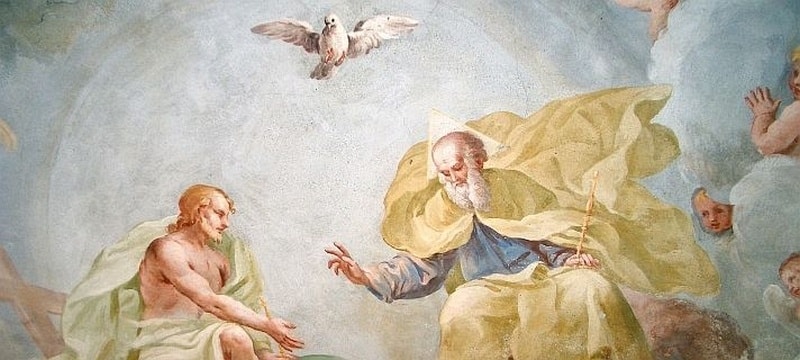
  • The Doctrine of the Trinity

    The Doctrine of the Trinity

    The Trouble with the Trinity

    The doctrine of the Trinity is one of the most contested of Christian doctrines. As you might imagine, any attempt to explain or describe God might be met with skepticism or disagreement or outright condemnation. This post is not an attempt at laying out a full explanation for the doctrine, which will come later. It’s simply an effort to get the doctrine ‘on the record’.

    It’s worth noting that there’s a big difference between teaching on the Trinity and explaining the Trinity. To teach it, one only needs to go to the Bible verses where we see the Trinity in action. To describe the Trinity, however, is virtually impossible. One simple reason is that there are no parallels to the Trinity in nature. There’s nothing we can point to and say, “See that? God is just like that.” We’re left with something that’s more than a little mysterious. That doesn’t mean the doctrine is wrong, or that one can imagine the Trinity to be whatever feels right. We do have Scripture as a reference, and it’s important to teach what the Bible says.

    The Basics of the Trinity

    God is described in the Bible as the Father, as the Son, and as the Holy Spirit. At the same time, the Bible is abundantly clear that there is only ONE God. Each of the three “persons” is described as having relationship (interacting) with one another, and as being present before, and taking part in, creation.

    Because of this, the doctrine of the Trinity can be explained “simply” in this way:

    • The Father is God.
    • The Son (Jesus) is God.
    • The Holy Spirit is God.
    • The Father is not the Son, nor the Spirit.
    • The Son is not the Father, nor the Spirit.
    • The Spirit is not the Father, nor the Son.
    • There is only one God.

    Clear as mud, right? While analogies abound in our attempts at explaining how this can be so, we have no natural analogues for this kind of three-in-one relationship. We have only the Bible to help us understand, and the Bible doesn’t usually lay out such things precisely. Suffice it to say that if anyone denies that one of the above items is true, their theological understanding of God would be considered both unbiblical and unorthodox.

    Questions

    Does this mean there are three Gods?
    No. That’s a heresy known as “tri-theism.” The Bible clearly teaches, and so Christians have always affirmed, that there is only one God. How three persons can be the same being isn’t something we’re able to understand at this point. To understand, God would have to help us in ways He hasn’t yet.

    Does this mean that the Father, Son, and Spirit are the same person?
    No. That’s a heresy known as “modalism.” It claims that the one God only appears as different persons at different times… sometimes as Father, sometimes as Son, and sometimes as Holy Spirit. This directly contradicts a number of plain passages of Scripture where, for example, Jesus indicates that He is certainly not the Father.

    Was this made up at the Council of Nicaea?
    No. The Council of Nicaea was in 325 AD. A hundred years before that, Tertullian wrote about the Trinity. Plus, Christians believed in the trinity long before that. The fact that the New Testament was finished by the end of the first century attests to this fact. Clement of Rome, who died in 99 AD, wrote this: “Do we not have one God, and one Christ, and one gracious Spirit that has been poured out upon us, and one calling in Christ?” – 1 Clement 46:6.