Blog

  • Is David Jeremiah a False Teacher?

    Is David Jeremiah a False Teacher?

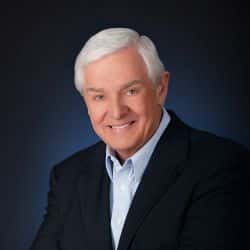
    Like clockwork, not a week goes by without someone writing to either ask whether David Jeremiah is a false teacher, or to recommend him as a reliable teacher of Scripture. This article will not satisfy either group, but it’s the best I can do at this moment.

    NOTE: I have not called David Jeremiah a false teacher. This article is in response to the question, asked by dozens of readers.

    David Jeremiah

    Our goal should be to simply be truthful, not to attack or defend anyone. I’ve heard David Jeremiah teach, on the radio, many times in the past. I’ve never personally heard him say anything that concerned me. However: as someone who has not followed him closely, I’m uncomfortable recommending him based solely on past impressions. I’m also entirely unwilling to call anyone a false teacher without seeing, objectively, that they’re teaching falsely.

    For more information on that, please read What is a False Teacher?

    The trouble with other people’s websites

    When I’m unfamiliar with a teacher, I begin my research by looking for the things that other people have found. There’s no need to reinvent the wheel, so if someone has already done solid research, I can begin there. Unfortunately, after reviewing around a hundred different websites that call David Jeremiah a false teacher, I’m no closer to having any answers. Why? Because different people have different ideas of what makes someone a false teacher. Here’s a short list of the reasons that some call Jeremiah a false teacher:

    • He’s on TBN.
    • He’s appeared onstage with false teachers.
    • He’s quoted some people whose beliefs contradict the Bible.
    • He’s an agent of Rome and a secret supporter of the Jesuits.
    • He doesn’t teach a pre-tribulation rapture.

    … and so on. That’s what I find when I look for hard answers about David Jeremiah.

    To be clear: Associating with non-believers, unbelievers, and false teachers is also not evidence that someone is a false teacher. There are plenty of examples of solid, Bible-believing Christians spending time with non-Christians and heretics without compromising their own faith, or teaching falsely.

    To be clear: simply quoting non-believers is not evidence that someone is a false teacher. There are many quotes in the Bible that originated with non-believers.

    To be clear: while some believe that the Roman Catholic church is the Babylon of Revelation, most do not. This is an interpretive question that can’t be answered at this point in history, so the charge amounts to little more than a conspiracy theory… and I see no direct connection between Jeremiah and the Vatican to begin with. This is overly dramatic at best, and certainly a kind of immature mud-slinging.

    To be clear: doctrinal disagreements between Christians are not evidence that someone is a false teacher. If you believe in the rapture but your brother does not, that isn’t evidence. That’s an “in-house debate” between Christians, not evidence that your brother is a wolf in sheep’s clothing.

    What does make someone a false teacher? Teaching falsely. I’ve seen virtually no actual quotes from David Jeremiah on the dozens of website that proclaim that he’s a false teacher. This simply should not be.

    Cause for concern

    However: these things are not to simply be dismissed. When someone aligns themselves with heretics, it’s wise to consider whether they’ve joined them… or, at the very least, whether they lack the discernment needed to be a wise teacher. There’s no question that David Jeremiah spends a lot of time with people who are demonstrably false teachers. 2 John 1:10-11 points to the fact that we are not to welcome a false teacher: If anyone comes to you and does not bring this teaching, do not take them into your house or welcome them. Anyone who welcomes them shares in their wicked work.

    I’ve not seen any quotes from David Jeremiah that contradict clear Scriptures, or the basic doctrines of the Christian faith. I’ve not heard him say anything directly that I can compare with a particular Bible verse to show that he’s a false teacher. That’s why he’s not on the List of False Teachers.

    That’s also why he’s not on the list of Bible Teachers I Can Recommend. I need to continue my research, which takes time. I can’t rely on any of the dozens and dozens of websites I’ve found that are essentially immature attempts at making a case against him. I have to take the time to listen to a bunch of his sermons.

    I’ve seen evidence that he’s joined the TBN false teaching of the prosperity gospel… but I haven’t seen the video. I’ve seen evidence that he lacks the discernment needed to be considered trustworthy… but I haven’t heard his unwise recommendations myself. For that reason, I write this warning.

    Until I know more, I’m unable to recommend David Jeremiah. Until I know more, it would be foolish and unwise and almost certainly sinful for me to suggest that he’s a false teacher. I refuse to bear false witness against my neighbor, let alone my brother in Christ.

    Please pray for David Jeremiah, that he will be faithful to the Scriptures. While you’re at it, please pray for me as I work to help those who trust me learn whether they can trust others. I don’t take this lightly, and I don’t do it for myself. I simply get too many requests for this kind of information, and can’t ignore them.

  • A Caution to Those Who Decree and Declare

    A Caution to Those Who Decree and Declare

    What does it mean when Christians say that they “decree” something? When they “declare” something, what are they doing? I witness people who claim to follow Jesus saying these things, and I’m disheartened. Why?

    As Oyewole Akande points out in this article, the idea comes from the heretical false teaching of the Word of Faith movement. The unbiblical idea behind it is that words have power… not the ideas that the words express, but the words themselves. When spoken with faith, they say, anyone can do the things that God can do. Not only can they declare themselves wealthy and disease-free, they can even create their own universes!

    Of course, that’s simply not true. Unfortunately, many have heard and believed these false teachers. They begin to do strange things as a result of their new beliefs. They “decree” all kinds of wonderful things for themselves, and “declare” a bright future for their loved ones.

    While this might sound nice, let’s compare that idea with what we see in the New Testament. The apostle Paul had a thorn in the flesh that God wouldn’t take away. Should he have decreed himself free of it? Timothy, pastor in Ephesus, had stomach problems. Should Paul have ‘declared health over him?’ No. That’s not even close to what we see in God’s Word.

    After reading Akande’s article, let me know if you have questions. I’m here to help.

    Go to the Original Article

  • The Nature of Apologetics

    What is apologetics? Is it good for only Christians, or is it also helpful for non-Christians? Is anyone actually born again as a result of apologetic arguments? Should we bother with it at all?

    These are good questions. Of course, I’m biased. GodWords is really all about apologetics. Most of the articles here are actual responses to actual questions, whether from Christians or non-Christians… and my goal in answer those questions is to make the case that Christianity is true and good.

    That’s what apologetics is: ‘making the case.’

    Learn to make the case

    In my opinion, apologetics is an essential part of being a follower of Jesus. To explain why I think that, I only need a few sentences. We’re to share the gospel and make disciples, right? To do that, we need to understand the gospel well enough to explain it to others, and to give them reasons to believe that it’s true. That, in a nutshell, is apologetics.

    In this article, Dr. Richard Land responds to an article by a former evangelical who claims that apologetics is only useful for those who are already saved. I disagree, and so does Land. I heartily recommend this article to you in full, and want to encourage you to seek out quality Christian apologists so you can better understand Christianity… both for your own maturity – which is very important – and for the salvation of those with whom you have influence.

    Dr. Land explains the different approaches to apologetics and why different approaches work best in different situations. If you’d like to explore this further, I’m here to help.

    Go to the Original Article

  • I Am Second – Steven Curtis Chapman

    I Am Second – Steven Curtis Chapman

    Christian singer and songwriter Steven Curtis Chapman has the most awards in Christian music history… but his life has been a journey of ups and downs. He shares a bit of his story with the folks at I Am Second.

    For those who aren’t familiar with Chapman’s career, he’s made over 25 albums, won five Grammy Awards, and won 59 Dove Awards, more than any other artist in history. He’s also won Doves for Artist of the Year 7 times, another record.

    You can find some of his songs, with lyrics, on our sister website Awesome Christian Music. He’s one of my personal favorites, and I have most of his albums. He’s probably influenced my spiritual growth as much as any other musician, and I’m grateful.

  • Is the Five-Fold Ministry False Teaching?

    Is the Five-Fold Ministry False Teaching?

    I’m often asked to assess what others teach. I do not do this lightly, but it is necessary. Before reading this page, or any of the pages about specific people, I recommend that you read What is a False Teacher?, which explains what the Bible says about false teachers, and why I would bother to research who they are and what they say. You may also want to check out a list of Bible Teachers I Can Recommend.

    I regularly get questions about those who call themselves ‘apostles’ or ‘prophets.’ My opinion is irrelevant, of course. The important question is whether anyone today should use those terms for themselves. In this article, I focus on the ‘apostle’ part of the five-fold ministry, to clear up the questions about modern-day apostles.

    The idea comes from Scripture

    The idea of the five-fold ministry comes directly from Ephesians 4:11 where Paul lists 5 (or four) kinds of roles that equip Christians for service. Here’s the verse, with some of its context:

    So Christ himself gave the apostles, the prophets, the evangelists, the pastors and teachers, to equip his people for works of service, so that the body of Christ may be built up until we all reach unity in the faith and in the knowledge of the Son of God and become mature, attaining to the whole measure of the fullness of Christ.

    That’s good stuff. Here are the 5:

    • Apostles
    • Prophets
    • Evangelists
    • Pastors
    • Teachers

    I say there might be four because many scholars suggest that pastor and teacher should be combined as pastor/teacher. The number isn’t really important for our discussion. The question is whether the five-fold ministry, as expressed today, matches what we see in the New Testament. Keep in mind that there’s some variety of belief within those who teach about this, and that not everyone sees things in exactly the same way.

    Is it for today?

    Is the ‘five-fold ministry’ only found in the first-century church, or is it something that should be emulated and repeated today? It’s my belief that the five-fold ministry, as expressed by Paul in Ephesians 4, is a thing of the past. When I say that, I don’t mean that it’s no longer needed. I mean that it’s a historical thing, like Jesus’ birth and death and resurrection. Those are obviously still relevant today, but they don’t need to be repeated. To be clear: the New Testament doesn’t talk about apostles and prophets in the way that five-fold folks do, and that raises a red flag.

    The idea is that today’s church has these 5 ‘offices’ or roles, and that all 5 are needed to today. If this were true, then each church could have their own apostles and prophets. That isn’t what we find in the New Testament. Instead, ‘apostles and prophets’ refer to specific people who laid the foundation of the church… and that foundation is the same for every church, rather than being localized.

    This passage is in Ephesians 4. Let’s go back a bit to Ephesians 2 and see another place where Paul mentions apostles and prophets:

    Consequently, you are no longer foreigners and strangers, but fellow citizens with God’s people and also members of his household, built on the foundation of the apostles and prophets, with Christ Jesus himself as the chief cornerstone.

    Note this phrase: “built on the foundation of the apostles and prophets.” The NIV (a fine translation) doesn’t quite capture what the Greek says. The NASB, a stricter word-for-word translation, expresses it more fully. They both express the meaning, but “having been built” is more precise than “built.” In context, Paul was saying that the Christians in Ephesus had been made one with the Jews because of Jesus, who made the two groups one. BOTH were built on the foundation of the apostles and prophets and “in Him the whole building is joined together.”

    The key is that the apostles and prophets were the foundation for both. The prophets for the Jews weren’t modern-day prophets, but Jewish prophets who warned Israel to return to God. The apostles weren’t modern-day prophets, but the apostles of Jesus… those who personally encountered Him while He ministered in Israel, who saw Him do what He did. THAT is the foundation on which the church has been built. Just as Jesus died and rose again and doesn’t need to repeat the process, so the work done by the apostles and prophets has been completed. The foundation of the church has been laid.

    The biblical definition of an apostle

    How do we know this? Let’s look at what happened after Judas betrayed Jesus and killed himself. The twelve had become eleven. They needed to choose a replacement for Judas, and here are the requirements, from Acts 1:17-22:

    Therefore it is necessary to choose one of the men who have been with us the whole time the Lord Jesus was living among us, beginning from John’s baptism to the time when Jesus was taken up from us. For one of these must become a witness with us of his resurrection.

    THAT is an apostle. They couldn’t replace Judas with just any old believer. They had to choose someone who could personally testify that they had witnessed Jesus in action. Paul wrote specifically in 1 Corinthians 15 about the ones to whom Jesus appeared:

    • Cephas (Peter)
    • then to the Twelve (the other 10 of Jesus’ closest disciples, minus Judas)
    • then to more than 500 of the ‘brothers and sisters,’ who were also disciples
    • then to James
    • then to all of the apostles
    • and last of all to Paul.

    Last of all to Paul. Now, Paul mentions several times that he’s not a typical apostle. Why? Because he didn’t follow Jesus when He was alive and ministering in Israel. The other apostles did. So, if Paul persecuted the church at that time, how could he be considered an apostle? It’s because He personally encountered Jesus after His resurrection, and was SENT (the meaning of the word ‘apostle’) to minister to the Gentiles by Jesus Himself.

    For verification: Luke, the writer of Acts, called Paul an apostle. Paul called himself an apostle in his writings, which Peter said were Scripture. The one common denominator in both the regular apostles and Paul, the atypical apostle, was that they saw Jesus alive after He had been killed and had been sent to teach others what He taught.

    The foundation has already been laid

    The church – everyone who has been born again, throughout all of history, all over the world – has been built on the foundation of the Old Testament prophets and the New Testament apostles. We have all we need for life and godliness in the Scriptures, in the one true gospel that was handed down once for all. Modern-day apostles and prophets can’t add to the gospel, or improve on it. We need no continuing revelation, which is the basis for the five-fold ministry.

    While there are lots of people who believe in the five-fold ministry that otherwise have orthodox theology, they can’t substantiate their position from Scripture. Instead – in my experience, and in the experiences of many others – those who consider themselves to be modern-day apostles and prophets both teach contrary to Scripture and go far beyond Scripture when they teach. For those reasons, I can never recommend an ‘apostle’ or ‘prophet’ as someone who can be trusted to handle Scripture responsibly.

  • The Kalam Cosmological Argument

    The Kalam Cosmological Argument

    The cosmological argument is the idea that God’s existence can be shown likely by appealing to known facts about how the universe works. The Kalam Cosmological Argument is a variation of that argument. Popularized by William Lane Craig, it addresses the question of the universe’s beginning, and its logical cause.

    At its most basic, the ideas are simple:

    1. Everything that begins to exist has a cause.
    2. The universe began to exist.
    3. Therefore, the universe has a cause.

    If the first two are true, then the third must also be true. This is the structure of a basic philosophical argument. #1 appears indisputable: we don’t observe things happening without a cause. We may not fully understand the cause, but we have no evidence that things happen on their own. #2 seems apparent based on all of the available physical evidence. Therefore, #3 seems likely.

    That doesn’t mean that the Bible is true, or that the cause of the universe is God as the Bible describes Him. It simply means that the universe has a cause. If we grant that this is true, then some basic implications are clear: that the cause of the universe must be an uncaused, personal creator who is timeless, immaterial, immensely powerful, and who has no beginning.

    • Uncaused – the chain of events leading to the creation of everything else must, by definition, have no cause. This fits the biblical understanding of God.
    • Supernatural – if the natural world was created, its cause cannot be part of the natural world. This is what philosophers and theologians have always called ‘supernatural.’
    • Personal – a decision had to be made to cause the universe’s existence, and decisions are only made by creatures with minds. This fits the biblical understanding of God.
    • Timeless – if time was created, whatever created it must be outside of time. This fits the biblical understanding of God.
    • Immaterial – if all matter was created, whatever created it must be immaterial. This fits the biblical understanding of God, who is spirit.
    • Powerful – a basic concept of physics is that an effect cannot be greater than its cause. Therefore, whatever created the universe must be more powerful than the universe. This fits the biblical understanding of God.
    • No beginning – if the cause of the universe itself had a cause, it would not be the actual cause… it would be an intermediary. This fits the biblical understanding of God. Also, if the cause of the universe is timeless, then it is naturally understood to be eternal.

    Videos by William Lane Craig

    Below is the series of videos explaining the Kalam Cosmological Argument. The most difficult part, perhaps, is the idea that – within time – there can be no eternity in the past. An actual infinite number of past events is a logical absurdity… but, because this is the target for many skeptics, Dr. Craig spends a fair amount of time on that bit.

    Part One: Scientific

    Part Two: Philosophical

    I’ll add more as they are created, or corollary videos in response to your comments.

  • Sex, Marriage, and Becoming One Flesh

    Sex, Marriage, and Becoming One Flesh

    How does the Bible define marriage? What is marriage in God’s eyes? Is it okay for people to have sex before they’re married? What about second marriages… are they always wrong? These questions are not only important, but they’re increasingly relevant as people, young and old, revisit their ideas about relationships.

    Some want to complain that the Bible is strict about issues of sex and sexuality. Well, they’re right. The Bible does prescribe narrow boundaries for sex and marriage, and for some very good reasons. The primary reason? Because marriage isn’t about you, or me, or any other human being. Marriage is about God… and, for that reason, it carries a lot of weight.

    God as Husband

    You see, throughout the Bible marriage is used as a picture of our relationship with God. In the Old Testament, God is depicted as the husband of the ancient Israelites. Here are a few examples:

    • For your Maker is your husband – the Lord Almighty is his name – the Holy One of Israel is your Redeemer; he is called the God of all the earth. Isaiah 54:5
    • “It will not be like the covenant I made with their ancestors when I took them by the hand to lead them out of Egypt, because they broke my covenant, though I was a husband to them,” declares the Lord. Jeremiah 31:32
    • “In that day,” declares the Lord, “you will call me ‘my husband’; you will no longer call me ‘my master.’ … I will betroth you to me forever; I will betroth you in righteousness and justice, in love and compassion.” Hosea 2:16, 19

    One can’t read Hosea without recognizing this imagery. God told Hosea, a righteous man, to marry Gomer, an unrighteous woman. She had been promiscuous, and would be unfaithful to Hosea. This was a symbol… a message to the Israelites about their own unfaithfulness to God. He called them “an adulterous wife.” The ancient Israelites had engaged in idolatry, worshipping other gods and combining the worship of Yahweh with the worship of others. God used the imagery of marriage to describe their relationship with Him. He was the faithful husband, she the adulterous wife.

    Jesus as Bridegroom

    In the New Testament, Jesus is called the Bridegroom and the church – that is, those who trust in Him – are called the Bride. Here are a few examples:

    • How can the guests of the bridegroom fast while he is with them? They cannot, so long as they have him with them. But the time will come when the bridegroom will be taken from them, and on that day they will fast. Mark 2:19-20
    • I feel a divine jealousy for you, for I betrothed you to one husband, to present you as a pure virgin to Christ. 2 Corinthians 11:2
    • For this reason a man will leave his father and mother and be united to his wife, and the two will become one flesh. This is a profound mystery – but I am talking about Christ and the church. Ephesians 5:31-32

    At the beginning of Jesus’ ministry, John the Baptist described Him as a bridegroom. At the end of time, as described in Revelation, the Bridegroom and the Bride – we who are born again – will finally be united. Throughout Scripture, we see God using marriage to represent our relationship to Him: beloved, and wanted.

    No, we won’t actually be married to God… not in the sense that one human marries another. It’s a metaphor. It’s a word picture, kind of like a parable: it uses a familiar, temporary, earthly thing to teach us something about an unfamiliar, eternal, heavenly thing. Consider some of what makes marriage so special, and consider how they reflect the way the Bible describes our relationship with God:

    • Unconditional love
    • Compassion
    • Self-sacrifice
    • Companionship
    • Belonging
    • Being known and understood
    • Forgiveness
    • Patience
    • Accountability
    • Loyalty
    • … and much, much more.

    Not all marriages are like that, of course. When they are not, we recognize that things are not as they should be… and, as a result, we seek more. Ultimately, all suffering points to God, who will ultimately remove all suffering.

    No marriage in Heaven

    I’ve been happily married since 1989. I had read Luke 20 before my wedding, but it was only after I got married that I paid close attention to it. Jesus was asked about marriage in Heaven, and this is His response:

    The people of this age marry and are given in marriage. But those who are considered worthy of taking part in the age to come and in the resurrection from the dead will neither marry nor be given in marriage.

    As a new husband, reading that caused some distress. I didn’t want to lose my relationship with my wife. That sounds tragic! Of course, Jesus didn’t say that. He said that people won’t be married in Heaven. Why would He say that?

    Simple: marriage isn’t an end unto itself. Marriage is a means to another end. Marriage has a GOAL.

    The purpose of marriage

    If marriage has a purpose, what is it? What can we conclude from Scripture, and from how God uses marriage to make a point? It seems clear: marriage points us to God.

    You see, God didn’t have to make us the way we are. He made us this way on purpose. He knows what He’s doing. Why do we have to eat? Because God wants us to learn something. We hunger for food, and that hunger goes away when we eat. Of course, that doesn’t last forever. We get hungry again, and again, and again. We can only partially satisfy our hunger.

    In John 6, Jesus called Himself “the bread of life.” He told the crowd that those who come to Him would never be hungry again. Obviously, Christians still need to eat. He was using a metaphor: our spiritual hunger is satisfied when we finally find the true food we were created to eat.

    The same is true of every other desire we have. God created us with each and every desire we have. He did this purposefully, to help us see our need for Him. We get lonely, so we want companions. We seek someone to love, who will love us in return. We want to be known, to be understood.

    A good marriage looks a lot like God’s love for us… and that’s the point. Marriage teaches us about God. A good marriage shows us what He is like, and points to our desires finally being utterly fulfilled. A bad marriage – a tragedy – does help us see that this world is broken, that no other person can meet all of our deepest needs, and makes us hungry for the One who can.

    It all starts in Genesis.

    One Flesh

    In Genesis 2:24 we read this:

    … a man leaves his father and mother and is united to his wife, and they become one flesh.

    In Matthew 19:4-6 we read this:

    … at the beginning of creation God ‘made them male and female.’ For this reason a man will leave his father and mother and be united to his wife, and the two will become one flesh. So they are no longer two, but one flesh. Therefore what God has joined together, let no one separate.

    Finally, here’s 1 Corinthians 6:15-16:

    Do you not know that your bodies are members of Christ himself? Shall I then take the members of Christ and unite them with a prostitute? Never! Do you not know that he who unites himself with a prostitute is one with her in body? For it is said, “The two will become one flesh.”

    Having sex makes you one flesh. You’re no longer two, but one. This is really, really important. Whether we have sex with a spouse or with a prostitute, we become united with them. This is a spiritual thing: as Jesus pointed out in Matthew, we are joined in this way by God Himself.

    Covenants

    Marriage has traditionally been called a “covenant.” A covenant is like a promise, but more. It’s really a set of promises that are intended to be permanent. These days, covenants are a pretty foreign idea. In Jesus’ time, they were fairly common and very well known.

    If two people wanted to form a kind of permanent partnership, they would make a covenant with each other. The covenant was intended to include the two, and their households, and their descendants. While there may have been different arrangements, a typical covenant would include promises of provision, protection, and identity. The two would promise to provide for each other in difficult times, symbolized by trading wallets. They would promise to protect each other from danger, symbolized by trading cloaks. Finally, when someone thought of one of the two, they would automatically think of the other… symbolized by exchanging names.

    We see some of this in the name changes in the Bible. Before God made a covenant with Abraham and Sarah, their names were Abram and Sarai. After the covenant, they added the AH sound to their names. The AH sound comes from Yahweh, the one they were in covenant with. When you encountered Abraham, you would think of Yahweh.

    That, by the way, is a good example of how people should see Christians: when they see us, they should think of Jesus, the one who made a new covenant with us.

    When we understand the basics of covenants, we can see why marriage has been called a covenant. Our marriage ceremonies have traditionally expressed those promises. Here’s a common set of promises used in many marriages:

    • To have and to hold (to be physically intimate) from this day forward
    • For better or worse
    • For richer and for poorer
    • In sickness and in health
    • To love and to cherish
    • Till death do us part

    As you can see, these kind of promises reflect a typical covenant from Jesus’ day. The tradition of exchanging names is also common, where a wife would change her last name to match her husband’s. When you would think of her, you would also think of him.

    Clinging to God

    Let’s go back to Genesis 2, where we see that ‘a man leaves his father and mother and is united to his wife, and they become one flesh.’ The word we translate as “united” is the Hebrew DABAQ. It means to cling to, to stay close to, or to be joined to another. The interesting part is that this is the same word used in Deuteronomy 13:1-4.

    If a prophet, or one who foretells by dreams, appears among you and announces to you a sign or wonder, and if the sign or wonder spoken of takes place, and the prophet says, “Let us follow other gods” (gods you have not known) “and let us worship them,” you must not listen to the words of that prophet or dreamer. The Lord your God is testing you to find out whether you love him with all your heart and with all your soul. It is the Lord your God you must follow, and him you must revere. Keep his commands and obey him; serve him and hold fast to him.

    Being united in marriage, in Genesis 2, is the same word as holding fast to God. Again and again we see that marriage is an earthly expression of a spiritual reality. Just as a husband and wife are to be united, we are to be united with God. In this life, that union takes the form of trusting God with our lives, and never following other gods. In the Old Testament, marital unfaithfulness is equated to spiritual unfaithfulness. The ancient Israelites didn’t only worship Yahweh… too often, they added the worship of other gods as well.

    Jesus’ Yoke

    Followers of Jesus are to be single-minded in our devotion to Him. We aren’t to unite ourselves with other gods, obviously… but we’re also taught to make sure that when we are united with others, we’re united together by our common commitment to Him. In 2 Corinthians 6:14-16 Paul warned us:

    Do not be yoked together with unbelievers. For what do righteousness and wickedness have in common? Or what fellowship can light have with darkness? What harmony is there between Christ and Belial? Or what does a believer have in common with an unbeliever? What agreement is there between the temple of God and idols? For we are the temple of the living God.

    A “yoke” is a kind of harness that connects two farm animals, like oxen, together. The idea is that they can be more effective at plowing a field when they’re joined together. If a young ox needs to be trained, they would yoke it to an older ox. It would learn to pull in the same direction as the older ox, and together they would get the work done.

    Paul warned believers to not be connected to unbelievers in this way. When two people are closely connected but heading in different directions, there’s always conflict. People who follow Jesus are to have the same goal in mind: to seek first God’s Kingdom. Jesus spoke in Matthew 11:28-30 about yoking ourselves to Him. In this picture, He’s the older and wiser and well-trained ox who will help us head in the right direction, and who will teach us how the work of the kingdom should be done:

    Come to me, all you who are weary and burdened, and I will give you rest. Take my yoke upon you and learn from me, for I am gentle and humble in heart, and you will find rest for your souls. For my yoke is easy and my burden is light.

    Putting things together

    Marriage is supposed to reflect our relationship with God. We can be ‘one flesh’ with someone without being in covenant, but that’s not good. That is, biblically speaking, yoking yourself to someone unwisely. We’re supposed to be in covenant. As Adam “clung” to Eve and made himself one flesh with her, we’re to do the same.

    You can be in covenant with someone without being one flesh with them. That happened all the time in ancient Israel. Marriage, on the other hand, is BOTH: it’s becoming one flesh while in covenant with another. We’re to yoke ourselves together in covenant, and become one flesh, under that permanent commitment.

    Marriage is a promise of provision, protection, and identity with another person, their household, and their descendants. Becoming one flesh with your covenant partner is a picture of our union with Christ. Not everyone will be married, so there are times when the picture is incomplete… but an incomplete picture is not at all like a distorted picture.

    Don’t distort the picture

    As human beings with the ability to choose for ourselves how we will live, there are many situations in which we can distort the picture God has given us. If the purpose of marriage is to make that picture clear, then distorting the covenantal one-flesh relationship of marriage makes it harder for people to know and understand God.

    That’s bad.

    Here are a few examples of the kind of situations we put ourselves in that distort the picture of God as Israel’s husband, and of Jesus as our bridegroom:

    • Divorce
    • Sex outside of a covenant
    • Same-sex relationships
    • Polyamorous relationships
    • Bestiality

    All of these things are distortions of the picture God has presented in Scripture. If salvation has any meaning, anything that undermines God’s goal of being understood by humanity must be considered harmful. Things that make it harder to trust God are bad, and things that make it easier are good. When the picture God painted in Scripture is replicated in the lives of people around us, it’s an obvious blessing and an inspiration.

    Sexual Immorality

    The Bible speaks often of sexual immorality. Here’s what Paul wrote in 1 Corinthians 6-18 about the subject:

    Flee from sexual immorality. All other sins a person commits are outside the body, but whoever sins sexually, sins against their own body. Do you not know that your bodies are temples of the Holy Spirit, who is in you, whom you have received from God? You are not your own; you were bought at a price. Therefore honor God with your bodies.

    People think the Bible is strict about sex. It is… not arbitrarily, but because it’s important. As followers of Jesus Christ, we’re not free to do whatever we want with our lives. We belong to Him, and we’re to seek first His kingdom. Our job is to represent Him in all we do, and that includes how we handle issues of sex and sexuality.

    If we keep in mind the info about covenants and becoming one flesh, here are a few simple definitions as outlined in the Bible:

    • Adultery – a married person having sex with someone they’re not in covenant with
    • Fornication – a single person having with someone they’re not in covenant with

    Both are condemned in Scripture because they distort the picture of who God is in relation to humanity.

    Questions and Feedback

    What about the marriage ceremony? Isn’t that important?

    What I’ve described above is a kind of ‘mechanical’ description of how things work. Technically speaking, a marriage ceremony has nothing directly to do with whether two people are in covenant. Instead, the marriage ceremony is a public declaration of your intention to be in covenant. That is good, and useful, and beneficial.

    Who are you to tell people who they can love?

    This question is a knee-jerk reaction that doesn’t have anything to do with what’s written above. First, I’m not telling anyone to do, or not do, anything at all. I’m trying to explain the biblical description of marriage, why it’s important, and to encourage people to consider living by what God has said. The choice is theirs. Second, Jesus taught that we should love God, love our neighbors, and love our enemies. That pretty much covers the whole world. What Jesus did not teach is that it’s okay to become one flesh with whomever you wish. He taught that we should seek first God’s kingdom, and that we’re to be yoked together with people who do the same. Part of seeking God’s kingdom is knowing what the King has said.

  • Problematic Bibles

    Problematic Bibles

    I’m regularly asked about whether a specific Bible is good or bad. Most of the Bibles in the world are just fine. They adequately communicate God’s message to humanity without significantly substituting human ideas or traditions for divine revelation.

    That’s not the whole story, of course. There are a number of Bibles that should be avoided entirely. This list is incomplete, and I have not written about each individually to this point, but I will as time permits.

    Bible VersionProblems
    Bible in Living EnglishThe work of anarchist Steven T. Byington was published by the Jehovah’s Witnesses in 1972, presumably because they agreed with his work.
    Cepher BibleA non-scholarly work that claims to restore what’s missing from modern English Bibles, from single words to entire books. The implication is that modern Bibles are either wrong or incomplete, or both. Their process is not primarily translation, but transliteration.
    JST
    Joseph Smith Translation
    Also known as the IV (Inspired Version), the JST is an altered version of the King James Bible designed to fit the theology of Joseph Smith, founder of the Church of Jesus Christ of Latter-Day Saints (Mormons), a pseudo-Christian cult.
    NWT
    New World Translation
    Produced by the Jehovah’s Witnesses, a pseudo-Christian cult, to fit their own theology.
    RSV
    Revised Standard Version
    While the RSV is generally considered reliable, it suffers from the theologically-liberal positions of the National Council of Churches. Among their members, for example, is the Swedenborgian church. Their unbiblical teachings include that salvation is available through all religions, that Jesus has already returned, and that Heaven and Hell are simply our personal, present, inner experience as individuals.
    TCWB
    Clear Word Bible
    Produced by the Seventh-Day Adventists (but not their official Bible), this is a paraphrase that alters the text, and adds to the text, to fit SDA doctrines.
    TPT
    The Passion Bible
    Not translated by a qualified team, but paraphrased by one person, Brian Simmons. Designed to promote unbiblical New Apostolic Reformation principles, not to reflect what eyewitnesses to Jesus’ ministry originally wrote.
    The Pure Word BibleThe New Testament, translated by one person, Brent Miller. In addition to dubious claims about his work and the Greek language, Miller is known for sensationalist claims about the end of the earth, citing Nostradamus, Edgar Cayce, and Mayan and Incan prophets.

    What about The Message Bible?

    I’ve received a fair number of emails and comments about The Message, by Eugene Peterson. Some condemn it outright, others recommend it. It seems wise to mention it here.

    The Message is not a Bible in the traditional sense. It is – at best – a paraphrase. It’s what Eugene Peterson would say to help people better understand what the Bible says. It is better categorized, in my opinion, as a personal commentary on the Bible, and not a Bible itself.

    On a positive note, Peterson seems to enjoy a good reputation among conservative Bible scholars, including some who have spent decades on translation committees. Not being a Bible translator myself, I rely on a number of these folks to give me some guidance… and I’ve yet to hear anyone in that group condemn The Message outright.

    On a negative note, the real problem is not what Peterson has written. The problem is the perception about what Peterson has written. The Message has been marketed as a Bible in the traditional sense of Bibles, putting it in the same category as other Bibles. Those other translations were produced by large numbers of scholars, carefully considering every word with an eye toward the original manuscripts, linguistics, church traditions, modern language, and bias. The Message was produced by one person, and should not be put in the same category. Bible commentaries can be very helpful, and The Message can be useful when used as a commentary. Peterson was a scholar, including studies in ancient languages… so I wouldn’t rule out his point of view as unbiblical. I would, however, caution every reader in this way:

    Do not use The Message as your primary Bible. Not for reading, not for devotions, not for study. Use it to learn what Eugene Peterson thought, remembering that he was just one man. Where his thoughts match closely what God has revealed, we should be thankful. Where we have questions, we should be like the Bereans: we should receive the message with great eagerness, then go to the Scriptures to see if what Peterson has said is true.

  • So, You Just Became a Christian?

    It’s always exciting when someone decides to trust God with their life! For many, this decision can be a bit overwhelming. Sometimes it’s hard to even understand what they just did, let alone see what happens next. Dr. William Lane Craig explains both in this brief video.

  • God’s Existence is Proven by Science

    “Follow the science.” That’s a good idea, I’d say. Why? Because good science tells us true things about the world around us. Scientific thinking has always been on the side of theism, and of Christianity in particular.

    In fact, while questions about the world around us have been asked by almost everyone everywhere, people who believed in God were the driving force behind the development of the scientific method. If you’ve studied science at all, many of their names will be familiar:

    • Robert Boyle
    • Michael Faraday
    • Gregor Mendel
    • Isaac Newton
    • Carl Friedrich Gauss
    • George Washington Carver
    • Blaise Pascal
    • Charles Babbage
    • Werner Heisenberg
    • Samuel Morse
    • Francis Bacon
    • Galileo Galilei
    • John Dalton
    • Louis Pasteur
    • Lord Kelvin
    • Freeman Dyson

    I could go on and on, listing hundreds of names of those who contributed significantly to the advance of scientific thinking, whose work exposed the nature of the world we live in. Science and faith are not natural enemies, as so many poorly-educated atheists like to claim. Faith is what drove these brilliant people, as they sought to understand God by studying His creation.

    Michael Egnor and Jerry Coyne have been having an online discussion. Egnor is a pediatric neurosurgeon and a Christian. Coyne is a biologist specializing in genetics, and an atheist. Egnor blogs for the Discovery Institute while Coyne wrote a book called Faith Versus Fact. In this part of their discussion, Egnor suggested that people pray for those who have COVID-19. Coyne believes that such prayers are actually harmful.

    The debate is really about science, and about the existence of God. Coyne doesn’t believe, Egnor does. Coyne discounts arguments that show that God must exist… and, in his blog post, Egnor explains a couple of the arguments. While many atheists will simply wave their hands and discount the arguments, I’ve seen no valid reason given for thinking that they’re insufficient. Having spent some time studying Aristotle and Aquinas, I’m passingly familiar with both… and I consider both arguments watertight.

    What do you think?

    Go to the Original Article