Skeptics of Christianity often suggest that Jesus may not have existed. Extra-biblical evidence is especially helpful. Both Tacitus and Josephus mention Jesus, and this article outlines the evidence. Establishing the historicity of the Bible is an important part of discussing Christianity today.
Tag: Jesus
Jesus of Nazareth is the founder of Christianity. Jesus is God, become human. His life and teachings form the foundation of all Christian belief and practice.
-

Did the Early Church Invent the Divinity of Jesus over a Long Period of Time?
Skeptics of Christianity sometimes claim that Jesus never claimed to be God, and that belief in His divinity was a legend that developed over time. When did this belief develop? How early can it be established?
If Jesus’ first disciples and the early church didn’t consider Him to be God, the case for Christianity makes no sense. This is an important issue.
-

The Top 40 Messianic Prophecies
The Jewish Scriptures – the Old Testament – speak often of the coming Messiah. The New Testament clearly claims that Jesus is that Messiah, and points to many Old Testament prophecies as being fulfilled by Jesus. Here are 40 of the 300+ prophecies associated with Jesus’ life, death, and resurrection.
Jesus Himself acknowledged that He is the Messiah. Either He was right, or He was wrong. If He was right, then His claims and His teaching must be taken seriously.
-

A Neglected Proof for the Resurrection – The Sign of Jonah
Jesus’ death fulfilled Old Testament prophecy. Even though He paralleled His own death with ‘the sign of Jonah,’ some have struggled to justify using His words as evidence, believing that Jonah didn’t die inside the fish. A careful look at Scripture suggests otherwise.
-
How Can the Divinity of Christ be Proven?
Jesus asked His disciples who people thought He was. We should ask others the same question. Many don’t believe Jesus is God. If He is, then His claims should be taken very seriously.
-
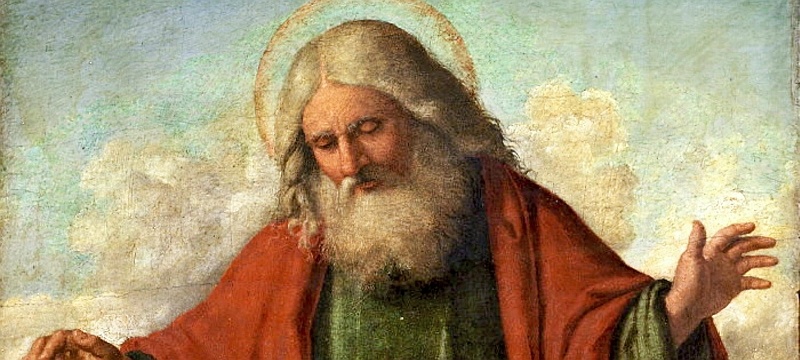
Old Testament God vs New Testament God?
Is the God of the Old Testament the same as the God of the New Testament?
At first glance, God in the Old Testament seems harsh, and perhaps callous. God in the New Testament seems loving, and gentle. With respect, this is a simple misunderstanding. It’s also not new…this has been a common misunderstanding since at least the turn of the first century AD.
It may seem like the God of the Old Testament is very different from the God of the New Testament, but He’s the same. His nature and character have not changed at all. How does God describe Himself? Look at Exodus 34:6-7…
And [God] passed in front of Moses, proclaiming, “The Lord, the Lord, the compassionate and gracious God, slow to anger, abounding in love and faithfulness, maintaining love to thousands, and forgiving wickedness, rebellion and sin.”
In the Old Testament, God describes Himself as a shepherd who cares for His sheep, a faithful husband who forgives His unfaithful wife, and so on. His “New Testament character” is clearly seen in these descriptions. Yes, He created some strict rules for His people. Yes, He has always held people accountable for their actions.
On the flip side, those who see Jesus as only gentle and meek are also missing half of the picture. We all know that Jesus used very harsh words when talking to the self-righteous. Take a look at the list of “woes” that Jesus pronounced and try to picture Him as only meek and mild! We also read in the Gospels that He proclaimed a coming judgment on Israel, which happened in 70AD. Jesus talked just as much about Hell as Heaven, if not more. In Acts, Ananias and Sapphira were killed for lying. In Hebrews 10 we read that it is a fearful thing to fall into the hands of the living God, and that He is a consuming fire (12:29). When we get to Revelation, we see that Jesus isn’t soft. He carries a sword, and will judge and destroy those who oppose God.
God’s grace and mercy and forgiveness have been shown from the beginning, from Genesis to Malachi. His justice – with wrath, punishment, and destruction – are there to see from Matthew to Jude and Revelation. God has not changed. He handles different situations differently, which makes sense…but His character has always been the same. Naturally, we LIKE to think of God as more loving and kind and gentle…but what would happen if that were His only attributes? The wicked and unrepentant would go unpunished. That would make Him unjust, and unloving toward those who have been victimized. Were He only harsh and demanding, He would be unjust toward those who love Him and seek to serve Him well.
The antidote to this misunderstanding is easy: just read the Bible more thoroughly. It’s hard to read the first few chapters of Hosea and not see that God is forgiving, loving, compassionate, and patient. We tend to think of God as emotionless, but Song of Solomon tells us otherwise. Reading through the Psalms will show that God cares for us deeply. At the same time, reading ALL of the Gospels – not just passages like the Beatitudes – will help us understand that neither the Son nor the Father are playing games. Lives are at stake, and there will be a reckoning.
-
Did Jesus Claim to be God?
Many skeptics of Christianity believe that Jesus never claimed to be God. Some claim that nobody believed He was God until long, long after His death. Others argue that Jesus’ own words show that He believed Himself to be simply a man, or only the Son of God and not God Himself. Still others claim that Jesus’ divinity was created by the apostle Paul, and that his teaching and Jesus’ teaching are in conflict. From Jehovah’s Witnesses to Muslims to atheists, a whole bunch of people deny that Jesus is God.
Their confusion is understandable. It’s not a common situation…you know, God becoming human. When we look at Scripture, it’s undeniable that Jesus Himself, and His disciples, and the Jews around Him, understood that He was claiming to be God.
Jesus claimed to be God
Jesus repeatedly called Himself the Son of Man. This refers to a prophecy in Daniel 7, which Jesus quotes directly. The Son of Man is the one whom all will worship, whose reign will last forever, and so on. Remember: religious Jews are fiercely monotheistic…they would never worship anyone who is not God, yet they accept that the Son of Man should be worshipped.
This is clear in Mark 14. During His trial before the Sanhedrin (the Jewish ruling council), this happened:
“… the high priest asked him, “Are you the Messiah, the Son of the Blessed One?” “I am,” said Jesus. “And you will see the Son of Man sitting at the right hand of the Mighty One and coming on the clouds of heaven.” The high priest tore his clothes. “Why do we need any more witnesses?” he asked. “You have heard the blasphemy.
If the Messiah were simply human, then claiming to be the Messiah would not be blasphemy. Blasphemy has to do with God, not humans. Because the Son of Man – the “Son of the Blessed One” – wasn’t considered simply a man, Jesus’ claim to BE the Messiah caused the most severe reaction:
They all condemned him as worthy of death.
… and then some more:
In Revelation 1:17, John records Jesus saying, I am the first and the last. This is a direct quote from Isaiah 44:6, where God says I am the first and I am the last; apart from me there is no God.
When Jesus claimed to be the Son of God, He wasn’t claiming that He was a created being, or that He was less…He was claiming to be EQUAL with God. The Jewish leaders understood this very well, as we see in John 5:18… For this reason they tried all the more to kill him; not only was he breaking the Sabbath, but he was even calling God his own Father, making himself equal with God.
John 2:19, Jesus claimed to be able to raise Himself from the dead: Jesus answered them, “Destroy this temple, and I will raise it again in three days.
In Luke 6:5, Jesus claimed to be Lord of the Sabbath. Of course, God Himself created the Sabbath.
In John 8:58, Jesus claimed to exist before Abraham, who died 1600 years before He was born: Very truly I tell you,” Jesus answered, “before Abraham was born, I am! See the next part for more on this.
The Jews believed Jesus claimed to be God
In that same passage, some Jews asked Jesus, “Who do you think you are?” Jesus used the phrase “I am.” He used this phrase to describe Himself numerous times. This is the same phrase God used to describe Himself in Exodus 13:14 when Moses was going to confront Pharaoh: I am. How did the Jews respond? They picked up stones to kill Him for saying it, because they understood that Jesus was calling Himself God.
At Jesus’ trial, the Jewish leaders insisted, We have a law, and according to that law he must die, because he claimed to be the Son of God.
It was understood that only God could forgive sins, and then, in Luke 5:20, Jesus forgave sins: When Jesus saw their faith, he said, “Friend, your sins are forgiven.” The Pharisees and the teachers of the law began thinking to themselves, “Who is this fellow who speaks blasphemy? Who can forgive sins but God alone?” Jesus knew what they were thinking and asked, “Why are you thinking these things in your hearts? Which is easier: to say, ‘Your sins are forgiven,’ or to say, ‘Get up and walk’? But I want you to know that the Son of Man has authority on earth to forgive sins.” Then, of course, the man did just that: he got up and walked away. If Jesus had the authority to heal a paralytic, then – by His own words – He had the authority to forgive sins… clearly indicating that He could do what God alone can do.
In John 10:30, Jesus was talking about God the Father, and then said, I and the Father are one. Sounds maybe like Jesus was saying they were like-minded, or on the same team or something. That’s not how the Jews heard it, of course… they knew exactly what Jesus meant: Again his Jewish opponents picked up stones to stone him, but Jesus said to them, “I have shown you many good works from the Father. For which of these do you stone me?” “We are not stoning you for any good work,” they replied, “but for blasphemy, because you, a mere man, claim to be God.”
The High Priest believed Jesus claimed to be God
As mentioned above: in Matthew 26:63, Caiaphas said to Jesus, “I charge you under oath by the living God: Tell us if you are the Messiah, the Son of God.” “You have said so,” Jesus replied. “But I say to all of you: From now on you will see the Son of Man sitting at the right hand of the Mighty One and coming on the clouds of heaven.” Then the high priest tore his clothes and said, “He has spoken blasphemy! Why do we need any more witnesses? Look, now you have heard the blasphemy. What do you think?” “He is worthy of death,” they answered. Remember that the Jews believed the Son of Man was divine.
Jesus’ disciples believed Jesus is God
John 1:1 says that Jesus was God.
In John 20:28, Thomas called Jesus God.
In Hebrews 1:8 we read that God called the Son God.
In Acts 20:28, Luke records Paul’s words that God bought the church with His own blood…clearly meaning Jesus.
In 2 Peter 1:1, Peter called Jesus our God and Savior.
In Titus 2:13, Paul calls Jesus our great God and Savior, Jesus Christ.
Do we believe Paul, or Jesus?
This is a seemingly valid question, but one that betrays ignorance of the events outlined in the Bible. After fourteen years of ministry, Paul went to Jerusalem to meet privately with Peter, James, and the other Christian leaders there. He presented to them the gospel that he preached to the Gentiles…to make sure he was on track. They added nothing to his message. Why would the disciples accept what Paul taught as true if he falsely claimed that Jesus is God? No… Paul agreed with Jesus and His disciples, which is why there was never any conflict over him saying that Jesus is God.
I could go on, of course. Without question, Jesus claimed to be God. Without question, those around Him understood exactly what He meant… some followed Him because they believed Him, and others wanted to kill Him – and ultimately succeeded – because they didn’t believe Him.
The most important question at the moment is whether YOU believe Him. Having the facts is important, but not enough by itself… to have peace with God, we must trust Him enough to submit to Him as well.
More Conclusive Evidence
As if the above texts weren’t enough to establish 1) that Jesus claimed to be God and 2) that those around Him understood that He claimed it, the Bible shows definitively that Jesus IS God:
- He is the object of worship by humans and angels
- Salvation is found in Him
- He forgives sins, which only God can do
- He presides over the final judgment
- Christians are taught to pray to Jesus
- He bears the titles used for Yahweh in the Old Testament
In the end, the text is clear: Jesus claimed to be God, and His enemies wanted to kill Him for it. His disciples believed that He is God, and were willing to die before claiming otherwise. The foundation of Christianity is that Jesus isn’t simply a man, but God in flesh.
-
Jesus in Every Language
While Christianity began in first-century Israel, it quickly spread around the known world. Today, there are approximately 2,180,000,000 Christians living in every country in the world. Around 6,500 languages are spoken in the world today.
One of the most popular articles on GodWords is What Does Jesus Mean?. The article gets a lot of comments requesting the meaning of Bible names, so I thought it was time to begin a list of Jesus’ name in different languages. This list will probably never be complete, but people have been asking for it anyway.
If you speak in languages other than English and have an addition or correction, please send me a message using the form at the bottom of this page.
Click column headers to sort
Language Jesus’ Name Afrikaans Jesus Albanian Jezu Amharic እየሱስ። Arabic يسوع Armenian Հիսուսը Azerbaijani İsa Basque Josu Belarusian Ісус Bengali যীশু Bosnian Isus Bulgarian Исус Catalan Jesus Cebuano Jesus Cherokee Tsisa Chichewa Yesu Chinese (Simplified) 耶稣 Chinese (Traditional) 耶穌 Corsican Ghjesù Croatian Isus Czech Ježíš Danish Jesus Dutch Jezus English Jesus Esperanto Jesuo Estonian Jeesus Filipino Jesus or Hesus Finnish Jeesus French Jesus Frisian Jezus Galician Xesús Ge’ez1 ኢየሱስ Georgian იესო German Jesus Greek Ιησούς Gujarati ઇસુ Haitian Creole Jezi Hausa Yesu Hawaiian Iesu Hebrew ישוע Hindi यीशु Hmong Yexus Hungarian Jezus Icelandic Jesus Igala Jisos Igbo Jesus Indonesian Yesus Irish Íosa Italian Gesù Japanese イエス Javanese Gusti Yesus Kannada Yesu Kazakh Иса Khmer ព្រះយេស៊ូវ Kilba (Høba) lthakú Korean 예수 Kurdish (Kurmanji) Îsa Kyrgyz Иса Lao ພຣະເຢຊູ Latin Iesus Latvian Jezus Lithuanian Jezus Luganda Yezu or Yesu Luxembourgish Jesus Macedonian Исус Malagasy Jesosy Malay Yesus Malayalam യേശു Maltese Ġesù Maori Ihu Marathi येशू Mende Yesu Mongolian Ecyc Myanmar y shayu s nyya Nepali येशू Norwegian Jesus Pashto عیسي Persian عیسی Polish Jezus Portuguese Jesus Punjabi ਯਿਸੂ Rohingya Isá Romanian Iisus Runyoro-Rutooro Yesu Russian Иисус Samoan Iesu Scots Gaelic Íosa Serbian Исус Sesotho Jesu Shona Jesu Sindhi عيسي Sinhala යේසුස් වහන්සේ Slovak Ježíš Slovenian Jezus Somali Ciise Spanish Jesús Sundanese Yesus Swahili Yesu Swedish Jesus Tajik Исо Tamil இயேசு கிறிஸ்து (Yesu Christu) Telugu యేసు Thai พระเยซู Tigrinya የሱስ Tongan Sisu Turkish Îsa Ukrainian Ісусе Urdu یسوع Uzbek Iso Vietnamese Chúa Giêsu Welsh Iesu Xhosa UYesu Xitsonga Yesu Yoruba Jesu Zulu UJesu 1 – Ge’ez is the liturgical language of several Ethiopian churches.
Suggest an Addition
Feel free to contact me if you have suggestions or corrections for this list.
-
Did Jesus Really Exist? Bart Ehrman Explains.
Some people doubt that Jesus actually existed. They claim that some first-century men made up a story, and that a bunch of people were fooled into believing it. I’ve heard from a lot of skeptics of Christianity, and there’s a fair number who claim that Jesus never actually existed. There are many reasons why this is silly, but we tend to believe what we want to believe.
Bart Ehrman is a well-known New Testament scholar. He’s also an agnostic atheist…that is, he acknowledges he doesn’t know whether God exists, but he doubts that God exists. His books have been popular, as his doubts encourage other doubters. His arguments are regularly parroted by those who wish to discredit Christianity, which is why I’m posting this video. If you agree with Ehrman’s conclusions about Christianity, you should also agree with his conclusions about whether Jesus really was an actual person.
There is no scholar in any college or university in the western world who teaches Classics, Ancient History, New Testament, Early Christianity…any related field who doubts that Jesus existed.
Bart Ehrman -
Did Jesus Ever Get Sick?
Did Jesus ever get sick?
An Anonymous ReaderThe Bible doesn’t record Jesus being sick, and it doesn’t say that He never got sick… so we don’t really know.
Some presume that He never got sick because He is God, but they forget or ignore that He is also fully human. He grew in wisdom and stature, got hungry, got tired, got frustrated, felt pain… so there’s no reason to assume that He never got sick. Hebrews 2:17 says that “He had to be made like His brothers in every way.”
Some have suggested that Jesus simply healed Himself whenever He started getting sick. That doesn’t seem to be a good answer, because 1) the text doesn’t suggest that, and 2) Jesus says over and over in John that He did nothing on His own… it was His Father who was doing His work through Jesus. The Father could have kept Jesus from getting sick, but we have no evidence that He did or did not.
So: the answer to your question is “I don’t know,” but – from what I can tell – it’s also “probably.”