Blog

  • Docetism

    Docetism

    What is Docetism?

    Docetism is an ancient heresy related to Christianity.

    Docetism comes from the Greek dokein (to seem). It is the belief that Jesus wasn’t actually human, but only appeared to be human. Docetism was closely related to Gnosticism, which viewed physical matter as inherently evil and spiritual substance as inherently good. This denial of Jesus’ humanity contradicts the plain teaching of the New Testament.

    The New TestamentJesus is both God and man
    DocetismJesus is either God or man, but not both.

    This idea appeared soon after Jesus’ death and resurrection. 1 John 4:1-3 appears to address it specifically:

    Dear friends, do not believe every spirit, but test the spirits to see whether they are from God, because many false prophets have gone out into the world. This is how you can recognize the Spirit of God: Every spirit that acknowledges that Jesus Christ has come in the flesh is from God, but every spirit that does not acknowledge Jesus is not from God. This is the spirit of the antichrist, which you have heard is coming and even now is already in the world.

    In 2 John 1:7 Paul wrote that many deceivers, who do not acknowledge Jesus Christ as coming in the flesh, have gone out into the world.

    Jerome, born in the mid-300s, wrote this in The Dialogue Against the Luciferians: “While the apostles were still surviving, while Christ’s blood was still fresh in Judea, the Lord’s body was asserted to be but a phantasm.”

    The question of Jesus having a body appears to have been an issue very early in the church, or John would not have needed to address it. Docetism seems to have been a fairly significant issue for some time. A hundred years after John wrote that, Serapion of Antioch discovered the idea in the false Gospel of Peter. Docetism was condemned at the first council of Nicaea in 325, and is considered heretical by Roman Catholics, Eastern Orthodox, Coptic, Armenian and Ethiopian Orthodox, and all Trinitarian Protestants.

    What’s the Big Idea?

    Docetism is based in the idea that God has no body, cannot suffer, and certainly cannot die. Docetists, from the Greek doketai (illusionists), believed that Jesus did not have a physical body… that his body was an illusion. Therefore, everything in Scripture that relates to Jesus having a real body must be understood as not being actually true… either false or metaphorical:

    • Mary’s pregnancy and Jesus’ birth
    • Eating food
    • Walking around
    • Being tired
    • Weeping
    • His crucifixion
    • His death
    • His resurrection
    • His ascension to Heaven
    • … and so on.

    Two Kinds of Docetism

    The denial that Jesus was fully human results in one of two primary interpretations:

    1. that because God has no body, so Jesus’ body must have been an illusion, or
    2. that Jesus was a regular man, and “the Christ” is a separate divine entity that entered Jesus’ body at His baptism, empowered Him to do miracles, and left His body during the crucifixion… leaving the human Jesus to die.

    Every passage in the Bible that expresses Jesus’ humanity must, in the Docetist’s view, be reinterpreted. While it’s obvious that this belief contradicts Scripture, those who hold it do not generally believe the Bible to be the infallible Word of God.

    Docetism Today

    The idea that Jesus was only divine and not also human persists to this day. Modern Gnostics like Christian Science believe that the only true reality is spiritual, and that anything physical is an illusion. This is why they tend to avoid doctors: to receive physical treatment is to reinforce the illusion. Others who believe Jesus was only divine include some involved in the New Age movement, Theosophy, and certain sects of Hinduism that consider Jesus to have been a divine symbol rather than God in the flesh.

    Implications of Docetism

    Jesus’ humanity is a core tenet of Christianity. The apostle Paul wrote again and again that he preached about Jesus’ crucifixion, and in 1 Corinthians 15:17 that “if Christ has not been raised, your faith is futile.” If Jesus had no body, He could not be crucified. He could not die. Therefore, He could not be raised from the dead. Docetism, then, contradicts the most foundational element of the Christian faith.

    God, in Leviticus 17:11 (and Hebrews 9:22) is quoted as saying that there would be no forgiveness of sins without the shedding of blood. Under the old covenant, the ancient Israelites sacrificed animals to cover their sins. Jesus was the fulfillment of those symbolic acts. His death – the shedding of His blood – didn’t simply cover our sins temporarily, it removed them. Jesus paid the price for everyone’s sins, for all time… as we read in Hebrews 7:27, He sacrificed for their sins once for all when he offered himself.

    Docetism erases Jesus’ life, death, resurrection, and sacrifice… all of which are central to a biblical understanding of God, His plan, and our salvation.

  • Biblical Patterns: Calling You Twice

    Biblical Patterns: Calling You Twice

    When reading the Bible, we’re wise to keep an eye out for repetition. This emphasis points to pivotal moments. God talked to a lot of people in the Bible, from Adam to Zechariah. Here’s a list of seven people who, in pivotal moments, God called by name… not once, but twice.

    Abraham

    The father of our faith, who believed God, was about to obediently sacrifice his son when ‘the angel of the Lord’ called out to him.

    Then he reached out his hand and took the knife to slay his son. But the angel of the Lord called out to him from heaven, “Abraham! Abraham!”

    “Here I am,” he replied.

    “Do not lay a hand on the boy,” he said. “Do not do anything to him. Now I know that you fear God, because you have not withheld from me your son, your only son.”

    Jacob

    He just found out that his son Joseph isn’t dead. Instead, his kid is basically in charge of the largest empire in the world. Not only will Jacob see Joseph again, but they’ll be together when the old man dies.

    God spoke to Israel in a vision at night and said, “Jacob! Jacob!”

    “Here I am,” he replied.

    “I am God, the God of your father,” he said. “Do not be afraid to go down to Egypt, for I will make you into a great nation there. I will go down to Egypt with you, and I will surely bring you back again. And Joseph’s own hand will close your eyes.”

    Moses

    The former prince of Egypt ran away after killing an Egyptian. After 40 years of tending sheep, Moses sees something strange: a bush is on fire, but not burning up.

    When the Lord saw that he had gone over to look, God called to him from within the bush, “Moses! Moses!”

    And Moses said, “Here I am.”

    “Do not come any closer,” God said. “Take off your sandals, for the place where you are standing is holy ground.” … “And now the cry of the Israelites has reached me, and I have seen the way the Egyptians are oppressing them. So now, go. I am sending you to Pharaoh to bring my people the Israelites out of Egypt.”

    Samuel

    People rarely heard from God anymore, so young Samuel assumed that High Priest Eli was calling him. After the third misunderstanding, Eli knew that it was God who had spoken.

    The Lord came and stood there, calling as at the other times, “Samuel! Samuel!”

    Then Samuel said, “Speak, for your servant is listening.”

    And the Lord said to Samuel: “See, I am about to do something in Israel that will make the ears of everyone who hears about it tingle…” The Lord was with Samuel as he grew up, and he let none of Samuel’s words fall to the ground. And all Israel from Dan to Beersheba recognized that Samuel was attested as a prophet of the Lord.

    Martha

    Somebody has to get the job done, and Martha got busy… probably cleaning, cooking, and making the guest room presentable for Jesus’ visit. Mary wasn’t helping at all. Mary was just sitting around, listening to Jesus talk… and Jesus told her it was good:

    But Martha was distracted by all the preparations that had to be made. She came to him and asked, “Lord, don’t you care that my sister has left me to do the work by myself? Tell her to help me!”

    “Martha, Martha,” the Lord answered, “you are worried and upset about many things, but few things are needed – or indeed only one. Mary has chosen what is better, and it will not be taken away from her.”

    Simon Peter

    It was Passover. Instead of focusing on when God rescued Israel from slavery, the disciples were arguing about which of them would be the greatest in Jesus’ kingdom. They didn’t know what was coming, as Jesus was just about to be betrayed. He knew they would need courage in the days ahead so He warned Simon Peter to be ready:

    “Simon, Simon, Satan has asked to sift all of you as wheat. But I have prayed for you, Simon, that your faith may not fail. And when you have turned back, strengthen your brothers.”

    But he replied, “Lord, I am ready to go with you to prison and to death.”

    Jesus answered, “I tell you, Peter, before the rooster crows today, you will deny three times that you know me.”

    Saul

    Like a first-century bounty hunter, Saul was on his way to Damascus to round up some of Jesus’ followers. The man who would be apostle to the Gentiles definitely wasn’t expecting to encounter Jesus personally:

    As he neared Damascus on his journey, suddenly a light from heaven flashed around him. He fell to the ground and heard a voice say to him, “Saul, Saul, why do you persecute me?”

    “Who are you, Lord?” Saul asked.

    “I am Jesus, whom you are persecuting,” he replied. “Now get up and go into the city, and you will be told what you must do.”

    The Bible is full of cool stuff. Keep reading!

  • How Did Jesus’ Apostles Die?

    How Did Jesus’ Apostles Die?

    It’s commonly believed that all of Jesus’ disciples, except John, were martyred… that is, killed for following Jesus. Unfortunately, these events aren’t as clear as we’d like them to be. Some seem to be well-attested in history while others rely on traditions, both oral and written. This alphabetical list has the best information I can find, for now. I’ll update the page as new information comes to light.

    Keep in mind that some of these traditions come LONG after the events, so the development of legends definitely comes into play here.

    Andrew

    Likely martyred. Accounts of Andrew’s death are a bit sketchy. He is said to have been martyred by crucifixion at the city of Patrae, in Achaia (Greece), in AD 60. The 6th-century apocryphal work Acts of Andrew describes him as bound, rather than nailed, to a cross. A later tradition says his cross was shaped like an X, which became known as Saint Andrew’s Cross. His remains were interred in Constantinople, then moved to the Cathedral of Amalfi, Italy.

    Bartholomew

    The manner of Bartholomew’s death is indeterminate. Foxe’s Book of Martyrs says that Bartholomew, also known as Nathanael, was beaten and crucified in India. Another tradition says that he was either beheaded or flayed alive in Armenia. His remains are thought to have been interred in St. Bartholomew Church, Rome, Italy.

    James (the son of Alphaeus)

    The manner of James’ death is indeterminate. Hippolytus (AD 170 – AD 235) wrote that James faced violent opposition from the Jewish community while preaching in Jerusalem, was stoned to death, and was buried near the temple in Jerusalem. His remains are believed to have been interred in St. James Church, Compostela, Spain.

    James (the son of Zebedee)

    Martyred. Acts 12 tells us that King Herod arrested members of the early church, intending to persecute them. James was executed by the sword in Jerusalem, at Herod’s command, around AD 44. It was about this time that King Herod arrested some who belonged to the church, intending to persecute them. He had James, the brother of John, put to death with the sword. His remains were interred in the Holy Apostles Basilica in Rome, Italy.

    John

    Died of natural causes, probably in Ephesus, around AD 100. Tertullian wrote that prior to his exile by the Romans, John was brought into a coliseum, immersed in boiling oil, and emerged unharmed. This, it was claimed, lead to the conversion of the entire coliseum to Christianity. John was later exiled to the island of Patmos. His remains were thought to be interred in St. John Basilica near Ephesus, Turkey.

    Judas Iscariot

    Suicide. Matthew 27 and Acts 1 tell us about Judas’ death. After betraying Jesus, the money he was given was used to buy a field. Matthew say that he hanged himself, while Acts tells us that he ‘fell headlong’ and his body burst open. Attempts to harmonize the two accounts suggest that after he hanged himself, the rope broke and his body fell to the ground.

    Jude

    The manner of Jude’s death is indeterminate. Also known as Thaddeus, tradition tells us that Jude was killed, along with Simon the Zealot, with an axe in Beirut, Lebanon around AD 65. His remains were moved from Lebanon in AD 1665 and interred in St. Peter’s Basilica, Vatican.

    Matthew

    Matthew likely died a natural death. Foxe’s Book of Martyrs records that Matthew’s missionary work included Ethiopia, where tradition says that King Hirtacus killed him with a halberd in AD 60. Other traditions make it unclear whether he was burned, stoned, or beheaded. His remains were interred in St. Matthew Cathedral, Messina, Sicily.

    Matthias

    The manner of Matthias’ death is indeterminate. Matthias replaced Judas Iscariot, who betrayed Jesus and then committed suicide. One tradition says that he was stoned to death in what is now modern Georgia, and was buried there. Another says he was stoned to death in Jerusalem, then beheaded. Hippolytus of Rome wrote that Matthias died of old age in Jerusalem. His remains are believed to have been interred in St. Mathias Abbey, Trier, Germany.

    Philip

    Philip likely died a natural death. One tradition says that Philip was crucified upside-down, along with Bartholomew. Another tradition says that he was beheaded. Both traditions maintain that he was killed in Hierapolis, in what is modern Turkey. His remains were interred in the Church of the Dodici, Rome, Italy.

    Simon Peter

    Crucifixion. Simon Peter was crucified by Roman emperor Nero in AD 64. Tradition says he requested to be crucified upside-down, as he didn’t consider himself worthy of being killed in the same manner as Jesus. His death was foreshadowed in John 21:

    “Very truly I tell you, when you were younger you dressed yourself and went where you wanted; but when you are old you will stretch out your hands, and someone else will dress you and lead you where you do not want to go.” Jesus said this to indicate the kind of death by which Peter would glorify God.

    The phrase “stretch out your hands” appears to be a reference to crucifixion. Eusebius quoted Origen as having written the following: Peter appears to have preached in Pontus, Galatia, Bithynia, Cappadocia, and Asia to the Jews of the dispersion. And at last, having come to Rome, he was crucified head-downwards; for he had requested that he might suffer in this way. Peter’s remains were buried in Rome, and the Church of St. Peter was built above to commemorate him.

    Simon the Zealot

    The manner of Simon’s death is indeterminate. Here’s a list of the different traditions of Simon’s death:

    • Simon was crucified in what is now England in AD 61.
    • Simon and Jude were killed in what is now Lebanon in AD 65.
    • Simon was crucified in Samaria.
    • Simon was sawn in half in Persia.
    • Simon died peacefully in Edessa.
    • Simon was stabbed with a sword.
    • Simon was martyred in Iberia.
    • His remains are buried at the Altar of Crucifixion, Vatican.

    Simon’s remains are said to have been interred in Nicopsia (Georgia), transferred to Anakopia (Georgia), and are believed to be at the Vatican… though some say the location of his remains are now unknown.

    Thomas

    Likely martyred. Known as Didymus (“the twin”), Thomas was killed with spears in Chennai, formerly known as Madras, India in AD 72. His remains were interred in St. Thomas Cathedral, Mylapore, India, with some relics being taken to Edessa (Turkey).

  • If You Love Me, Keep My Commandments

    If You Love Me, Keep My Commandments

    Following Jesus is more than just believing what He said. It’s also recognizing that a right relationship with God includes accepting that He is God, and that we are not God… that we are His subjects, and that He expects us to live as loyal subjects in His kingdom.

    Below is a list of Bible verses that, in essence, say exactly the same thing: if we love God, we will do as He says. Like a child who trusts a loving father, we should respond to God with joy. Grudging obedience is better than none, of course… but if we believe He loves us, obeying Him will be an honor.

    • I, the Lord your God, am a jealous God, punishing the children for the sin of the parents to the third and fourth generation of those who hate me, but showing love to a thousand generations of those who love me and keep my commandments. Exodus 20:5-6, repeated in Deuteronomy 5:9-10.
    • Know therefore that the Lord your God is God; he is the faithful God, keeping his covenant of love to a thousand generations of those who love him and keep his commandments. Deuteronomy 7:9
    • And now, Israel, what does the Lord your God ask of you but to fear the Lord your God, to walk in obedience to him, to love him, to serve the Lord your God with all your heart and with all your soul, and to observe the Lord’s commands and decrees that I am giving you today for your own good? Deuteronomy 10:12-13
    • Love the Lord your God and keep his requirements, his decrees, his laws and his commands always. Deuteronomy 11:1
    • So if you faithfully obey the commands I am giving you today – to love the Lord your God and to serve him with all your heart and with all your soul – then I will send rain on your land in its season, both autumn and spring rains, so that you may gather in your grain, new wine and olive oil. I will provide grass in the fields for your cattle, and you will eat and be satisfied. Deuteronomy 11:13-15
    • If you carefully observe all these commands I am giving you to follow – to love the Lord your God, to walk in obedience to him and to hold fast to him – then the Lord will drive out all these nations before you, and you will dispossess nations larger and stronger than you. Deuteronomy 11:22-23
    • If the Lord your God enlarges your territory, as he promised on oath to your ancestors, and gives you the whole land he promised them, because you carefully follow all these laws I command you today – to love the Lord your God and to walk always in obedience to him – then you are to set aside three more cities [cities of refuge]. Deuteronomy 19:8-9
    • I set before you today life and prosperity, death and destruction. For I command you today to love the Lord your God, to walk in obedience to him, and to keep his commands, decrees and laws; then you will live and increase, and the Lord your God will bless you in the land you are entering to possess. Deuteronomy 30:16
    • Be very careful to keep the commandment and the law that Moses the servant of the Lord gave you: to love the Lord your God, to walk in obedience to him, to keep his commands, to hold fast to him and to serve him with all your heart and with all your soul. Joshua 22:5
    • I prayed to the Lord my God and confessed: Lord, the great and awesome God, who keeps his covenant of love with those who love him and keep his commandments, we have sinned and done wrong. We have been wicked and have rebelled; we have turned away from your commands and laws. Daniel 9:4-5
    • Then I said: Lord, the God of heaven, the great and awesome God, who keeps his covenant of love with those who love him and keep his commandments, let your ear be attentive and your eyes open to hear the prayer your servant is praying before you day and night for your servants, the people of Israel. Nehemiah 1:5-6
    • If you love me, keep my commands. And I will ask the Father, and he will give you another advocate to help you and be with you forever – the Spirit of truth. John 14:15
    • Whoever has my commands and keeps them is the one who loves me. The one who loves me will be loved by my Father, and I too will love them and show myself to them. John 14:21
    • This is how we know that we love the children of God: by loving God and carrying out his commands. In fact, this is love for God: to keep his commands. And his commands are not burdensome… 1 John 5:2-3
    • And this is love: that we walk in obedience to his commands. As you have heard from the beginning, his command is that you walk in love. 2 John 1:6

    Follow-Up: Salvation is Not by Works

    It’s important – crucial – that we recognize that keeping God’s commands is NOT how we’re saved:

    For it is by grace you have been saved, through faith – and this is not from yourselves, it is the gift of God – not by works, so that no one can boast. For we are God’s handiwork, created in Christ Jesus to do good works, which God prepared in advance for us to do. Ephesians 2:8-10

    Note the timeline: first we are saved, and become a new creation. Then we do good works. To put it another way, God saves us and then puts us to work. Most religions are works-based, teaching that we must please or appease the gods in order to avoid suffering. Christians are to be obedient to what God has told us to do, but we don’t become Christians by our own efforts.

    Follow-Up: Not All Commands are the Same

    It’s important to recognize that these Bible verses point us to God, and how we should respond to Him. If we love Him, we will obey Him… like a child who trusts our loving Father.

    These verses, however, do not all point to the same commands. The Hebrew word in Exodus 20 – misva – can mean ANY command… whether from God, from another person, or it can even mean a wise saying. The Greek word in John 14:15 – entole – can mean an order, a command, a precept (a general rule), or any authoritative instruction. Many of the commands in Exodus and Deuteronomy, for example, were given only to the ancient Israelites. Those commands related to living as a nation in the Promised Land, and never applied to anyone else.

    Each command must be read in context to learn who it was meant for, and how to obey it. For example, the apostle Paul told Timothy to take a little wine for his stomach. This isn’t a universal command for all people, of course. The point of this article is not to suggest that all Christians should follow all commands they find in the Bible. That’s not possible, and it’s certainly not a good idea. As we read the Bible carefully we will learn to read it as it was written and avoid such simple mistakes.

    Conclusion

    Let me encourage you to first consider the reason that God wants you to love Him. It’s because He loves you, and wants the very best for you. If we understand His love for us, it will be easy to love Him in return because we know we can trust Him. Then, because we trust Him, obeying Him will become a joy and an honor, knowing that we’re part of His good plan for everyone.

    Let me know if you have any questions.

  • What Really Happened at the Council of Nicea?

    What Really Happened at the Council of Nicea?

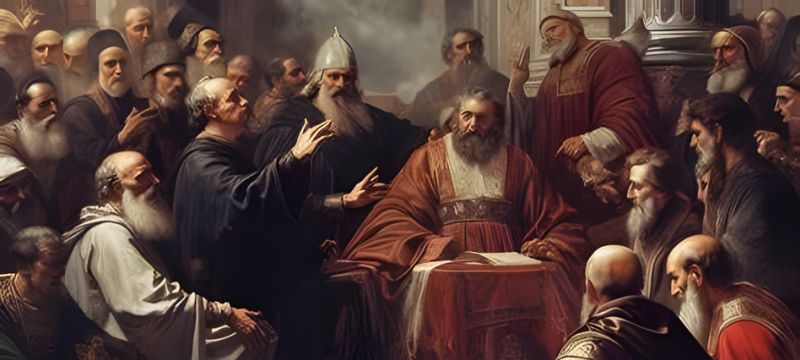
    One of the most common objections about the Bible is that it was supposedly created by Roman Emperor Constantine at the Council of Nicea in AD 325. Of course, that’s not true. It’s mythology, not history. So what really happened at the council of Nicea?

    Where?

    Nicea (Nicaea) was an ancient Greek city, now part of Iznik, Turkey. This was about 75 miles from Constantine’s capital in Nicomedia, and a convenient location for travelers.

    When?

    Constantine (Caesar Flavius Constantine I) became the western Roman emperor in AD 306, and became the sole ruler of the Roman empire in 324 after defeating eastern Roman emperor Licinius at the battle of Chrysopolis. The council at Nicea was convened the next year, from May/June through July, AD 325. Expenses were paid for by the Empire.

    Who?

    This is considered to be the first ecumenical council. That is, the first attempt to gather representatives from all of the Christian churches to settle disputes. Around 1800 bishops were invited – all of the bishops at that time – while only between 250 and 300 or so attended. Some wrote that 318 were in attendance, but that number may only symbolize the 318 trained men of Abraham’s household as found in Genesis 14. Because bishops often had multiple presbyters and deacons with them, the total attendance may have been around 1800. Constantine took part in discussions, but didn’t vote because he wasn’t a bishop. Pope Sylvester I was represented by emissaries. Claims that the council was attended by groups like Gnostics or Ebionites are unfounded.

    Why?

    It appears that Constantine considered religious disputes to be a problem for a united Roman empire, so the council of Nicea was convened to settle theological issues. This wasn’t the first time Constantine worked to settle religious disputes. Twelve years earlier, in AD 313, he and eastern emperor Licinius co-authored the Edict of Milan, granting official toleration to Christians in the Roman Empire. He later tried to resolve a dispute over Donatism, appointing Miltiades of Rome to hear the dispute and then calling the Council of Arles in 314. The need for the Nicene council began with a number of issues, especially a dispute over Arius’ view of the nature of Jesus as Son of God.

    Constantine’s Invitation

    The original proclamation of the council only survives in a Syriac translation. Here’s an English version:

    I believe it is obvious to everyone that there is nothing more honorable in my sight than the fear of God. 

    Though it was formerly agreed that a council of bishops should meet at Ancyra in Galatia, it seemed to us for many reasons that it would be better for the council to assemble at Nicaea, a city of Bithynia, because the bishops from Italy and the rest of the countries of Europe are coming, because of the excellent temperature of the air, and in order that I may be present as a spectator and participant in what will be done. Therefore I affirm for you, my beloved brothers, that you should all promptly assemble at the said city, that is at Nicaea.  

    Let every one of you therefore, as I said before, keep the greater good in mind and hurry to gather without any delay, so that each may be physically present as a spectator of those things which will be done. 

    May our God keep you, beloved brothers.

    Issues Discussed at the Council

    Arianism

    The exact nature of Jesus, the Son of God, had been an issue for some time. Nearly a century earlier, Sabellius taught that Father, Son and Holy Spirit were three separate modes in which God appeared throughout history. He was excommunicated in AD 220, and almost none of his writings survive. His modern followers include the Unitarians and Jehovah’s Witnesses.

    Arius, a priest in Alexandria (Egypt), argued with his bishop Alexander over whether the Son was a subordinate creation of the Father, or is eternally God… and whether the Father and Son were ‘of different substances’ (heteroousios) or ‘of one substance (homoousious). For this view, Arius was declared a heretic by 80 church leaders in 320, and again by more than 100 leaders in 321. While in exile, his position continued to gain a hearing, and Constantine wished to have the matter settled.

    In the meantime, Eusebius of Nicomedia (not to be confused with Eusebius of Caesarea) had reinstated Arius. Alexander wrote a statement of faith that 250 leaders signed, then convened a council that agreed that Arius was still excommunicated. Arius complained directly to Constantine, which led to him convening the Council of Nicea.

    The Nicene council consulted Scripture and discussed the issue at length. Beyond the obvious – that Arius’ views contradicted Scripture – a primary argument against his view was that his ideas were new, and were not taught in early church history. In other words, Christians had always understood Scripture to say that the Son is God (John 1), that He had always been God (John 1), and that He is equal to the Father (Philippians 2)… and that Arius contradicted both Scripture and the witness of centuries of faithful believers. Athanasius asked, “How many fathers [early Christian writers] can you cite for your phrases?” To settle the matter, the Nicene Creed was written – line by line – to ensure that Christians could properly express the three-fold nature of God.

    All but Arius and two other bishops signed the creed: Theonas of Marmarica and Secundus of Ptolemais. Arius’ teachings were declared heretical, and his books were to be burned… and, by Constantine’s order, anyone hiding copies of Arius’ writing would be put to death.

    All three were anathematized and exiled to Illyria, but this didn’t settle the matter. Arianism continued to plague the church for more than a century. It’s reported that Constantine’s sister urged him to support Arias, and it seems that his position softened over the years to a more inclusive view. The Synod of Jerusalem restored Arius in AD 336, and Constantine invited Arius to come back… but Arius died – weirdly, his intestines exited his body while in the bathroom – before he arrived.

    One of his followers, Eusebius of Nicomedia, became an advisor to Constantine, baptizing him just prior to his death in AD 337. This served to promote Arianism, and the following two emperors (Constantius II and Valens) were Arians. Athanasius continued to fight against Arianism, arguing from Scripture. Emperors removed him from his position as bishop 5 times, resulting in 4 different emperors reinstating him.

    Modern groups like The United Pentecostal Church and Oneness Pentecostals continue to promote the Sabellian heresy, while Jehovah’s Witnesses and, to some extent, Mormons continue to promote the Arian heresy.

    What else did they discuss?

    Twenty disciplinary decrees were issued, and a letter was written to Alexandria to announce the council’s decisions. Here are some of the topics of the day:

    • They formally denounced Gnosticism and other minor sects.
    • Soldiers who had renounced their position and returned to it were given penance.
    • Those who professed faith (catechumens) but lapsed prior to baptism were allowed to rejoin as catechumens after a period of three years.
    • Only specific people were allowed to offer the Eucharist, and others who did were to be suspended from their ministry.
    • Followers of deposed, anti-trinitarian teacher Paul of Samosota who wanted to rejoin the church could be rebaptized after affirming the Trinity.
    • The Nicene Creed was written to codify the consensus about Arius’ view.

    Clergy Stuff

    • Clerics lending money with interest were to be condemned.
    • Healthy clergy who castrated themselves were disqualified from ministry.
    • New bishops were to be chosen by all of the other bishops in their region, but three would do in a pinch… as long as the others wrote letters of approval.
    • Bishops, priests, and deacons were not allowed move from one church to another.
    • In light of the fact that recent converts had sometimes been made clergy, they were to be given time and grace to mature… but, “with the passage of time,” if they were found guilty of “sins of sensuality” they would forfeit their position.
    • No member of the clergy could have a woman living with him, other than a mother, sister or a person similarly “above suspicion.”
    • Discussions about excommunicated clergy should be held at twice-yearly meetings, to make sure they hadn’t been kicked out due to the pettiness of their bishop.
    • As was the custom, regional church authorities were to be recognized. For example, Egypt, Libya and Pentapolis were under the authority of the bishop of Alexandria. Anyone made bishop without proper regional authority was not to be considered a bishop.
    • They resolved the Miletian schism, dealing with clergy who had lapsed under persecution.

    Tried and Failed

    • Failed to establish a uniform date for Easter, which is still unresolved.
    • Socrates Scholasticus wrote that they had intended to make a law enforcing celibacy of the clergy, but failed due to objections.

    There is no record of any discussion of the biblical canon at the council.

    Objections

    Didn’t the Council of Nicea decide on the use of the word “trinity”?
    The word trinity originated in the 1200s. While the word didn’t yet exist, the doctrine did. Tertullian and Origen wrote about the three-fold nature of God 150 years before the Council of Nicea. The idea is found in other early writings, like the writings of Polycarp, Ignatius, and Justin Martyr.

    What’s the big deal about Arianism? Does it really matter?
    Yes, it matters. If Jesus is not God, He should not be worshiped. If Jesus is God, He should. As we see that Jesus was worshiped in Scripture and has been worshiped throughout history as God, this is considered an essential tenet of the faith.
  • Why Are There So Many Different Bibles?

    Why Are There So Many Different Bibles?

    Why are there so many different types of Bibles? And what is the best one to read?
    – Patty

    Let’s look at some of the reasons. You may be able to think of more reasons, but we’ll start with these four.

    Reason One: There are Many Languages

    A long time ago, the ancient Israelites gathered writings they considered inspired by God… the Hebrew Old Testament. Some time after that, Greek became a primary language of the region… so they translated the Hebrew Scriptures into Greek. After Jesus’ death and resurrection, the early Christians gathered writings inspired by God, which we call the New Testament. As the news about Jesus spread to different countries, it was translated into Latin, Coptic, Syriac, Armenian, and more. Eventually it was translated into English and Chinese and Tagalog and many other languages. That’s one of the reasons for so many Bibles: people need to know the gospel, and about how God loves them, and it’s easier for them to understand in their own language.

    That only covers SOME of the Bibles, of course. It’s easy to understand why we translate the Bible into different languages. One might ask why we need multiple Bibles in the same language, and it’s a good question. I can think of three more reasons for this.

    Reason Two: Languages Change

    Languages change over time, and the meanings of words also change over time. Consider how many of today’s English speakers would be able to understand Old English. Let’s compare Genesis 19:24 in Old English and modern English:

    Þa beseah Lothes wif unwislice underbæc 7 wearð sona awend to anum sealtstane na for wiglunge, ac for gewisre getacnunge.Then the Lord rained down burning sulfur on Sodom and Gomorrah—from the Lord out of the heavens.

    That’s a pretty drastic difference, isn’t it? Some of those letters don’t even exist in modern English! The fonts I use here probably don’t accurately present the text. You can see that one reason we have so many Bibles is that languages change over time. Virtually nobody can read Old English today.

    Reason Three: Different Purposes

    Another reason we might want multiple Bibles in the same language has to do with the purpose of the Bible. The two most obvious purposes have to do with readability and accuracy. Let’s look at a simple Spanish-to-English translation:

    Casa blanca is Spanish. How would we translate this into English? We have two options. We can translate it strictly, replacing each word with its English equivalent. In this case, the English would be house white. Casa means house, blanca means white. We can also translate it a bit less strictly, but in a phrase-by-phrase way that makes more sense to English speakers. In this case, the English would be white house. This way of translating is a better fit for most readers.

    That’s how translations work: some can be very strict in a word-for-word sense, but may sacrifice readability in the “target language.” This is known as formal equivalence. Others can be less strict and communicate the same idea in a phrase-by-phrase way. This is known as dynamic equivalence. They serve different purposes. A more strict translation is better for serious study, for example… and a less strict translation is usually better for public readings and devotionals. It’s important to note that neither translation is wrong, and one is not necessarily better than the other. They simply serve different purposes.

    Reason Four: Manuscript Evidence

    One more reason for having multiple translations in the same language has to do with the source material. We keep finding more and more ancient manuscripts. This is very helpful when it comes to translation… and, considering the Bible’s importance, it makes sense that we would want as much information as we can get before translating. To date there are well over 25,000 ancient Greek manuscripts and partial manuscripts of just the New Testament, and we keep finding more. As we revise and update the Bibles we have, we don’t get rid of the old ones. That means we continue to have multiple translations of the Bible in the same languages, which is a good thing.

    Let’s recap. Here are some reasons we have so many different Bibles:

    • There are many different languages
    • Languages change over time
    • We translate differently for different reasons
    • We find more and more manuscripts over time

    So: which Bible is the right Bible? The answer is simple: almost any modern Bible is great. The best Bible is the one you’ll read! There are a few to stay away from, of course… they’re not translated using the same responsible processes, and reflect the values of either a single person or another religion entirely. I do have a list of Problematic Bibles, if you need it. I don’t have a list of good Bibles, because almost all of them are awesome.

    No matter which good Bible you choose, I have two recommendations. First, read it. Second, focus primarily on the New Testament. The whole thing is good, true, and valuable… but for people who want to follow Jesus, the primary part is where He and His first students teach us how to live as God intends.

    I made a free Bible Reading Checklist to keep track of your progress, if you find that helpful. Let me know.

  • Is Cremation a Sin?

    Is Cremation a Sin?

    There are no Bible verses that prohibit cremation. In fact, there are no specific instructions in the Bible for how we’re to deal with the bodies of those who have died.

    The ancient Jews typically buried the dead, but not always. 1 Samuel 31 describes “valiant men” who snuck into enemy territory during war to provide burials for Saul and his sons. They quickly burned the bodies, then took their bones and buried them somewhere else. Jews in the New Testament era also practiced cremation, and we see nothing in Scripture to suggest they shouldn’t have done it.

    I understand your concern, as many Christians have grown up with the idea that burial is the option that God prefers. They see some connection between burial and resurrection. Of course, that doesn’t quite make sense. God will have no problem providing bodies for those He resurrects, and cremation is not going to make it more difficult for Him.

    Having recently lost both of my parents and a brother (all separately), I admire your desire to make things easier for your family. My advice to you would be to do whatever you think is best, as God has not provided any restrictions on how to dispose of our bodies.

  • What is the Edict of Milan?

    What is the Edict of Milan?

    The Edict of Milan is a proclamation by Roman emperor Constantine I, given in 313 AD, that ensured the right of all Roman citizens to worship freely. It also instructed that any property that had been confiscated from Christians should be returned.

    We have no copies of the original edict. What we have are quotations from Lactantius, a Christian scholar and advisor to Constantine. I present this to you not because it directly affects any Christians today, but because so many readers have been led to believe that Constantine, in the Edict of Milan, officially changed the sabbath from Saturday to Sunday. This is simply wrong, as simply reading the text will show. Sabbath-keeping is not something Christians need to be concerned with.

    When I, Constantine Augustus, as well as I Licinius Augustus fortunately met near Mediolanum (Milan), and were considering everything that pertained to the public welfare and security, we thought -, among other things which we saw would be for the good of many, those regulations pertaining to the reverence of the Divinity ought certainly to be made first, so that we might grant to the Christians and others full authority to observe that religion which each preferred; whence any Divinity whatsoever in the seat of the heavens may be propitious and kindly disposed to us and all who are placed under our rule And thus by this wholesome counsel and most upright provision we thought to arrange that no one whatsoever should be denied the opportunity to give his heart to the observance of the Christian religion, of that religion which he should think best for himself, so that the Supreme Deity, to whose worship we freely yield our hearts) may show in all things His usual favor and benevolence. Therefore, your Worship should know that it has pleased us to remove all conditions whatsoever, which were in the rescripts formerly given to you officially, concerning the Christians and now any one of these who wishes to observe Christian religion may do so freely and openly, without molestation. We thought it fit to commend these things most fully to your care that you may know that we have given to those Christians free and unrestricted opportunity of religious worship. When you see that this has been granted to them by us, your Worship will know that we have also conceded to other religions the right of open and free observance of their worship for the sake of the peace of our times, that each one may have the free opportunity to worship as he pleases ; this regulation is made we that we may not seem to detract from any dignity or any religion.

    Moreover, in the case of the Christians especially we esteemed it best to order that if it happens anyone heretofore has bought from our treasury from anyone whatsoever, those places where they were previously accustomed to assemble, concerning which a certain decree had been made and a letter sent to you officially, the same shall be restored to the Christians without payment or any claim of recompense and without any kind of fraud or deception, Those, moreover, who have obtained the same by gift, are likewise to return them at once to the Christians. Besides, both those who have purchased and those who have secured them by gift, are to appeal to the vicar if they seek any recompense from our bounty, that they may be cared for through our clemency,. All this property ought to be delivered at once to the community of the Christians through your intercession, and without delay. And since these Christians are known to have possessed not only those places in which they were accustomed to assemble, but also other property, namely the churches, belonging to them as a corporation and not as individuals, all these things which we have included under the above law, you will order to be restored, without any hesitation or controversy at all, to these Christians, that is to say to the corporations and their conventicles: providing, of course, that the above arrangements be followed so that those who return the same without payment, as we have said, may hope for an indemnity from our bounty. In all these circumstances you ought to tender your most efficacious intervention to the community of the Christians, that our command may be carried into effect as quickly as possible, whereby, moreover, through our clemency, public order may be secured. Let this be done so that, as we have said above, Divine favor towards us, which, under the most important circumstances we have already experienced, may, for all time, preserve and prosper our successes together with the good of the state. Moreover, in order that the statement of this decree of our good will may come to the notice of all, this rescript, published by your decree, shall be announced everywhere and brought to the knowledge of all, so that the decree of this, our benevolence, cannot be concealed.

    from Lactantius, De Mort. Pers., ch. 48. opera, ed. 0. F. Fritzsche, II, p 288 sq. (Bibl Patr. Ecc. Lat. XI).

  • Who Were the Judges in Israel?

    Who Were the Judges in Israel?

    Between the death of Joshua and the inauguration of King Saul, the ancient nation of Israel didn’t have specific human leaders at the top of the food chain, running the show.

    Moses’ generation didn’t get to enter the Promised Land. The next generation did, and they fought battles and took land as God directed. As we read in Judges 2:10-11, after that whole generation had been gathered to their ancestors, another generation grew up who knew neither the Lord nor what he had done for Israel. Then the Israelites did evil in the eyes of the Lord and served the Baals.

    This began a cycle of rebellion that lasted over 300 years:

    • Israel did evil and worshiped other gods
    • God used the nations around Israel to punish them
    • They cried out to God
    • God raised up a “judge” to deliver Israel from their oppressors
    • They served God in peace, but then
    • again did evil and worshiped other gods…

    Today we think of judges as those presiding over a court of law, pronouncing judgement on criminals. The Hebrew sapat is a lot like that, only it was God who did the judging. He chose certain individuals to free Israel from their oppressors, and we call them judges. Here’s what Judges 2:18 tells us:

    Whenever the Lord raised up a judge for them, he was with the judge and saved them out of the hands of their enemies as long as the judge lived; for the Lord relented because of their groaning under those who oppressed and afflicted them.

    The definition of sapat is to judge, govern, vindicate, or punish. There were 12 judges. Some claim they each came from a different tribe of Israel, but that’s not what the Bible tells us… another reminder to do your homework! Each name is linked to the passage about them… some short, some long, some spread across multiple books in the Bible.

    JudgeTribe
    OthnielJudah
    EhudBenjamin
    Shamgar(not mentioned, probably not an Israelite)
    Deborah(Unknown, possibly Issachar)
    GideonManasseh
    TolaIssachar
    JairMannasseh
    JephthahMannasseh
    Ibzan(not mentioned, possibly Judah)
    ElonZebulun
    AbdonEphraim
    SamsonDan

  • Will There Be a Rapture?

    Will There Be a Rapture?

    Thanks to Michael for asking the question. I’m biased on this subject, and I could be wrong. A lot of people believe in the rapture, and not all of them are uneducated Left Behind readers. There are scholars who believe it’s found in Scripture. I’m not really a scholar, but I do disagree with the idea. Most of the verses in question either seem to be unclear, or interpreted backwards. What follows are my opinions. It’s important to remember that this is not an essential teaching of the Christian faith.

    First, what IS the rapture? It’s generally taught be the event where Jesus comes to take His Bride – the church, which is all believers – to Heaven with Him. Some believe this will happen before the Great Tribulation, some believe it will be in the middle, and some at the end. All of these views consider the rapture to be a separate event from Jesus’ second coming.

    However: for virtually all of church history, Christians have considered the two to be actually ONE event. In the rapture, Jesus comes back… but not all the way. He comes back most of the way, but doesn’t touch the earth with His foot. He then pulls all believers into the air with Him, taking us to Heaven. Then, at some point later, He comes all the way back.

    I don’t see that in Scripture. I believe the historical, traditional view that the rapture and second coming are one event. Here are a few reasons why I believe this:

    • Jesus said that when He comes back, everyone will see it. The rapture is a secret event, where those left behind are left to wonder where we went. Those who rejected the gospel might figure it out, but that’s after… not during the event itself.
    • Jesus talked a lot about the separation of the righteous and unrighteous, which is what the rapture is about… and what will happen at His second coming.
      • In Matthew 13, Jesus’ parable about weeds in a wheat field says that the weeds should be removed first. In that sense, the unrighteous are taken.
      • In Matthew 24, Jesus talked about Noah’s flood, and how the unrighteous were ‘swept away.’
      • In Luke 17, Jesus talks about some who are taken, and some left behind. The disciples asked, “Where?” That seems like a strange question. What were they asking? Those left behind would still be right where they were, of course. Their location wasn’t a mystery. So it appears they were asking about where people would be taken TO, and Jesus replied “Where there is a dead body, there the vultures will gather.” It seems those taken would be the unrighteous, which is the opposite of the rapture.
    • In that Luke 17 passage, where Jesus talks about one being taken and one being left, He refers to it as ‘the day the Son of Man is revealed.’ The rapture is supposed to be a secret event, not a revelation to the world that Jesus is back.
    • When Jesus warned people about His coming, He spoke as if THEY needed to be concerned… rather than saying that some unknown, future generation should be afraid:
      • Matthew 10:23 When you are persecuted in one place, flee to another. Truly I tell you, you will not finish going through the towns of Israel before the Son of Man comes.
      • Matthew 23:36 Truly I tell you, all this will come on this generation.
      • Matthew 24:34 Truly I tell you, this generation will certainly not pass away until all these things have happened.
    • In Revelation 13, Jesus told John about the Beast, and his mark. Check out verse 18: This calls for wisdom. Let the person who has insight calculate the number of the beast, for it is the number of a man. That number is 666. Now, consider: if this is still a future event, how could John’s original audience – the first-century church – use wisdom to calculate the number of a man who wouldn’t be born for another 2000 years? They wouldn’t use wisdom for that. They would need direct revelation from God. Only the generation that includes the Beast could use wisdom to calculate his identity.

    For these reasons, and a few more, I consider myself – somewhat loosely – a Partial Preterist. That is, I believe that some of the prophesied end-time events happened in the first and second centuries. Full Preterism – the idea that it’s all past – is a heresy. We’re definitely not yet living in the New Jerusalem, so there are still many events to come… but it does seem that the most responsible handling of Scripture may lead us to believe that the persecution – the tribulation – has already occurred, and that Jesus and John were warning those alive at that time about its coming. There may be another, even greater tribulation, but I believe this one is in the past.

    Finally, we have John’s description of himself in Revelation 1:9. Depending on which version you read, this is what he called himself: 

    • your brother and partner in the tribulation (ESV, HCSB)
    • your brother and fellow-partaker in the tribulation (BLB)
    • your brother and companion in tribulation (KJV, AMP)
    • your brother and fellow participant in the tribulation (NASB)
    • your brother and the one who shares with you in the persecution (NET)

    I hope that answers your question. Keep in mind that much of this is speculation, and that we may not fully understand what’s to come. I’m okay with that. We should cling tightly to the gospel, and hold more loosely those things about which we’re unsure. This is certainly one of those unsure things.

    What are your thoughts?