- Founder:
- Muhammad
- Born in Mecca in 570 AD
- Founded:
- Approximately 610 AD
- Founding Occasion:
- Muhammad claimed to receive revelations from the angel Gabriel.
- Headquarters:
- Mecca is the center of the Islamic world
- Membership:
- 1,780,000,000
- Splinters:
- Sunni
- Shiite
- Ahmadiyya
- Druze
- Ahmdiyan
- Ishmailites
- Zaidites
- Sufi
- Nation of Islam
- Moorish Science Temple
- Five Percenters
- Sacred Texts:
- The Quran (also spelled Koran or Qur’an)
- Sunnah
- Nahjul Balagha
- Official Website:
- None
Blog
-

Islam FactSheet
-
Christianity FactSheet
- Founder:
- Jesus (also known as Jesus Christ)
- Born approximately 7 AD in Bethlehem, Judea
- Founded:
- While it could be said that Christianity had no beginning, the Christian church as we know it began in the 1st century AD.
- Founding Occasion:
- The death and resurrection of Jesus
- Headquarters:
- None
- Membership:
- 2,200,000,000
- Current Leadership:
- Every Christian is considered to be a leader, or a leader in training
- Parent Religion:
- Judaism
- Sacred Texts:
- The Bible
- Official Website:
- None
- Certain sects of Christianity claim to be “true” Christianity and that all others are false. Many of these groups have websites. There is no official web address for Christianity.
-
Are Bible Codes Real?
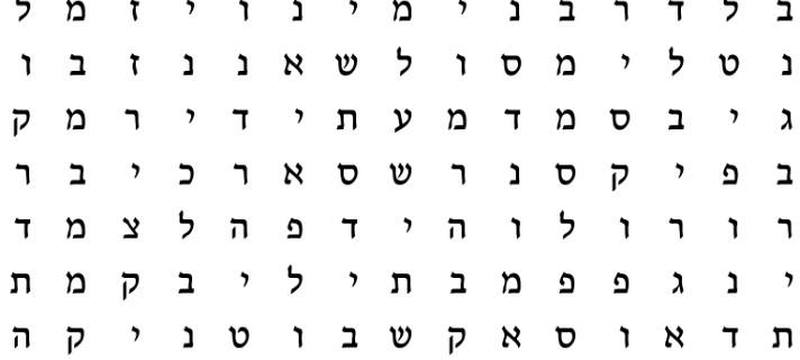
Some people believe that the Bible doesn’t just contain God’s message to mankind, they also believe that it contains hidden messages for us to ferret out. One method of ferreting is known as ELS, or Equidistant Letter Sequencing. To find the hidden messages you must take a block of text from the Bible, and reformat it. This means that you must lay out the words in a chunk, like 20 words to a line. Then, you pick a variable… say, 5. Starting at the first word, or the fifth, you jump to every fifth letter and write them down. Sometimes a word will be created by this jumping around.
If 5 doesn’t work, try another variable… say, seven. If no messages are found, you might try a sequence of variables. Three, six and two might work. Start at word one, jump to the fourth, jump to the tenth, jump to the twelfth. See? Child’s play. Of course, sometimes even that doesn’t uncover a hidden message… but don’t worry! There’s a solution. Try going diagonally, either up or down. It makes no difference.
If you don’t find any messages in this manner, you might have to reorder the block of text. Instead of the 20 words per line, go to seventeen… or thirty-one. Whatever it takes to find that hidden message, right? If it’s from God we must find it.
The Bible Code is based on Equidistant Letter Sequencing. Michael Drosnin wrote the book using research done by Eliyahu Rips (a mathematician from Hebrew University) and Doron Witztum (a physicist from the Jerusalem College of Technology). The two of them (along with their friend Yoav Rosenberg) published their research in Statistical Science in 1994, but the the editors made it clear they did not endorse their work. Even Rips and Witztum are critical of the way Drosnin used their research.
Here’s the problem with the Bible codes: you can make it say anything you want. That’s not a message from God… that’s manipulation, pure and simple. Drosnin told Oprah Winfrey “I am entirely secular. I don’t believe in God”… doesn’t THAT tell you anything? When you apply the coding system, you can program a computer to search for patterns by (for example) every fourth letter. The trouble with such a system is that Hebrew HAS NO VOWELS! You can insert your own ideas into the pattern any time you want… “God’s message” isn’t clear at all. For example, Drosnin claimed that the code predicted Yitzhak Rabin’s assassination. Problem? “Rabin” transliterated in Hebrew is RBN. That could be “Robin” or “Rubin” or “Rabean” or “Roubion” or any other combination of such letters. It’s certainly no more clear than the ravings of Nostradamus, which no self-respecting scholar would ever consider divinely inspired.
Another problem with the code? Hebrew reads right to left… but you can use the code left to right, top to bottom, or even diagonally. That’s a stupid way to claim inspiration from God! Everyone who’s ever solved a word search knows inherently that a diagonal line in a block of letters is completely dependent on where you break the lines in the paragraph. I could take this editorial and break it up into 20 different configurations and find codes within it by applying that methodology. Does that mean that my writing is inspired by God? Certainly not. Anyone can find a “message from God” by taking a language without vowels and reconfiguring the text and searching with a computer for patterns… and then translating those messages by inserting vowels wherever it seems appropriate.
God’s real message, on the other hand, is clear. You don’t need a computer to find it. You don’t need to apply some esoteric system of revelation to understand it. You simply need to read the Bible, and listen to the promptings of the Holy Spirit. God has never worked the way that Drosnin claims… hidden, secret, and undisclosed. God has always been up front about what He wants us to know. If God’s real message were a hidden secret, then God would be cruel indeed. Think of all those people who had to do without God’s “true revelation” that’s only recently been revealed! No, the Bible Code isn’t real. Instead, God has made His message plain… it’s all there for ANYONE to find it. After all, God said “You will seek Me and find Me when you search for Me with all your heart” … not ‘with your personal computer’.
-

Is Christianity about Being Good?
There are a lot of common misconceptions about Christianity, and probably the most common is that Christianity is about being good. Of course, the “commonness” of an idea has nothing to do with its accuracy. Christianity isn’t about being good. Not even close. It’s easy to be confused about this. After all, there’s a lot of talk in Christian churches about being good…and we should be good. But being good is really a side issue. If being bad is our problem, then being good would certainly be the answer…but being bad is not our problem. Our problem is that we are DEAD.
The Bible tells us that we all start out dead. Of course, we’re not physically dead…only spiritually dead, which is certainly the worst kind of dead. I laugh, I joke…come on, smile. Anyway, we’re told that dead is our natural state. That’s bad news, but that’s not the end of the story…Jesus told us that He came to give us life. There are dozens of verses in the Bible that indicate both our need for life and the fact that Jesus gives it. We (Christians, that is) were dead in our trespasses and sins and then made alive with Christ. We have passed out of death into life. Part of the Bible was written specifically to help accomplish this:
“…these have been written so that you may believe that Jesus is the Christ, the Son of God; and that believing you may have life in His name.
Jesus even identified Himself as “THE LIFE”. He also called Himself the bread of life…from heaven which gives life to the world. Sure, the Bible tells us to do good. There’s nothing wrong with doing the right thing…unfortunately, when people stop reading after those parts, they get confused. Because they stopped reading, lots of people think that being good or following the “rules” will get them into heaven. That’s just not so, and here’s a verse that proves it:
…if a law had been given which was able to impart life, then righteousness would indeed have been based on law.
Jesus pointed out that people who search for life won’t find it unless they’re willing to come to HIM for it. It seems pretty clear when you read the Bible…if the problem is simply that we are bad, the solution would obviously be to be good. The problem, however, is that we are dead…and the answer to being dead is certainly LIFE. He who has the Son has the life; he who does not have the Son of God does not have the life. It’s that simple. You’re dead. You need life. Fortunately, that life has been offered to you free of charge.
-

Christian Science FactSheet
Theologically, Christian Science is a cult of Christianity. Also known as The First Church of Christ, Scientist, it shares common ground with Gnosticism.
- Founder:
- Mary Baker Eddy (Mary Ann Morse Baker)
- Born 1821 in Bow, New Hampshire
- Founded:
- Approximately 1866
- Founding Occasion:
- Eddy’s claim of being healed from injuries sustained by a fall on the sidewalk
- Headquarters:
- Boston, Massachusetts
- Membership:
- 400,000 (no official info released)
- Current Leadership:
- Jon G. Harder, “Mother Church President”
- Parent Religion:
- Christianity
- Sacred Texts:
- The writings of Mary Baker Eddy, primarily Science and Health with Key to the Scriptures.
- Official Website:
- www.christianscience.org
-
Does the Old Testament condone slavery?
Absolutely not.
The Old Testament speaks of slavery often, and lays out rules on how slaves were to be treated. This has caused some to become confused…but a basic understanding of the context for ancient near-eastern slavery shows that the Old Testament does not condone slavery. Let’s look at some common assumptions:
ASSUMPTION #1: Regulating a behavior shows approval
There are 33 Bible verses (NIV) containing the word “divorce”. Divorce is specifically regulated in Scripture, but does that mean that the Bible condones divorce? Let’s see:
I hate divorce,” says the LORD God of Israel…
God hates divorce. Why would He give specific instructions governing it? Simple: because divorce was a fact of life. Failing to provide practical instructions on divorce would be like pretending it didn’t actually happen. Well, slavery was also a fact of life. Regulations for slavery should not be confused with the approval of slavery. The existence of regulations for specific behaviors is not the same as approval for those behaviors.
However, Assumption #1 is not relevant to the issue of slavery in the Old Testament. As we’ll see, other faulty assumptions are at work:
ASSUMPTION #2: Slavery was involuntary servitude
Many incorrectly assume that the slavery in the Old Testament was like the modern western slavery of the 1700’s and 1800’s. Western slavery primarily benefited the rich, but Israelite slavery primarily benefited the poor. You see, slavery was almost always voluntary…the basic types of “enslavement” are known as self-sale, family sale, and indentured servitude. These relationships were usually initiated by the slave as a remedy for poverty.
A thief was expected to pay restitution for their crime. If the couldn’t pay, they could become a slave until their debt was paid. Poor families would sometimes sell their children as slaves. Were this situation like modern western slavery, we could justifiably condemn the practice… but the reality is that this was of great benefit to the child.
Slavery contracts often emphasized that the slave agreed to work in exchange for economic security and personal protection. While modern western slaves were forbidden to own property of any kind, Hebrew slaves could take part in business, borrow money, and buy their own freedom… in other words, they were free to “buy out” the contract they’d made. They were also able to own property, pay betrothal monies, and pay civic fines. Slaves could appear in court as witnesses, plaintiffs, and defendants.
Many ancient near-eastern slaves were able to buy time off as well, paying a fixed fee called a “quitrent” to their owner. This bought them a year where they didn’t have to work. The amount paid was roughly equivalent to the average annual pay of a hired worker, regardless of whether he was free or a slave.
ASSUMPTION #3: Slavery was cruel and inhumane
While human nature tells us that abuse certainly must have occurred, the Old Testament forbids the cruel treatment of slaves. In fact, slaves were afforded the same legal protections as free citizens.
Leviticus 25 instructed Israelites to not mistreat slaves:
- Do not rule over them ruthlessly, but fear your God.
- …you must not rule over your fellow Israelites ruthlessly.
- …you must see to it that his owner does not rule over him ruthlessly.
Instead of being cruel and inhumane, the relationships between slaves and owners appear to have been, at the very least, respectful. Many slaves were treated much like members of the owner’s family. Deuteronomy 15 has a very instructive passage regarding setting a slave free:
If a fellow Hebrew, a man or a woman, sells himself to you and serves you six years, in the seventh year you must let him go free. And when you release him, do not send him away empty-handed. Supply him liberally from your flock, your threshing floor and your winepress. Give to him as the LORD your God has blessed you. Remember that you were slaves in Egypt and the LORD your God redeemed you. That is why I give you this command today.
But if your servant says to you, “I do not want to leave you,” because he loves you and your family and is well off with you, then take an awl and push it through his ear lobe into the door, and he will become your servant for life. Do the same for your maidservant.
Do not consider it a hardship to set your servant free, because his service to you these six years has been worth twice as much as that of a hired hand. And the LORD your God will bless you in everything you do.
The personal rights and responsibilities of a slave were clearly more important than the owner’s “property rights”. Slavery was generally an economic transaction and not a human rights violation. As but one example, slaves were forbidden to work on the Sabbath and were expected to take part in social celebrations…just like their masters. It’s clear that the slavery in the Old Testament wasn’t like modern western slavery at all. Obviously, these slaves recieved great benefits from making such arrangements.
Assumption #4: It was okay to harm a slave
If a master beat a slave and the slave died, he was to be killed. If he caused any sort of permanent damage to the slave, the slave was to be set free immediately. Note that “permanent damage” included such things as knocking out a tooth! This was a stark contrast to other near-eastern cultures, where a master was allowed to put out the eyes of his slaves with no consequences. An Israelite master had incentive to avoid striking a slave in the face, which was considered a civic wrong.
Some try to use Exodus 21:20-21 as evidence that Assumption #4 is accurate:
If a man beats his male or female slave with a rod and the slave dies as a direct result, he must be punished, but he is not to be punished if the slave gets up after a day or two, since the slave is his property.
On the surface, this looks as though a master could get away with mistreating a slave. When we look more closely, it’s clear that this wasn’t considered mistreatment. In fact, this verse shows that slaves were treated in much the same way as free citizens.
Being beaten by a rod was a common punishment. The community elders employed the rod to punish wrongdoers, and fathers applied the rod to rebellious older sons. Using a rod to discipline a slave would be common, if not customary. The punishments for harming slaves and free men were equivalent:
- If the slave died, the owner was killed.
- If the slave was permanently harmed, they were set free.
- If the slave was temporarily harmed, the owner was not punished.
A free citizen who was temporarily harmed would be compensated for lost work time and medical bills, but the slave would not. The difference was simply economic: the owner was financially responsible for the slave, so he absorbed the loss of work time and made sure the slave was healed instead of paying them cash.
Assumption #5: Women were sex slaves
Women were sometimes sold into slavery (self-sale or family sale) as concubines. While westerners typically consider this the equivalent of being an involuntary sex slave, that’s clearly not the case, as we read in Exodus 21 :
If a man sells his daughter as a servant, she is not to go free as menservants do. If she does not please the master who has selected her for himself, he must let her be redeemed. He has no right to sell her to foreigners, because he has broken faith with her. If he selects her for his son, he must grant her the rights of a daughter. If he marries another woman, he must not deprive the first one of her food, clothing and marital rights. If he does not provide her with these three things, she is to go free, without any payment of money.
A concubine wasn’t held against her will and used for sex. She was a true wife, but a secondary or subordinate one. The phrase “marital rights” as well as those in Judges 3 give us insight into a concubine’s life: the man who bought her is her husband, his father is her father-in-law, and so on. The practice of keeping concubines is related to polygamy and not to enforced servitude.
These relationships could hardly be considered negative. They let young women voluntarily escape poverty, offered them security and protection, and gave them upward social mobility in the home of a wealthy family. They were also safe from favoritism: if the man took another wife, she was afforded the same basic legal protections as any other wife: food, clothing, and conjugal rights.
Exodus 21:8 says that such women could not be sold to foreigners. The implication is that foreigners wouldn’t recognize her personal rights as afforded by Israeli law, and so she could never be redeemed. This shows that a slave’s personal rights were more important than a slave owner’s “property rights”.
Assumption #6: The Old Testament condones involuntary slavery
The Old Testament is clear in its position on involuntary slavery: it was punishable by death:
- Anyone who kidnaps another and either sells him or still has him when he is caught must be put to death. Exodus 21:16
- If a man is caught kidnapping one of his brother Israelites and treats him as a slave or sells him, the kidnapper must die. You must purge the evil from among you. Deuteronomy 24:7
Involuntary enslavement was, according to the Old Testament, evil.
Assumption #7: The selling of slaves is proof of cruelty
The most common verse used for this claim is Leviticus 25:44…
Your male and female slaves are to come from the nations around you; from them you may buy slaves.
The assumption here is that this sale would be against the slave’s will. However, there’s nothing in the Old Testament to bear this out. The Hebrew word from that verse that’s translated “buy” suggests a transaction. Considering the Old Testament’s view of slavery and the lack of contrary evidence, one could reasonably assume that these transactions were entirely voluntary.
The ancient definitions of freedom and slavery were more relative than absolute. Kings were masters and their subjects were slaves. Rulers subject to others (e.g. emperors) were slaves. Child adoptions were recorded as sales transactions, with the new parents being considered masters. Virtually any subordinate could be considered a slave. The modern definitions of freedom, slavery, property, and ownership don’t adequately express the ancient reality.
For an example, read the 15th and 16th verses of Deuteronomy 23:
If a slave has taken refuge with you, do not hand him over to his master. Let him live among you wherever he likes and in whatever town he chooses. Do not oppress him.
The implication here is that the slave belongs to a foreigner, but should be allowed to make a home among the Israelites as he pleases. If slaves were considered property, extradition would have been immediate…since the slave would “belong” to someone else. Extradition back to a foreign slave owner was forbidden, and we might safely assume that this had to do with the difference in how slaves were treated by other cultures.
Note as well the wording of Leviticus 25:46…
You can will them to your children as inherited property and can make them slaves for life…
While it was possible to will foreign slaves to your children, that was not the default. While it was possible to make them slaves for life, that was not the default. It’s entirely reasonable to assume that the ‘slave for life’ clause would be based on the slave’s wishes, as it would be for a Hebrew slave.
Assumption #8: Slaves were captured in wartime
During wartime, a city might surrender to Israel. It would then become a vassal state to Israel, and its people would be considered serfs instead of slaves. They would be expected to work on civic projects, as the Israelites did under Solomon’s rule.
Considering the fact that such conscriptions included both Hebrews and foreigners, such serfdom would be entirely voluntary. The serf as well as the slave enjoyed the protection and prosperity of the community.
Conclusion
While the Old Testament clearly lists guidelines regarding slavery, it’s clear that the type of slavery involved was overwhelmingly voluntary. Most relationships were either initiated by the slave or as an arrangement by the family of the slave as an economic and social benefit. Mistreatment of a slave was forbidden, and slaves were afforded most of the same freedoms and responsibilities as free citizens. The charge that the Bible condones slavery, as the modern western world understands it, is entirely without merit.
-
What Does ‘Jesus’ Mean?
I was told that the name of Jesus is special, and saying His name in a prayer means it will be answered. Is that true?
Anonymous GodWords ReaderThis question has a few layers. Some claim that praying “in Jesus’ name” will ensure that He will give us what we ask. Some believe that we should refer to the Messiah by His ‘actual’ name, which – they presume – is Hebrew. Some go so far as to say that those who get His name wrong are actually worshipping a false god, and that these people can’t be saved as a result.
What name was Jesus given at birth?
My name, given at birth, is Anthony. My nickname is Tony. Some of my friends call me by other nicknames, but all of those names refer to me. You might ask what my “real” name is, and there’s no single answer. Names can be a bit complicated.
Jesus was given a name at birth. According to Matthew 1:21 that name is Iesous. That’s Greek. Because Jesus and His family are Jews, one presumes that they spoke Aramaic or Hebrew. However, Jesus isn’t named with a Hebrew name in the Bible. We see only Iesous.
We know that Iesous is the Greek version of the Hebrew name Yeshua, or Y’shua, or Yehosua. It’s the same name as “Joshua.” At no point do we see Jesus referred to in the Bible as either Yeshua or Y’shua, but it seems reasonable to assume that the angel told Joseph to name Him “Yeshua.” Y’shua and Yehosua are simply other forms of the name, like Tony is to Anthony.
So: what is Jesus’ “real name” in Hebrew? My name in Spanish is Antonio. Since I’m American and my parents spoke only English, it’s okay to assume that my “real name” is Anthony. In the same way, Jesus’ name – according to the Bible – is Iesous… but it’s okay to assume that the angel was speaking Hebrew, and that Joseph actually named the baby Yeshua.
A linguistic timeline
Jesus’ name in Hebrew is Yeshua, which is a shortened version of Yehoshua.
Yeshua translated into Greek is Iesous.
Iesous transliterated into Latin is Jesu.
Jesu became Jesus in English.
So: Jesus’ name, in English, is kind of “Joshua”. Weird, huh? Translators primarily use the name Jesus to differentiate between Joshua (Moses’ right-hand man) and Jesus (Son of God, Creator of the universe, Messiah).
Is it a translation?
A translation conveys meaning, so Iesous inherits its meaning from Yeshua. A transliteration is simply a letter-for-letter switch: the letters in one language are swapped for letters in another language that make the same sounds. Jesus is not a translation, it’s a modernized Latin transliteration of Iesous. Jesu is a Latin word that sounds like the Greek Iesous.
Jesus does not mean “Yahweh saves” or “the Lord saves” or even “He saves”. Despite the fact that Jesus Himself means a great deal to many people, there’s no English meaning to Jesus at all. Of course, there’s nothing wrong with saying that Jesus’ name means “Yahweh saves.” It’s not linguistically correct, but that’s not very important most of the time.
Isn’t there power in Jesus’ name?
No. The word “Jesus” has no magical powers, and saying it accomplishes nothing spiritually. It’s a name. There’s no special power in the name itself.
There’s nothing about the name itself that makes it more likely that God will give you what you pray for. When the New Testament tells us to pray in Jesus’ name, it doesn’t teach us that the name itself is special. It tells us that the person is special. When an ambassador speaks to a foreign leader, they speak “in the name of” – with the authority of – the one they represent. Jesus is an ambassador, speaking to the Father on our behalf… and speaking to us on behalf of the Father.
When we pray, we’re asking God to act on our behalf. There’s nothing in the Bible to support the superstitious notion that speaking His name does anything on its own. That’s more like witchcraft than Christianity… if you say the incantation right, you get the result. It’s nonsense.
The words have no power of their own, and God will either grant what we ask or He won’t. He will do what He knows is best, regardless of how often or how sincerely we say “Jesus.” When we pray in Jesus’ name, we’re pointing to our relationship with the Father… and that’s made possible by our relationship with Jesus. It’s a bit like saying, “We’re friends, right? Would you loan me $20?”
Should we pray in Jesus’ name?
We should feel free to pray in Jesus’ name. If you’d rather say “Y’shua,” that’s okay. Neither will produce magical results just because we speak the words. However: let’s not be superstitious and pretend that our incantations change anything. We’re asking God for help, or praising Him for being so awesome. We should do that all the time.
Objections
What about Yahshua? Isn’t that Jesus’ real name?
No. Yahshua isn’t actually a name in Hebrew. There’s no Yahushua or Yahua, either. Don’t believe everything you hear.Doesn’t the name “Jesus” come from the Greek god Zeus?
Again, no. This is ridiculous. Tony (my name) doesn’t come from “toe and knee,” and Jesus has no connection at all to the name Zeus. -
Jesus’ Geneology
Jesus had one earthly parent and one heavenly parent…and let’s not forget to include Joseph, too.
Jesus’ lineage is listed in Matthew 1 and Luke 3 …but a careful reading of these two passages raises a few questions. Matthew lists names from Abraham to Jesus, while Luke lists names from Jesus back to Adam. The lists are virtually identical between Abraham and David, so I’ve posted only names between David and Jesus, reversing the order of Luke’s list for convenience.
Matthew’s
ListLuke’s
ListDavid David Solomon Nathan Rehoboam Mattatha Abijah Menna Asa Melea Jehoshaphat Eliakim Jehoram Jonam Uzziah Joseph Jotham Judah Ahaz Simeon Hezekiah Levi Manasseh Matthat Amon Jorim Josiah Eliezer Jeconiah Joshua Shealtiel Er Zerubbabel Elmadam Abiud Cosam Eliakim Addi Azor Melki Zakok Neri Akim Shealtiel Eliud Zerubbabel Eleazar Rhesa Matthan Joanan Jacob Joda Joseph Josech Jesus Semein Mattathias Maath Naggai Esli Nahum Amos Mattathias Joseph Jannai Melki Levi Matthat Heli Joseph Jesus Why do both list Joseph, but show different ancestors? While this has been the subject of some debate, it appears that Luke gives us Mary’s ancestors. To avoid going into great detail, here’s a simple explanation: Luke’s mention of Joseph is parenthetical. Compare:
[Jesus] was the son, so it was thought, of Joseph, the son of Heli…
[Jesus], who was thought the son of Joseph, was the son of Heli…
- It appears that Heli was Mary’s ancestor, not Joseph’s. This explanation fits the available facts:
- Luke’s writings are known for their accuracy. The Chronicles were available to him, and it seems unlikely that he would make the serious mistake of listing the wrong geneology.
- Matthew’s list shows that Jesus had a legal claim to the throne of David, which could reasonably come from a legal parent instead of a physical parent. Luke’s list isn’t concerned with legal lineage, but physical.
- The Greek rendering of Joseph’s name grammatically differs from all other names listed, making the parenthetical nature apparent. As Luke wrote about Jesus’ miraculous conception two chapters earlier, it’s unreasonable to conclude that he would list Joseph as Jesus’ physical ancestor.
-
Biography of Jared
- Some facts about Jared:
- Son of Mahalalel
- Father of Enoch
- Technically an ancestor of Jesus Christ [Luke 3:23-38]
- Lived 962 years, the second-oldest person in the Bible
Who was Jared?
We know that Jared lived before the Flood, as he was an ancestor of Noah’s. He was an ancestor of Joseph, Jesus’ earthly father. As Luke records it, Jesus “was the son, so it was thought, of Joseph”.
Jared’s Lineage
There is some question about the completeness of the geneological lists in the Old Testament. Genesis 5 mentions Jared’s ancestors in the following order: Adam, Seth, Enosh, Kenan, Mahalalel…but it’s not entirely clear that each was the parent of the one that followed. That may be, or the list may include only notable (or notorious) people. Jared may have been in the 5th generation after Adam, or may have been part of a subsequent generation. While English translations may render the language in a straight-forward manner, ancient Hebrew isn’t that specific. The same word may be used when speaking of a father, grandfather, great-grandfather, and so on.
-
Biography of Boaz
Husband of Ruth
- Some facts about Boaz:
- Boaz means “fleetness” or “alacrity”
- Mentioned in Ruth, 1 Kings, and 1 & 2 Chronicles
- Ancestor of King David
- Wealthy landowner
- Lived sometime around 1100 BC
- Related to Naomi and Ruth by marriage
Boaz was a wealthy landowner living in Bethlehem who took care of Naomi when her husband Elimelech died. For her sake, he also took care of her daughter-in-law, Ruth. He was a kinsman-redeemer for Ruth, who was a young widow. Together they had a son, Obed. Obed was the father of Jesse, the father of David.
Read the story of Boaz in Ruth 1-4 .